
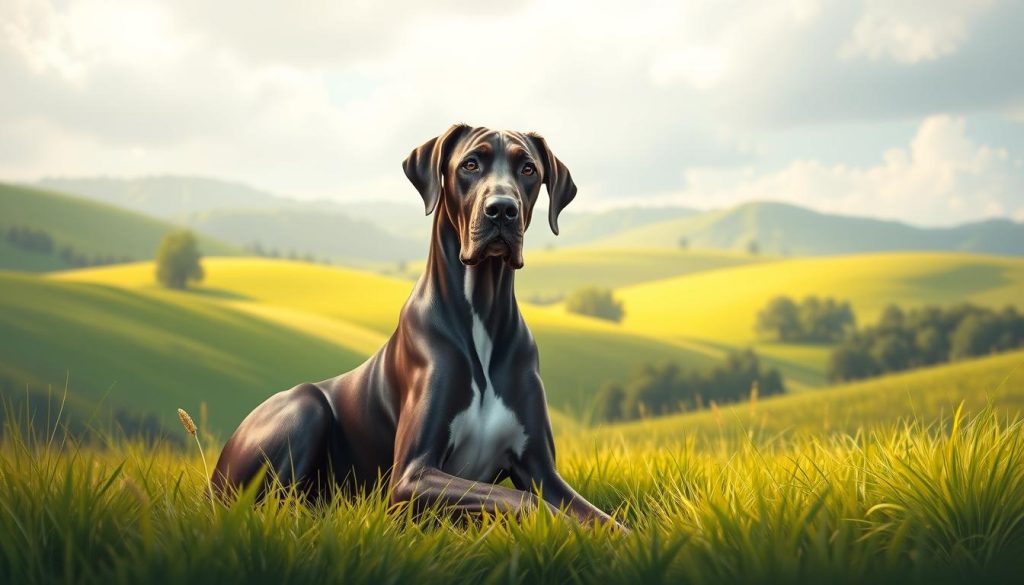
Great Danes are beloved giant breed dogs with impressive stature and gentle nature. These magnificent dogs typically live 7 to 10 years. Their lifespan is shorter compared to smaller breeds.
Multiple factors influence Great Dane lifespan, including genetics, health conditions, and overall care. Large dog breeds age faster than smaller dogs. Great Danes usually live about 8 years, while average breeds live around 11.
Great Dane owners should prepare for a brief but rewarding relationship. These gentle giants face unique health challenges due to their size. These issues can affect their overall lifespan1.
Key Takeaways
- Great Danes live an average of 7-10 years
- Larger dog breeds typically have shorter lifespans
- Genetic factors significantly impact Great Dane life expectancy
- Proper care can help maximize a Great Dane’s health and longevity
- Regular veterinary check-ups are crucial for these giant breed dogs
Understanding Great Dane Life Expectancy
Great Danes are magnificent giant breed dogs with unique longevity traits. These gentle giants face big health challenges that affect their lifespan2. Several factors influence their short but remarkable lives.
Average Lifespan Statistics
Great Danes typically live between 7-10 years, shorter than many other dog breeds3. This is less than the average dog lifespan of about 11 years2.
Smaller dog breeds can live up to 1.5 years longer than Great Danes3. This difference shows how size affects a dog’s lifespan.
Why Large Dogs Age Faster
Scientists have noticed that larger dog breeds age more quickly than smaller ones. Research shows big dogs seem to live their adult lives in fast-forward2.
This rapid aging leads to shorter lifespans for giant breeds like Great Danes. It’s a key factor in understanding their life expectancy.
Comparison with Other Giant Breeds
| Breed | Average Lifespan |
|---|---|
| Great Danes | 7-10 years |
| Mastiffs | 6-10 years |
| Bernese Mountain Dogs | 7-10 years |
| Irish Wolfhounds | 6-8 years |
Mastiffs and Bernese Mountain Dogs have similar short lifespans to Great Danes3. These comparisons show the health challenges big dog breeds face.
Common Health Issues Affecting Great Dane Lifespan
Great Danes face many health challenges that can impact their Saint Bernard lifespan. These gentle giants are prone to critical medical conditions. Careful monitoring and proactive healthcare are essential for their well-being4.
Bloat, or Gastric Dilatation Volvulus (GDV), is life-threatening for Great Danes. Their deep-chested anatomy makes them vulnerable to this condition, often occurring around 4.6 years old5. Preventive surgeries like gastropexy can reduce the risk of this fatal syndrome4.
- Cardiomyopathy: A significant genetic heart condition
- Hip dysplasia: Common in large breed dogs
- Thyroid problems: Often diagnosed around 9 years old5
Great Danes share health vulnerabilities with Dogue de Bordeaux lifespan and English Mastiff lifespan. Joint and bone diseases are common in these breeds. Genetic predispositions increase risks for conditions like osteoarthritis5.
Proper nutrition is crucial in reducing these health risks. Vets recommend diets high in glucosamine and chondroitin for joint health4. Regular check-ups and preventative care can help extend a Great Dane’s lifespan4.
Factors That Impact Great Dane Lifespan
Owners can help their Great Danes live longer through smart care and health management. Understanding key factors influencing giant breed dogs’ lifespans helps make informed decisions. These include nutrition, exercise, and preventative healthcare6.
Nutrition is crucial for a Great Dane’s health. Experts recommend high-quality food made for large breeds. This should have balanced protein, healthy fats, and essential nutrients6.
Feeding small meals throughout the day can prevent bloat, common in giant breeds7. Weight management is vital, as obesity can shorten a dog’s life by up to 2.5 years7.
Exercise supports a Great Dane’s overall health and can extend their life expectancy. Vets suggest 30 minutes to an hour of daily activity. This should fit their size and energy levels6.
Regular physical activity maintains muscle tone and supports joint health. It also prevents weight-related issues that can impact their limited life expectancy7.
Preventative healthcare is crucial for managing a Great Dane’s lifespan. Regular vet check-ups can detect potential health issues early. These include vaccinations, parasite control, and orthopedic evaluations6.
Consider comprehensive health strategies like annual dental cleanings. Monitor for common giant breed health concerns such as hip dysplasia and heart conditions7.
FAQ
What is the average lifespan of a Great Dane?
Great Danes usually live 7 to 10 years. This is short compared to smaller dogs. Giant breeds often have shorter lives due to size-related health issues.
Why do large dogs like Great Danes have shorter lifespans?
Large dogs age faster because of quick growth and high metabolic stress. Their rapid cell division leads to more genetic mutations. This causes faster aging compared to smaller dogs.
Scientists call this the “size-related mortality” effect in dog biology.
How do Great Danes compare to other giant breed lifespans?
Great Danes live about as long as Mastiffs, Saint Bernards, and Bernese Mountain Dogs. These breeds typically survive 7-10 years. Lifespan can vary based on health, genetics, and care.
What are the most common health issues affecting Great Danes?
Great Danes often face serious health problems. These include bloat, cardiomyopathy, hip dysplasia, and thyroid issues. Such conditions can greatly impact their lifespan and well-being.
How can I help my Great Dane live a longer, healthier life?
To extend your Great Dane’s life, focus on proper giant breed nutrition. Maintain regular exercise and vet check-ups. Prevent obesity and watch for early signs of health issues.
What diet is best for a Great Dane?
Great Danes need a diet that supports their rapid growth. Choose high-quality food made for giant breeds. Look for controlled calcium and protein levels to prevent joint problems.
How much exercise do Great Danes need?
Great Danes need 30-60 minutes of daily exercise. Avoid high-impact activities during growth to protect their joints. Walking and swimming are great low-impact options.
When should I start preventative healthcare for my Great Dane?
Start preventative care right away with your Great Dane. Begin socialization, regular vet visits, and proper vaccinations early. Screen for genetic health issues. A good healthcare routine from puppyhood can boost their longevity.
Source Links
- What Is the Great Dane Lifespan? – https://www.ellevetsciences.com/pet-care/great-dane-lifespan/?srsltid=AfmBOoqYsaFc1TQoHh414pAE44DFxLN3cH3oBHXnqFxEacY9ao1Dl9dh
- What Is the Great Dane Lifespan? – https://www.ellevetsciences.com/pet-care/great-dane-lifespan/?srsltid=AfmBOoopm6gwSQUpaoTfEWymGG7F3qlfEE-RW36Fet-YWKQV-Evyjpa0
- Great Dane Life Expectancy: Longevity of Our Big Besties – https://nativepet.com/blogs/health/great-dane-life-expectancy?srsltid=AfmBOoqthtWKSd1CaVFa-PurOJ_od8Zj_iS4EOprxI-jBckhViueb0cn
- Great Dane – https://www.petmd.com/dog/breeds/great-dane
- Great Dane Health Concerns: Keeping Your Gentle Giant Healthy | Spot Pet Insurance – https://spotpet.com/blog/breed-tips/common-health-problems-in-great-danes
- Great Dane Longevity and Health Issues – https://paworigins.com/blogs/vet-blogs/great-dane-longevity-and-health-issues
- Great Dane Life Expectancy: Longevity of Our Big Besties – https://nativepet.com/blogs/health/great-dane-life-expectancy?srsltid=AfmBOooRCLYU6rePzD6bItQs80uapWHX-hR8zui6VB4l4Wcg6w_jiM9_

