
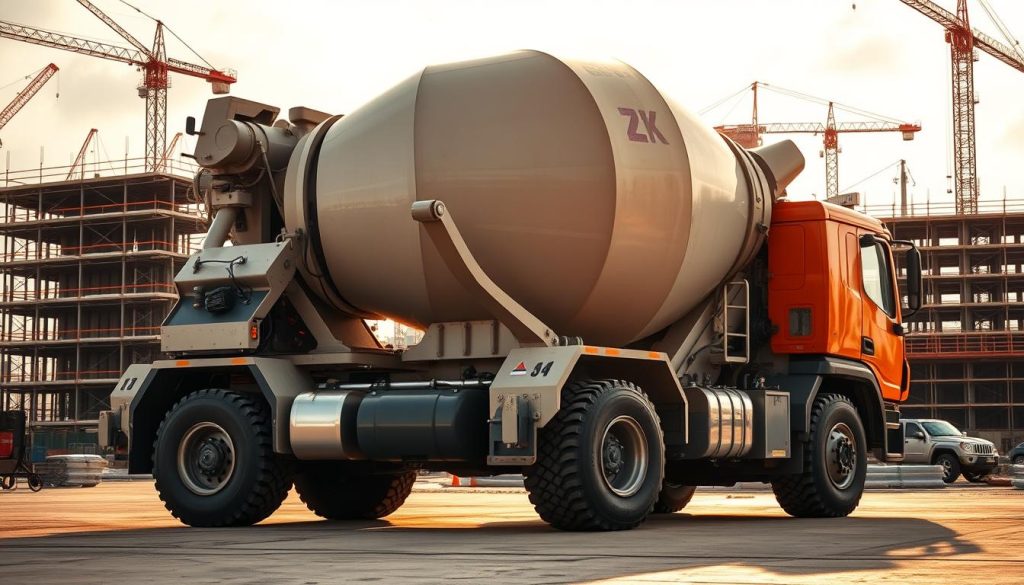
Concrete truck capacity is vital for construction pros and DIY fans planning big projects. Standard trucks usually carry 8 to 10 cubic yards of ready-mix concrete12. These vehicles are key in delivering exact amounts to building sites across the US3.
Most ready-mix trucks can transport about 10 cubic yards of concrete. This is the most common volume in the industry1. Some larger trucks can carry up to 12 cubic yards.
Road weight limits often restrict the maximum load13. A single cubic yard of concrete weighs around 4,056 pounds. This greatly affects the truck’s total load capacity.
Local road weight rules can limit concrete delivery amounts. This applies even if a truck could carry a full 10-cubic-yard load1.
Key Takeaways
- Standard concrete trucks typically hold 8-10 cubic yards
- Maximum truck capacity can reach up to 12 cubic yards
- Road weight restrictions impact concrete delivery volumes
- A cubic yard of concrete weighs approximately 4,056 pounds
- Truck capacity varies based on project requirements
Understanding Standard Concrete Truck Capacity
Concrete delivery trucks are vital for construction projects. Their mixer capacity is a key factor in planning. Several specialized vehicles meet diverse construction needs4.
Contractors must know the different transit mixer sizes for project efficiency. Most standard trucks hold about 10 cubic yards of concrete. The typical mixer capacity ranges from 7 to 8 cubic meters4.
Standard Mixer Truck Volumes
Volumetric concrete mixer dimensions have key specs:
- Standard trucks can carry 8-10 cubic yards of concrete5
- Trucks can transport approximately 20,000 kilograms of concrete5
- The typical truck width is about 2.9 meters, with a length of 7.1 meters4
Types of Concrete Mixer Trucks
Different mixer truck types serve unique purposes:
| Mixer Type | Batch Size | Primary Use |
|---|---|---|
| Drum Mixers | 3-9 cubic meters | Large volume projects |
| Vertical Axis Mixers | 0.75-3 cubic meters | Small to medium projects |
| Volumetric Mixers | Variable | On-site mixing |
Pro tip: Always order an additional 5-10% of concrete to account for potential spillage or waste4.
Understanding these truck capacities helps ensure smooth concrete delivery and project success.
Factors That Impact Concrete Load Delivery
Concrete delivery involves many complex factors. These can greatly affect the transport of ready-mix concrete. Understanding these factors helps contractors plan better and avoid problems6.
- Road Weight Restrictions: Local regulations can limit truck loads6. Gross vehicle weight (GVW) determines the maximum concrete a truck can safely transport6.
- Concrete Mix Density: Different concrete formulations affect the total weight and volume of the load7.
- Site Accessibility: Terrain and space constraints influence delivery logistics6.
Truck maintenance is crucial for efficient concrete delivery. Regular upkeep prevents breakdowns and ensures consistent performance8.
Concrete chipping appointments every three months help maintain optimal drum capacity. They also prevent material buildup8.
Efficient load management can significantly reduce transportation costs and project timelines.
Weather conditions also impact concrete delivery. Cold temperatures can slow the curing process, potentially causing delays7.
A safety margin of 5-10% is recommended. This accounts for potential waste during transportation7.
Contractors should consider these factors when planning deliveries. This ensures smooth, efficient project execution.
Calculating Required Concrete Loads
Precise planning is key for determining the right amount of concrete. Knowing mixer truck capacity is vital for efficient project management. To calculate, multiply length, width, and depth, then divide by 27 for cubic yards needed910.
Add a 5-10% buffer for potential wastage when assessing concrete hauling vehicles. Different projects need varying concrete volumes. Residential jobs may use mini trucks with 3-5 cubic yards capacity9.
Larger commercial projects often require standard trucks holding 8-10 cubic yards10. Accurate measurements prevent delivery shortages for all project types.
Project Size Assessment
A driveway project needs a different concrete volume than a foundation pour. Measure exact dimensions to calculate your specific needs. Then, talk to local suppliers about matching your needs with the right mixer truck capacity910.
Load Planning Considerations
Local rules and road weight limits affect concrete delivery. Standard trucks usually carry 8-11 cubic yards, depending on local restrictions10. Always discuss your project’s needs with suppliers.
This ensures smooth concrete transportation that meets construction requirements and legal guidelines. Good communication leads to efficient delivery and successful projects.
FAQ
What is the standard capacity of a typical concrete mixer truck?
Most standard ready-mix concrete trucks in the U.S. can carry 8 to 10 cubic yards. These trucks are built to transport and deliver concrete efficiently. The average load is about 9 cubic yards of concrete mix.
What are the different types of concrete mixer trucks available?
There are three main types of concrete mixer trucks. Standard trucks deliver pre-mixed concrete to sites. Volumetric mixers can create concrete on-site as needed.
Mini-mix trucks are smaller vehicles perfect for residential projects with limited access. Each type serves a specific purpose in construction.
How do road weight restrictions affect concrete truck capacity?
Road weight limits greatly impact concrete truck loads. Most states have max weight limits based on truck axles. A full concrete truck weighs about 66,000 pounds.
Drivers must follow local rules and adjust their loads accordingly. This ensures safe transport and prevents road damage.
How can I calculate the amount of concrete I need for my project?
To figure out concrete needs, measure your project’s size (length × width × depth). This will give you the cubic yards required. Add 10-15% extra for waste or uneven surfaces.
For complex projects, ask a concrete supplier for help. They can give you a precise estimate of how much concrete you’ll need.
What factors can impact concrete load delivery?
Many things affect concrete delivery. These include road weight limits, mix specs, site access, and weather. Truck maintenance is also important.
All these factors can change how much concrete is delivered. They also affect how smoothly the delivery process goes.
Are there differences between residential and commercial concrete truck capacities?
Yes, commercial projects often use bigger trucks that hold 10-12 cubic yards. Residential projects might use smaller trucks or mixers with 6-8 cubic yard capacity.
The truck size depends on the project needs and site access. Local transport rules also play a role in choosing the right truck.
How does concrete mix density affect truck capacity?
Concrete mix density varies based on ingredients used. Denser mixes reduce the total volume a truck can carry. Lighter mixes might allow for slightly larger loads.
Concrete suppliers can help determine the exact capacity for specific mix designs. They consider all factors to ensure proper delivery.
What maintenance ensures efficient concrete truck performance?
Regular upkeep is key for concrete trucks. This includes checking drum rotation and cleaning mixer blades. Inspecting hydraulic systems and tires is also important.
Well-maintained trucks deliver concrete more reliably. They also help prevent delays at construction sites. Regular care keeps the concrete flowing smoothly.
Source Links
- How Many Yards of Concrete Can a Truck Hold? – https://silo-pros.com/blog/how-many-yards-of-concrete-can-trucks-hold/
- How Many Yards of Concrete in a Truckload: Full Breakdown – https://www.afewimports.com/warehouse-fulfillment/how-many-yards-of-concrete-in-a-truckload
- How Many Yards Can a Concrete Truck Hold? – Civil Engineering Tech – https://civengtech.com/how-many-yards-can-a-concrete-truck-hold/
- Ready-Mix Concrete Truck Capacity and Specifications | Mir Readymix – https://mirreadymixconcrete.com/ready-mix-concrete-truck-capacity-and-specifications/
- Concrete mixer – https://en.wikipedia.org/wiki/Concrete_mixer
- Maximizing Efficiency: Tips for Filling Concrete Trucks to Capacity – https://craftingwithconcrete.com/maximizing-efficiency-tips-for-filling-concrete-trucks-to-capacity/
- How Much Concrete Is in a Truck | Measurements – https://barrowmixconcrete.com/how-much-concrete-is-in-a-truck-measurements/
- Concrete Truck Capacity: Tips and Insight | General Chipping – https://generalchipping.com/concrete-truck-capacity/
- How Much Concrete Can a Truck Hold? Factors to Consider – https://www.howmuchconcrete.io/blog/how-much-concrete-can-a-truck-hold-factors-to-consider
- How Much Concrete Does A Truck Hold? – https://www.civilconcept.com/how-much-concrete-does-a-truck-hold/

