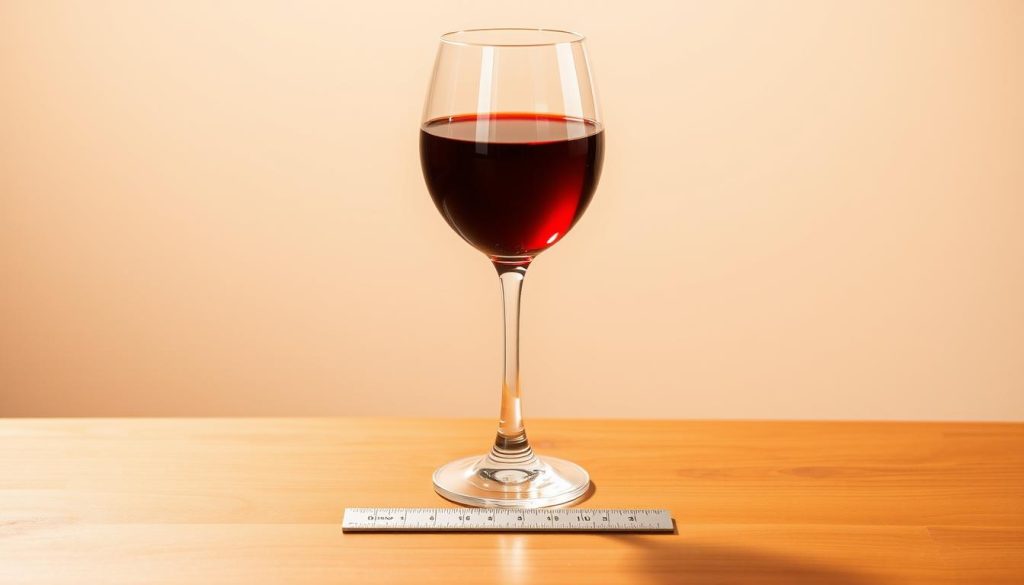
A standard wine serving is 5 ounces. This measurement is used in restaurants and tasting rooms across the United States1. It helps balance flavor and alcohol content while ensuring consistent servings.
Home pours often differ from standard servings. They typically range between 7 to 9 ounces1. This can greatly affect calorie intake and overall consumption.
A 5-ounce serving contains 105 to 125 calories1. Portion control is key for those watching their diet. A standard 750-mL bottle holds about five 5-ounce servings1.
Key Takeaways
- A standard wine glass holds 5 ounces
- Home pours often exceed the standard serving size
- One standard wine serving contains 105-125 calories
- A 750-mL wine bottle yields five standard pours
- Proper wine measurements enhance drinking experience
Understanding Wine Glass Capacities and Standard Pours
The right glass can transform your wine experience. Wine glass capacity enhances the characteristics of your favorite vintages. Stemware volumes are designed to provide the perfect serving2.
Exploring Glass Volumes and Serving Standards
A standard wine glass holds 12 to 16 fluid ounces. This extra space isn’t meant to be filled completely.
The additional room allows wine lovers to swirl and observe the wine. It also prevents spills during tasting.
- Swirl the wine to release aromas
- Observe the wine’s color and clarity
- Prevent spills during tasting
Precise Pouring Measurements
Ounce markings on wine glasses are crucial for precision. A standard wine pour is typically 5 ounces3.
This measurement ensures consistent serving sizes and proper alcohol consumption. It also allows for optimal wine enjoyment.
- Consistent serving sizes
- Proper alcohol consumption
- Optimal wine enjoyment
“The art of wine is not just in the taste, but in the presentation” – Wine Experts
Serving Recommendations
Different wines need different serving approaches. Red wines use larger glasses with 12 to 16-ounce capacities.
White wines are served in slightly smaller 12-ounce glasses2. The glass shape and size affect the wine’s temperature and aroma.
Knowing wine glass capacity helps you serve like a pro. It’s useful for dinner parties or quiet evenings3.
Wine Glass Ounces: Variations by Wine Style
Wine glass sizes can greatly improve your tasting experience. Different styles need unique glass designs for serving sizes and flavor profiles. Red wine glasses usually hold 12 to 16 ounces, allowing space for aeration and aroma development4.
Wine glass selection is key to maximizing taste. Sparkling wines have special serving sizes to keep their bubbles. Champagne flutes hold about 6 to 8 ounces of sparkling wine4.
Flutes have narrow openings to maintain carbonation and direct bubbles upward. Some specialized glasses, like tulip-shaped ones, balance traditional flutes and wider bowls4. White wine glasses usually hold 10 to 14 ounces, varying by varietal4.
Sauvignon Blanc and Riesling glasses have narrow bowls for crisp aromas. Chardonnay glasses offer broader bowls for full-bodied wines4. These specific ounce sizes ensure each style is served perfectly.
The right glass can enhance your drinking experience. Bordeaux glasses have tall bowls for oxygen exposure. Pinot Noir glasses promote delicate aroma development4. Understanding glass sizes is an art that makes every sip better.
FAQ
What is a standard wine pour?
A standard wine pour is 5 ounces. This is the typical serving size in restaurants and homes. It helps ensure consistent servings and responsible drinking.
Why do wine glasses look larger than the actual pour?
Wine glasses have extra space for aeration and swirling. This room helps release aromas and enhances the tasting experience. The actual pour is usually around 5 ounces.
Do different types of wine have different serving sizes?
Yes, serving sizes can vary by wine type. Sparkling wines are often served in 4-ounce portions. Dessert wines might have smaller pours due to higher alcohol content.
Red and white wines typically follow the standard 5-ounce pour.
How many glasses are in a standard wine bottle?
A standard 750ml wine bottle has about 5 servings of 5 ounces each. This makes it easy to plan portions for dinner parties or events.
Why do red and white wine glasses have different shapes?
Red and white wine glasses are designed to enhance each wine’s characteristics. Red wine glasses have larger bowls for more oxygen interaction. White wine glasses are smaller to preserve aromas and maintain cooler temperatures.
How can I measure a precise wine pour at home?
Look for ounce markings on wine glasses. You can also use a wine pouring tool or measuring cup. Some people fill the glass to its widest point or about one-third full.
Do alcohol percentages affect wine serving sizes?
Yes, wines with higher alcohol content are served in smaller portions. For example, Port might be served in 2-3 ounce servings. Standard table wine is usually 5 ounces.
Are there special glasses for wine tastings?
Yes, wine tasting glasses are designed for sampling. They’re usually smaller, holding about 2-3 ounces. These glasses let people try multiple wines without drinking large amounts.
Source Links
- This Is What A Serving Of Wine Actually Looks Like – https://www.self.com/story/this-is-what-a-serving-of-wine-actually-looks-like
- Wine Ounces | How many ounces in a glass of wine ? – https://www.millesima-usa.com/blog/wine-ounces-how-many-ounces-in-a-glass-of-wine.html
- How Many Glasses in a Bottle? Discover with Coravin | US – https://www.coravin.com/blogs/community/how-many-glasses-of-wine-in-a-bottle-a-detailed-guide
- What Type Of Wine Goes In What Type Of Glass? – https://www.wineandmore.com/best-wine-glass-for-every-type-of-wine/