
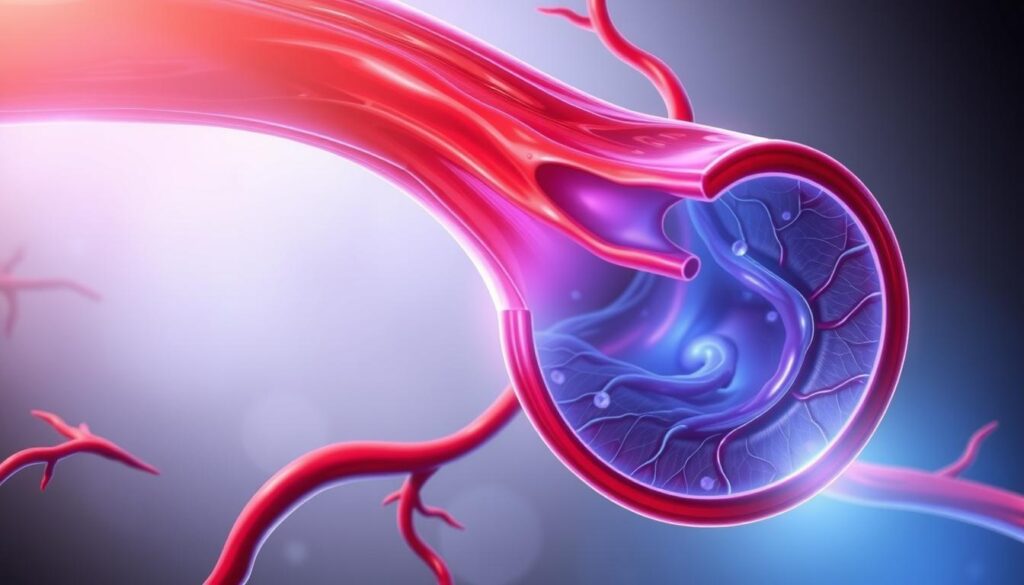
Minoxidil revolutionizes blood flow and heart health. It relaxes blood vessels, easing blood passage and lowering blood pressure1. This medication’s impact on cardiovascular wellness is truly remarkable.
Minoxidil opens potassium channels in smooth muscle cells. This action triggers vasodilation, boosting blood circulation throughout your body2. Studies show it can soften blood vessels and improve brain blood flow2.
The drug’s potential goes beyond typical heart treatments. It can increase elastin in blood vessels. Minoxidil also activates over 100 genes linked to blood vessel structure2. This discovery hints at a wider impact on vascular health.
Key Takeaways
- Minoxidil relaxes blood vessels, improving overall circulation
- The medication can reduce blood vessel stiffness
- Potassium channel activation is crucial to its mechanism
- Potential benefits extend beyond cardiovascular treatment
- Scientific research continues to explore its comprehensive effects
Understanding Minoxidil and Its Uses
Minoxidil is a game-changing medication for various health conditions. It started as a solution for serious medical issues. Now, it’s a powerful tool for different health concerns.
What is Minoxidil?
Minoxidil is a versatile medication available in oral and topical forms. It tackles specific health problems effectively. The drug shines in two main areas: hair growth and hypertension treatment3.
Common Conditions Treated with Minoxidil
The primary uses of minoxidil include:
How Minoxidil Works in the Body
Minoxidil’s action is complex and varied. For hair growth, it works by:
- Opening potassium channels
- Widening blood vessels
- Stimulating growth factors like VEGF and HGF3
“Minoxidil represents a breakthrough in managing hair loss and cardiovascular conditions.”
| Condition | Minoxidil Concentration | Expected Results |
|---|---|---|
| Male Pattern Baldness | 5% Solution | 14.90 hairs/cm² growth4 |
| Female Pattern Baldness | 2% Solution | 8.11 hairs/cm² growth4 |
Using minoxidil requires patience. Most people see results after 8 weeks of regular use. The best outcomes usually appear around 4 months4.
The Connection Between Minoxidil and Blood Vessels
Minoxidil is a unique medication that interacts with your body’s blood vessel system. It was first created to treat high blood pressure. This drug has remarkable effects on vasodilation and blood flow5.
Mechanism of Action on Blood Vessels
Minoxidil triggers a complex process of blood vessel relaxation. It opens potassium channels within vascular smooth muscle cells. This causes blood vessels to widen and improve overall circulation5.
- Opens potassium channels in blood vessel walls
- Relaxes smooth muscle cells
- Increases vessel diameter
Effects on Vasodilation
As a vasodilator, minoxidil significantly improves blood flow throughout your body. It relaxes and expands blood vessels. This enhances circulation to critical areas, including hair follicles5.
Impact on Blood Flow
Minoxidil does more than just relax blood vessels. It may stimulate the production of vascular endothelial growth factor (VEGF). This promotes the formation of new blood vessels5.
The process can potentially improve blood flow. It can also support healthier tissue function.
“Minoxidil transforms how blood moves through your body, opening pathways for better circulation.” – Medical Research Insights
Minoxidil’s ability to enhance blood flow has many uses. It’s now a versatile treatment option for various conditions6.
Benefits of Minoxidil for Hair Growth and Beyond
Minoxidil offers amazing potential for people dealing with hair loss and scalp issues. This powerful treatment does more than just restore hair. It provides multiple benefits for overall scalp health.
Hair Growth Stimulation
Minoxidil can greatly improve your journey to fuller hair. It’s very effective for people with androgenetic alopecia7. Users often see better hair count and density within two to four months.
Consistent use is key to getting the best results7. Minoxidil works best for younger patients and comes in 2% to 5% topical solutions7.
- Increases hair count and thickness
- Works best for younger patients
- Available in 2% to 5% topical solutions7
Improved Scalp Health
Minoxidil boosts scalp health by enhancing blood flow. It dilates blood vessels, helping deliver more nutrients to hair follicles8. This improved circulation can lead to a healthier scalp overall.
Other Potential Health Benefits
Minoxidil’s benefits go beyond just hair growth. Research shows it may also improve heart health in several ways.
| Cardiovascular Benefit | Observed Effect |
|---|---|
| Blood Vessel Elasticity | Increased vessel openness8 |
| Blood Pressure | Potential reduction in systolic pressure8 |
| Arterial Health | Reduced vascular stiffness8 |
Combining minoxidil with additional treatments like microneedling may further enhance its effectiveness7.
Remember to consult with a healthcare professional to determine the most appropriate minoxidil treatment for your specific needs.
Possible Side Effects of Minoxidil
Minoxidil can have potential side effects for those using it for hair growth. Many see great results, but it’s vital to know about possible adverse reactions.
Being aware of these effects helps users make informed decisions about their treatment. Monitoring your body’s response is key to safe and effective use.
Common Side Effects to Be Aware Of
Users should watch for several common side effects of minoxidil. These may include:
- Scalp irritation and redness9
- Skin dryness and itching9
- Unexpected hair growth in surrounding areas9
- Potential ingrown hairs9
Serious Reactions and Warning Signs
Some minoxidil reactions need immediate medical care. Be alert for these critical symptoms:
- Rapid weight gain over 5 pounds10
- Chest pain or discomfort10
- Difficulty breathing10
- Swelling or allergic reactions10
Dose-Response Relationship
Higher minoxidil doses often lead to more noticeable side effects. Higher concentrations may lead to more pronounced side effects. Topical minoxidil comes in different strengths:
| Concentration | Recommended Use | Potential Side Effects |
|---|---|---|
| 2% Solution | Recommended for Women | Mild scalp irritation |
| 5% Solution | Recommended for Men | Higher risk of skin reactions |
Always consult with a healthcare professional before starting minoxidil to understand your individual risk factors and potential reactions.
Regular monitoring and following usage guidelines can help reduce potential minoxidil side effects9. If you notice lasting or severe symptoms, seek medical help right away.
Minoxidil and Cardiovascular Health
Minoxidil’s impact on heart health is vital to understand. It offers benefits but also affects the heart and blood vessels in complex ways.
Patients should be aware of these interactions before starting treatment. Careful consideration is necessary to ensure safe and effective use.
Effects on Heart Rate and Blood Pressure
Minoxidil is crucial in managing high blood pressure. It’s used when other medications fail to control hypertension11.
The drug works by relaxing blood vessels. This action can lower blood pressure and boost overall heart health12.
- Minoxidil can help control high blood pressure, but does not cure the condition11
- Potential side effects include changes in heart rate and blood pressure
- Lifestyle modifications are recommended alongside medication11
Safety Considerations for Patients with Heart Conditions
People with heart conditions should be cautious when using minoxidil. It may increase cardiac output and cause fluid retention12.
Serious side effects to watch for include:
- Increased chest pain or angina11
- Fast heartbeat
- Unexplained weight gain
- Difficulty breathing
- Dizziness or fainting11
Always consult with a healthcare professional before starting minoxidil, especially if you have a history of heart problems.
| Cardiovascular Consideration | Potential Impact of Minoxidil |
|---|---|
| Blood Pressure | Can help lower blood pressure11 |
| Arterial Elasticity | May help restore arterial flexibility12 |
| Blood Flow | Potentially improves carotid and cerebral blood flow12 |
Minoxidil heart health benefits can be significant, but individual responses may vary. Close medical supervision is key to managing potential cardiovascular effects.
Best Practices for Minoxidil Use
Proper minoxidil use is crucial for hair restoration success. Mastering application techniques and dosage guidelines can greatly improve your results. Let’s explore the best practices for using minoxidil effectively.
Correct Application Techniques
Follow these key steps when applying minoxidil:
- Ensure your scalp is completely dry before application13
- Use the recommended amount – typically 1 mL of solution
- Gently massage the product into your scalp
- Allow the solution to dry completely before styling
Recommended Dosage Guidelines
Minoxidil dosage depends on your specific needs. Most users begin with a 2% solution. Men often use a 5% concentration for better results14.
| User Group | Recommended Concentration | Application Frequency |
|---|---|---|
| Females | 2% solution | Twice daily |
| Males | 5% solution | Twice daily |
Maximizing Treatment Effectiveness
Patience is key when using minoxidil. Consistent use can lead to significant hair regrowth. Most users see noticeable results within four to six months13.
Clinical trials have shown impressive results. Some studies report a mean hair density increase of up to 14.90 hairs/cm²14.
“Consistency is key in minoxidil treatment – stick to your routine for the best results.”
Be aware of possible side effects like scalp irritation or facial hair growth. If you experience unusual reactions, consult your doctor right away13.
Interactions with Other Medications
Minoxidil can interact with other drugs. It’s vital to know these interactions for your safety and treatment success. Tell your doctor about all your medications.
Managing drug interactions is key for minoxidil safety. Other medicines can affect how well minoxidil works. They may also increase side effects.
Common Drug Interaction Patterns
- Blood pressure medications can compound hypotensive effects15
- NSAIDs might reduce minoxidil’s absorption15
- Antidepressants and heart medications can alter minoxidil’s effectiveness15
Medication Interaction Risks
| Medication Type | Potential Interaction | Risk Level |
|---|---|---|
| Antihypertensives | Blood pressure lowering | High |
| Diuretics | Fluid balance disruption | Moderate |
| NSAIDs | Reduced absorption | Low |
Safe Medication Combinations
Some drugs can boost minoxidil’s effects. Topical tretinoin may improve absorption and overall results15.
Always consult your healthcare provider before combining medications with minoxidil.
Minoxidil has mild interactions with about 26 drugs16. Severe interactions occur with nitroglycerin and tadalafil16. Your safety relies on medical supervision and open talks with your healthcare team.
Learn more about minoxidil medication safety to ensure the best results from your treatment.
Minoxidil for Different Demographics
Hair loss impacts people of all ages and genders. Minoxidil offers a solution for various hair loss patterns. Understanding its effects can help you choose the right treatment.
Minoxidil for Men and Women
Men and women use different minoxidil concentrations. Men typically apply a 5% solution. Women often start with a 2% concentration17.
Treatment approaches vary based on individual needs. Men’s minoxidil targets pattern baldness. Women’s formulations address diffuse hair thinning.
- Men’s minoxidil typically targets male pattern baldness
- Women’s formulations address diffuse hair thinning
- Dosage and application frequency differ between genders
Age Considerations in Minoxidil Use
Age plays a crucial role in minoxidil’s effectiveness. Approximately 50% of males over 50 and postmenopausal women experience hair loss18. Different age groups may respond differently to treatments.
Effectiveness Across Age Groups
Hair loss treatment outcomes vary with age. Studies show 40-60% of users see visible improvement after consistent use17. Younger adults often experience more responsive hair regrowth.
Consistency is key in achieving optimal results with minoxidil treatments.
Dosage and Treatment Recommendations
Oral minoxidil dosages vary based on age and gender. For female pattern hair loss, doctors prescribe 0.25 to 1.25 mg daily. Male pattern hair loss treatments range from 2.5 to 5 mg daily18.
| Age Group | Recommended Dosage | Effectiveness |
|---|---|---|
| Young Adults | Lower concentrations | 40-50% improvement |
| Middle-Aged Adults | Standard prescription | 50-60% improvement |
| Older Adults | Monitored low doses | 30-40% improvement |
Always consult a healthcare professional for personalized minoxidil treatment. They can determine the best approach for your age, gender, and hair loss condition.
Research and Clinical Studies
Minoxidil research has revealed fascinating insights into its effects on blood vessels and health. Scientists have studied this versatile medication’s complex mechanisms extensively.
Groundbreaking studies have shown minoxidil’s impact on vascular health. Researchers have explored how it influences blood vessel function in various conditions.
Key Research Discoveries
Minoxidil blood vessel research has uncovered important findings. These include improvements in arterial elasticity and potential reductions in cardiovascular risk factors.
Patients also experience better blood flow in critical organ systems.
- Treatment with minoxidil can significantly improve arterial elasticity19
- The medication potentially reduces cardiovascular risk factors19
- Patients experience improved blood flow in critical organ systems19
Notable Study Findings
Clinical investigations have shown impressive results in different patient groups. For instance, studies revealed:
- 40% of men experience reasonable hair growth with minoxidil20
- Another 40% prevent further hair loss20
- A comprehensive post-marketing study found 92% of patients rated the treatment positively20
Future Research Directions
Scientists continue to explore minoxidil’s potential. They’re investigating its broader applications in various areas.
- Optimizing drug formulations
- Exploring potential treatments for additional cardiovascular conditions
- Understanding long-term effects on blood vessel health
“The potential of minoxidil extends far beyond our current understanding, making it an exciting area of medical research.”
These ongoing studies aim to uncover new insights into minoxidil’s therapeutic abilities. They may revolutionize treatment approaches for various health conditions.
Real-Life Experiences and Testimonials
Minoxidil users often share stories of hair transformation. These personal accounts show the unique paths people take with this treatment. Each journey is different and fascinating.
Many users report promising outcomes with minoxidil. Results can vary widely among individuals. Let’s look at real-world experiences of people using this hair regrowth solution.
Success Stories That Inspire
- Some users notice initial hair shedding during the first few weeks, which is actually a positive sign of treatment progression21.
- Visible improvements typically begin between months 2-4 of consistent use21.
- By months 7-12, many users experience significant hair density changes21.
Challenges and Unexpected Outcomes
Minoxidil use isn’t always smooth sailing. Users face various challenges along the way.
- Potential scalp irritation
- Unexpected hair growth in unintended areas
- Varying individual response rates
“Your hair restoration journey is unique. What works for one person may differ for another.” – Hair Restoration Expert
| Treatment Duration | Typical Results |
|---|---|
| 2-4 Months | Initial hair density improvements22 |
| 6-12 Months | Significant hair regrowth potential22 |
Important Note: Studies show 80% of patients see positive hair-related outcomes22. However, results can vary based on genetics and consistent use.
Patience is crucial when using minoxidil. Results take time to appear. Talk to a doctor for realistic expectations.
A healthcare professional can help create a personalized hair restoration plan. They’ll guide you through your unique journey.
Conclusion: Final Thoughts on Minoxidil and Blood Vessels
Minoxidil is a complex medical treatment for hair loss and cardiovascular issues. It has unique properties and potential benefits23. The FDA has approved it for multiple conditions, showing its versatility23.
Individual responses to minoxidil can vary. Consult your healthcare provider to see if it’s right for you. They can explain potential side effects and best usage practices24.
You might see positive results in hair growth after 4 months of regular use24. Safety is key when using minoxidil. Watch for scalp irritation or skin changes24.
If you have persistent issues or unexpected reactions, seek medical help right away. Your health should always come first when trying new treatments.
Minoxidil offers hope for those with hair loss or specific heart conditions. Use it wisely, with professional medical guidance, to get the best results.
FAQ
What is Minoxidil and How Does it Work?
Minoxidil is a medication that relaxes blood vessels. It boosts hair growth by improving blood flow to follicles. This happens through vasodilation, which widens blood vessels and increases circulation.
Is Minoxidil Effective for Hair Growth?
Minoxidil effectively treats pattern baldness in men and women. It can increase hair count, thickness, and length. The medication works best with consistent use over several months.
What Are the Common Side Effects of Minoxidil?
Common side effects include scalp irritation, itching, and dryness. Some users may experience unwanted hair growth elsewhere. Rare but serious side effects can include rapid weight gain and chest pain.
These issues are more likely with oral minoxidil or excessive topical use. Always follow recommended dosage guidelines for safety.
Can Minoxidil Be Used by Both Men and Women?
Minoxidil works for both men and women, with slightly different formulations. Men typically use 5% solutions, while women often start with 2%. The treatment is generally safe for younger adults.
Older individuals or those with health conditions may need closer monitoring.
How Does Minoxidil Affect Blood Vessels?
Minoxidil opens potassium channels in vascular smooth muscle cells, causing vasodilation. It can reduce blood vessel stiffness and increase blood flow. Research suggests it may remodel blood vessel walls by activating certain genes.
How Should I Apply Minoxidil for Hair Growth?
Apply minoxidil to a dry scalp and let it dry completely. Use 1 mL of 2% or 5% solution twice daily. For foam, use half a capful twice a day.
Consistency is key. It may take months to see significant results, so stay patient.
Are There Any Medication Interactions with Minoxidil?
Minoxidil can interact with blood pressure or heart medications. Combining it with other antihypertensive drugs may lower blood pressure too much. Always inform your doctor about all medications you’re taking.
Is Minoxidil Safe for Long-Term Use?
When used as directed, minoxidil is generally safe long-term. Regular check-ups are important, especially if using oral minoxidil for hypertension. Some users report lasting benefits, but experiences can vary.
Can Pregnant or Breastfeeding Women Use Minoxidil?
Pregnant or breastfeeding women should talk to their doctor first. The effects on fetal development aren’t fully known. Medical guidance is crucial for the safety of mother and child.
How Quickly Can I Expect Results from Minoxidil?
Results vary, but most users see improvements after 3-6 months of consistent use. Some may experience increased hair shedding initially. Patience and regular application are key for the best results.
Source Links
- Minoxidil (oral route) – https://www.mayoclinic.org/drugs-supplements/minoxidil-oral-route/description/drg-20068757
- Minoxidil may improve blood vessel structure – https://www.nih.gov/news-events/nih-research-matters/minoxidil-may-improve-blood-vessel-structure
- Minoxidil – https://en.wikipedia.org/wiki/Minoxidil
- Minoxidil (Rogaine): What You Need To Know – HairScience – https://hairscience.org/hair-loss-treatments/minoxidil/
- What is the mechanism of Minoxidil? – https://synapse.patsnap.com/article/what-is-the-mechanism-of-minoxidil
- Minoxidil (topical route) – https://www.mayoclinic.org/drugs-supplements/minoxidil-topical-route/description/drg-20068750
- Minoxidil for Hair Loss: Forms, Benefits, and Side Effects – https://utahhairmd.com/2023/12/13/minoxidil-for-hair-loss-forms-benefits-and-side-effects/
- Minoxidil Health Benefits: More Than Hair Growth – https://miamihair.com/blog/minoxidil-study-shows-health-benefits-beyond-hair-growth/
- Minoxidil: Formulation, Dosage & Side-Effects – ISHRS – https://ishrs.org/patients/treatments-for-hair-loss/medications/minoxidil/
- Minoxidil: Side Effects, Dosage, Uses, and More – https://www.healthline.com/health/drugs/minoxidil-oral-tablet
- Minoxidil: MedlinePlus Drug Information – https://medlineplus.gov/druginfo/meds/a682608.html
- Medicine that slows balding may turn stiff vessels supple, helping vital organs | Children’s National Hospital – https://www.childrensnational.org/about-us/newsroom/2018/medicine-that-slows-balding-may-turn-stiff-vessels-supple-helping-vital-organs
- Minoxidil usage guidelines: How and when should I apply? – https://www.hairmdindia.com/questions/minoxidil-usage-guidelines-how-and-when-should-i-apply/
- Minoxidil and its use in hair disorders: a review – https://pmc.ncbi.nlm.nih.gov/articles/PMC6691938/
- Minoxidil’s Interaction with Other Drugs: A Detailed Overview – https://upguys.com/blog/minoxidil-interactions
- Minoxidil: Side Effects, Uses, Dosage, Interactions, Warnings – https://www.rxlist.com/minoxidil/generic-drug.htm
- Does Oral Minoxidil Work for Hair Loss? – https://prolifehc.com/post/Does-Oral-Minoxidil-Work-for-Hair-Loss
- Role of Oral Minoxidil in Patterned Hair Loss – https://pmc.ncbi.nlm.nih.gov/articles/PMC9650732/
- Minoxidil improves vascular compliance, restores cerebral blood flow, and alters extracellular matrix gene expression in a model of chronic vascular stiffness – https://pmc.ncbi.nlm.nih.gov/articles/PMC6087770/
- How minoxidil was transformed from an antihypertensive to hair-loss drug – https://pharmaceutical-journal.com/article/news/how-minoxidil-was-transformed-from-an-antihypertensive-to-hair-loss-drug
- Real Transformations: Minoxidil Before and After Stories – https://www.foligain.com/blogs/foligain-news/real-transformations-minoxidil-before-and-after-stories?srsltid=AfmBOoqjmf-O2nQ6sGLvTZifwifk5BOykTVoTPJIkIr8RAig_YwcASxR
- Wimpole Hair Transplant Clinic – https://wimpoleclinic.com/blog/minoxidil-before-and-after-photos-results/
- Minoxidil | Definition, Uses, Side Effects, & Facts | Britannica – https://www.britannica.com/topic/minoxidil
- Minoxidil and Shedding: Why it Happens and What to Expect – https://www.healthline.com/health/shedding-minoxidil

