
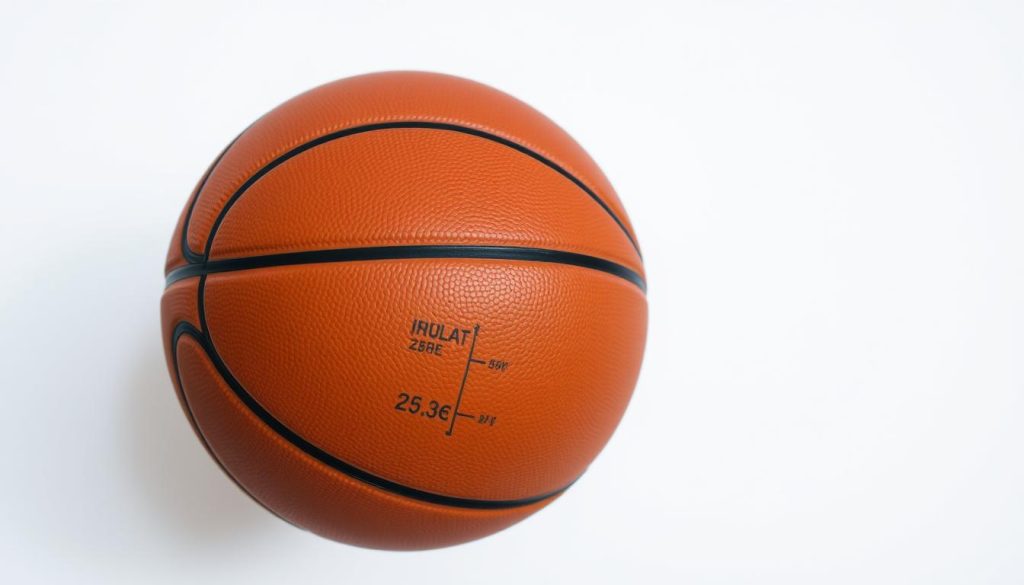
Basketball air pressure is vital for top-notch performance. The right PSI can greatly impact how players handle the ball. Knowing the correct pressure is key for practice and games.
Pro leagues have strict ball inflation rules. The NBA requires 7.5 to 8.5 PSI for basketballs. Women’s NCAA and FIBA allow 6.5 to 8.5 PSI1.
Most basketballs perform well between 7-9 PSI. This range ensures consistent play and player safety2. Careful attention to air pressure prevents gameplay issues.
Players should check their ball’s pressure before every session. This habit maintains optimal performance1. Wrong inflation can hurt ball control and accuracy.
Key Takeaways
- NBA basketballs require 7.5-8.5 PSI
- Different leagues have specific air pressure requirements
- Regular air pressure checks are essential
- Proper inflation affects ball performance and player control
- Environmental factors can impact basketball air pressure
Understanding Basketball Air Pressure Guidelines
Proper inflation is key for basketball performance. The right air pressure matters for all players, from youth to pros. Recommended pressure ranges from 7.5 to 8.5 PSI, with slight variations based on playing conditions.
Standard PSI Requirements for Different Leagues
Basketball leagues have specific air pressure rules. The NBA requires 7.5 to 8.5 PSI for official game balls. Players should note these key differences:
- Indoor basketballs: Aim for 8 to 8.5 PSI3
- Outdoor basketballs: Recommended PSI is 7.5 to 83
- Temperature impacts air pressure3
Impact of Proper Inflation on Performance
Air pressure greatly affects gameplay. A well-inflated ball ensures consistent bounce and optimal control. Underinflated balls reduce bounce and responsiveness.
Overinflated basketballs can create unpredictable bounces. This can make the game more challenging for players.
Indoor vs Outdoor Pressure Considerations
Different playing environments need different inflation approaches. Indoor basketball pressure should be slightly higher for consistent performance. Outdoor basketballs may need frequent adjustments due to temperature changes.
Regular checks with a quality air pump and gauge help maintain optimal pressure. This ensures the best playing experience in any setting.
Pro Tip: A properly inflated basketball should bounce back to about waist level when dropped from chest height3.
Essential Tools for Basketball Inflation
Inflating basketballs properly needs specific tools and careful attention. The right equipment ensures optimal ball performance. Athletes and enthusiasts require a comprehensive set of tools for accurate inflation4.
- Air Pump – Essential for adding air to the basketball
- Inflation Needle – Allows precise air insertion
- Pressure Gauge – Measures exact air pressure5
Digital pressure gauges offer amazing precision, measuring within ±0.1 PSI5. Prices for digital models range from $15 to $25. Analog versions cost between $10 and $205.
| Tool | Function | Recommended Type |
|---|---|---|
| Air Pump | Inflate basketballs | Hand or Electric Pump |
| Inflation Needle | Insert air accurately | Sport-specific Needle |
| Pressure Gauge | Measure PSI | Digital Recommended |
Regular pressure checks help maintain top performance6. The ideal inflation range is between 7.5 and 8.5 PSI5. This ensures consistent bounce and player control6.
Pro Tip: Always check your basketball’s pressure before playing to guarantee the best game experience.
Basketball Air Pressure Measurement and Testing
Measuring basketball air pressure is key for top-notch game performance. Players and coaches need reliable ways to check if their balls are properly inflated. Accurate measurement techniques are vital for this task.
Checking PSI Levels Accurately
Precise air pressure measurement prevents issues with under or overinflated basketballs. A good pressure gauge helps maintain the right PSI range1.
- NBA standard: 7.5 to 8.5 PSI
- Women’s basketball (NCAA and FIBA): 6.5 to 8.5 PSI
Check air pressure before every game or practice. This ensures the ball performs consistently1.
Bounce Test Methods
No pressure gauge? Try a bounce test. Drop a properly inflated ball from shoulder level. It should bounce to about hip height1.
This quick method helps spot potential inflation problems. It works for both under and overinflated basketballs.
Signs of Incorrect Pressure
Spotting improper inflation is crucial. Overinflated basketballs can cause several issues.
- Unpredictable ball bounce
- Reduced grip
- Decreased shooting accuracy
- Harder impact during play
Tip: Store basketballs in a cool, dry place to maintain consistent air pressure1.
Conclusion
Basketball air pressure is key for top performance. The right inflation improves your game, ensuring consistent bounce and control7. Most basketballs need 7 to 9 psi for ideal play7.
Air pressure greatly affects how a basketball performs. The ball’s bounce height relates directly to its air pressure8. Regular checks and maintenance prevent issues and extend the ball’s life8.
Proper inflation creates the best playing experience. Temperature, surface, and ball material all affect performance. Checking basketball air pressure often is crucial for serious players8.
Using these tips helps keep your ball in top shape. This can boost your skills and make the game more fun. Remember, the right pressure makes a big difference on the court.
FAQ
What is the standard air pressure for a basketball?
Most leagues require a PSI between 7.5 and 8.5. The NBA and NCAA suggest 7.5-8.0 PSI for pro and college play. This ensures consistent ball performance and bounce.
How does air pressure affect basketball performance?
Proper air pressure impacts ball control, bounce, and shooting accuracy. An underinflated ball feels sluggish and reduces control. Overinflated balls bounce too high and are hard to handle.
Are indoor and outdoor basketballs inflated differently?
Yes, outdoor basketballs might need more air due to temperature and surface changes. They often require higher pressure for rough surfaces. Indoor balls maintain standard PSI more easily.
How often should I check my basketball’s air pressure?
Check your basketball’s air pressure before every game or practice. Temperature changes and use can cause pressure shifts that affect performance.
What tools do I need to inflate a basketball correctly?
You’ll need an air pump, inflation needle, and pressure gauge. These tools help you inflate the ball to the right PSI. They also prevent damage to the ball’s inner bladder.
How can I tell if my basketball is properly inflated?
Try the bounce test: drop the ball from shoulder height. A well-inflated ball should bounce back to about 75-80% of its drop height. You can also use a pressure gauge for exact PSI.
What happens if I overinflate or underinflate my basketball?
Overinflation makes the ball hard and unpredictable, reducing control. Underinflation makes it feel heavy and reduces bounce. Both can hurt shooting and dribbling skills.
Do youth and professional basketballs have different inflation requirements?
Yes, youth basketballs often have different PSI needs based on size and player age. Pro leagues like the NBA have strict inflation rules for consistent gameplay.
Can temperature affect my basketball’s air pressure?
Yes! Temperature changes can expand or shrink air pressure. Cold temps can lower pressure, while heat might increase it. You may need to adjust pressure often.
How do I store my basketball to maintain proper air pressure?
Keep your ball in a cool, dry place away from sunlight. Avoid extreme temps and keep it inflated when not in use. This helps maintain its shape and performance.
Source Links
- Air Pressure for Basketball: Understanding PSI and Its Importance – https://www.mybasketballacademy.com/en/blog/air-pressure-for-basketball/
- How to Inflate a Basketball – https://www.spalding.com/community/howtoinflateabasketball.html?srsltid=AfmBOoqRlMKpWv7463IkIRfNFSFkHTA2JrZyB6ke5cUg9iK1h3jDP5vI
- What PSI Should Basketball Be? Find Your Perfect Bounce – https://huffsports.com/basketball/what-psi-should-basketball-be/
- How to Inflate a Basketball – https://www.spalding.com/community/howtoinflateabasketball.html?srsltid=AfmBOorl31leiFHpSZ8SrqUx9zpRtC57nc31A-LI1ga94lsmHX0wwQp4
- Understanding What’s the PSI for a Basketball: A Guide to Proper Inflation – https://sdkingsbasketball.com/whats-the-psi-for-a-basketball/
- Basketball Air Pressure and Recommended PSI – VMKONSPORT – https://vmkonsport.com/basketball-air-pressure/
- Does It Matter How Much Air Is in Your Basketball? – https://www.teachervision.com/gravity/does-it-matter-how-much-air-your-basketball
- Does Adding More Air to a Basketball Make It Bounce Higher? – https://www.gocuriousmind.com/2024/08/air-pressure-basketball-bounce.html

