
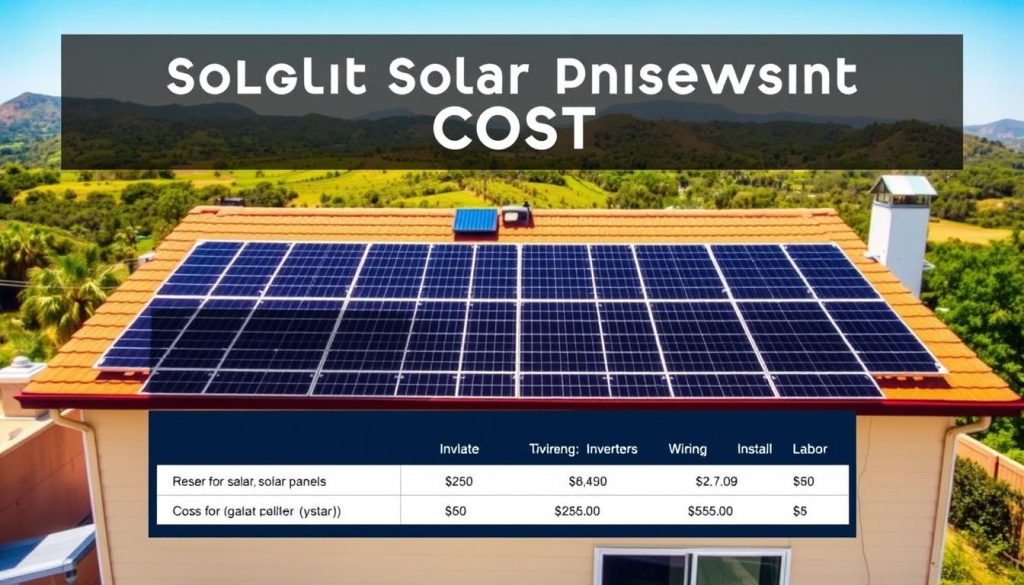
Solar panel installation costs have dropped dramatically in recent years. This makes renewable energy more accessible for American households. The average cost in 2025 is about $29,360 before federal tax credits1.
These credits can significantly reduce the overall expense. After applying them, the net cost drops to around $20,5521.
Photovoltaic system pricing varies across the United States. Factors like location, system size, and available incentives influence the cost. Over the past two decades, residential solar system prices have fallen by nearly $15,0001.
Key Takeaways
- Average solar panel installation cost is $29,360 before tax credits
- Federal tax credits can reduce net costs by approximately $8,808
- Solar system prices have decreased significantly over 20 years
- Costs vary by state and system requirements
- Long-term savings can offset initial investment
Solar Panel Installation Cost Factors
Solar energy system expenses involve various factors that influence rooftop solar costs. Homeowners need to grasp the complex pricing landscape for solar array installation. This knowledge helps determine the overall investment required.
National Average Expenses
Solar panel installation costs range from $5,000 to $40,000, with a typical expense around $12,0002. Most homeowners invest between $10,000 and $20,000 for a complete solar energy system3.
The federal solar tax credit can significantly reduce these costs. It currently offers a 26% credit on installation expenses2.
Cost Variations by State
Solar array installation fees vary greatly across different states. Here are some examples:
- Alabama: $21,047 (after tax credit: $14,733)
- California: $20,840 (after tax credit: $14,588)
- Florida: $23,351 (after tax credit: $16,346)
- New York: $24,479 (after tax credit: $17,135)
These differences result from local energy rates, sunlight exposure, and regional incentives3.
Equipment and Labor Breakdown
Rooftop solar costs include several components. Solar panels make up 12% of total installation costs. Inverters cost about $0.33 per watt.
Racking systems cost around $0.26 per watt. Labor expenses are roughly $0.17 per watt.
- Solar panels: 12% of total installation costs
- Inverter: Approximately $0.33 per watt
- Racking: Around $0.26 per watt
- Labor: Roughly $0.17 per watt
Homeowners often recoup their investment through energy savings within 7 to 10 years. Solar panels can also increase home value by 4.1%2.
Pro tip: Always consider your household’s energy usage and local electricity rates when evaluating solar investments.
Key Factors That Impact Your Solar Investment
Understanding solar power plant costs is crucial for your investment. The size of your solar system affects overall expenses. Homeowners typically need 11 kilowatts of solar capacity, with average installation costs around $20,552 after federal tax credits4.
Roof features and installation complexity influence renewable energy investments. Roof angle and material can dramatically affect pricing5. The best solar panel angle is 30 to 45 degrees for maximum energy capture.
Some roofs may need extra changes, increasing overall costs5. Local incentives can greatly reduce solar farm expenses. The federal solar tax credit offers a 30% credit on installation costs4.
State programs and net metering policies can further lower initial investments. This makes solar more accessible for homes and businesses6. Smart planning is key when considering solar investments.
Homeowners can save $31,000 to $100,000 over 25 years with solar solutions4. The average payback period is about 7.1 years. Solar energy is a sound long-term strategy for sustainable power4.
FAQ
What is the average cost of installing solar panels for a residential property?
Residential solar panel systems in the U.S. typically cost between ,000 and ,000. The federal solar investment tax credit (ITC) covers 30% of installation costs. After applying the ITC, homeowners usually pay ,500 to ,500 for a standard system.
How do solar panel costs vary by state?
Solar panel costs differ across states due to local factors and incentives. California and New York have higher costs but offer strong local incentives. Texas and Arizona often have lower expenses because of abundant sunlight and competitive markets.
What factors influence the total cost of a solar panel installation?
System size, panel efficiency, and roof characteristics impact solar panel installation costs. Local labor rates, equipment quality, and installation complexity also affect the overall investment.
The number of panels, mounting system type, and additional components like inverters influence costs too.
How can homeowners reduce their solar panel installation costs?
Homeowners can lower costs by using federal tax credits and exploring state and local incentives. Choosing the right system size and getting multiple quotes from reputable installers helps too.
Some utility companies offer rebates or net metering programs to further offset initial expenses.
How long does it take to recoup the cost of solar panel installation?
The payback period usually ranges from 6 to 10 years, depending on various factors. These include location, energy consumption, local electricity rates, and available incentives.
After this period, homeowners enjoy nearly free electricity and potential savings through net metering.
Do solar panels increase home value?
Homes with solar panel systems can see a property value increase of about 4-5%. Studies show buyers are willing to pay more for homes with existing solar installations.
This makes solar panels a valuable long-term investment for homeowners.
What maintenance costs should I expect with solar panels?
Solar panels need little upkeep, with most systems requiring minimal maintenance. Annual cleaning and occasional professional inspections might cost 0-0 per year.
Most solar panels come with 25-year warranties and are built to last with few extra expenses.
Are there financing options available for solar panel installations?
Yes, several financing options exist for solar panel installations. These include solar loans, home equity loans, solar leases, and power purchase agreements (PPAs).
Many banks and solar companies offer attractive financing with low-interest rates. This allows homeowners to spread out costs and start saving on energy right away.
Source Links
- What Do Solar Panels Cost in 2025 and Are They Worth It? – NerdWallet – https://www.nerdwallet.com/article/mortgages/solar-panel-cost
- Solar panel installation: costs, benefits and how to save – https://green-living.na.panasonic.com/articles/solar-panel-installation-costs-benefits-and-how-to-save
- Solar Panel Costs in 2025 : It’s Usually Worth It – https://www.solarreviews.com/solar-panel-cost
- Solar Panel Cost In 2025: It May Be Lower Than You Think – https://www.energysage.com/local-data/solar-panel-cost/
- 5 Factors That Affect Solar Panel Installation Cost | ARE Solar – https://aresolar.com/5-factors-that-affect-solar-panel-installation-cost/
- Solar Soft Costs Basics – https://www.energy.gov/eere/solar/solar-soft-costs-basics

