
Wheel bearing replacement can be a surprise expense for drivers. The cost usually falls between $300 and $500. This price varies based on your car’s make and model1.
Dealerships and independent mechanics often charge different prices. Some repair shops might offer significant savings1. Addressing issues early can prevent more costly repairs later.
Typically, only one wheel bearing needs replacement at a time2. The total cost includes both parts and labor. Hub-style wheel bearings can cost $80 to $300 each.
Labor costs add about $150 to $200 to the bill2. Electric vehicle owners should be extra careful. These heavier cars may put more stress on wheel bearings1.
Key Takeaways
- Average wheel bearing replacement cost: $300-$500
- Replacement typically involves single bearing, not full set
- Parts can cost between $80-$300 per bearing
- Labor costs range from $150-$200
- Early detection can prevent more expensive repairs
Understanding Wheel Bearings and Their Function
Wheel bearings are vital parts that allow smooth wheel rotation in vehicles. They help your wheels spin with little friction. These bearings support your vehicle’s weight while maintaining top performance3.
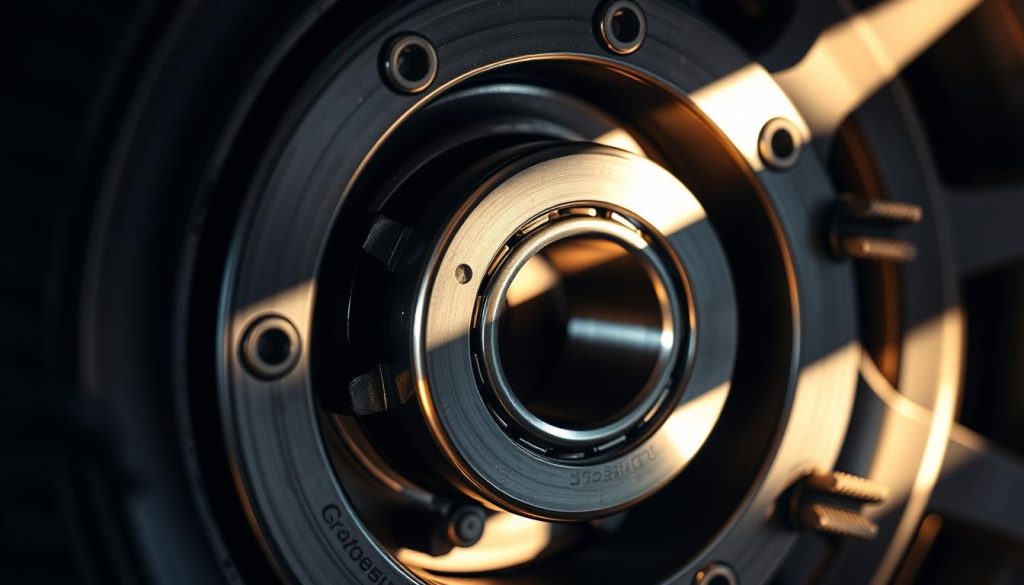
A wheel bearing is a complex device with steel balls or rollers in a metal ring. It reduces friction between the wheel and axle. This ensures smooth rotation and supports the vehicle’s weight while driving3.
What Wheel Bearings Do
These critical components perform several essential functions:
- Support the vehicle’s weight
- Enable smooth wheel rotation
- Reduce friction between moving parts
- Support steering and suspension systems
Common Signs of Wheel Bearing Failure
Car owners should look out for signs of wheel bearing problems. These can include:
- Unusual noises like humming, whirring, or grinding sounds3
- Vibrations while driving3
- Uneven tire wear3
- Vague or imprecise steering feel3
Impact of Driving Conditions on Wheel Bearing Life
Wheel bearings usually last 75,000 to 100,000 miles. This depends on driving conditions and maintenance3. Factors affecting their lifespan include:
- Road surface quality
- Driving habits
- Vehicle load
- Environmental conditions
Replacing a wheel hub assembly can cost $100 to $300 per wheel. Prices may change based on your car’s make and model3.
Wheel Bearing Replacement Cost
Knowing wheel bearing replacement costs helps car owners plan for this vital upkeep. Wheel bearing replacement costs change based on several key factors4.
Mechanic labor rates greatly affect overall expenses. Shop rates range from $47 to $215 per hour5. Different wheel bearing types also impact pricing:
- Tapered wheel bearings: $10 to $504
- Press-in wheel bearings: $30 to $1204
- Bolt-in wheel bearings: $85 to $2004
- Knuckle assembly with bearing: $250 to $5004
Pricing differences emerge between OEM vs aftermarket parts. Most car makers no longer offer serviceable tapered roller bearings4.
Replacing a sealed wheel hub bearing costs about $350 per wheel. However, total costs may exceed $1,000 depending on the car’s make and model5.
Location affects bearing replacement labor costs. Rust belt states may face higher prices due to corrosion issues4. DIY repairs can cut costs, but experts should handle complex installations4.
By understanding these factors, car owners can potentially save hundreds on repairs5.
Conclusion
Wheel bearing repair is crucial for vehicle upkeep. Costs range from $150 to $350 per bearing. Timely replacements can prevent pricier fixes later on.
DIY replacement may seem appealing, but it’s not always wise. Most modern vehicles need professional help. Wheel bearing replacement requires special tools and know-how for proper installation.
Wheel bearings typically last 100,000 to 150,000 kilometers6. Regular checks can catch early wear signs. If you’re unsure, consult a trusted mechanic.
Timely repairs can prevent costly damage. They also ensure a smoother, safer drive. Prioritizing maintenance is key to your vehicle’s long-term reliability.
Choose professional service or careful DIY replacement. Either way, focus on keeping your vehicle in top shape. Your safety and wallet will thank you.
FAQ
What exactly is a wheel bearing?
A wheel bearing is a vital part of your vehicle’s wheel hub assembly. It allows wheels to spin smoothly with minimal resistance. The bearing consists of steel balls or rollers inside a metal ring.
It reduces friction and supports the vehicle’s weight. This crucial component ensures your wheels rotate efficiently during your drive.
How much does it typically cost to replace a wheel bearing?
Wheel bearing replacement costs can range from 0 to 0. The price includes both parts and labor. Several factors affect the final cost.
These include your vehicle’s make and model, wheel location, and part choice. OEM or aftermarket parts can also influence the price.
What are the warning signs of a failing wheel bearing?
Common symptoms include loud humming or grinding noises while driving. You might also notice vibrations in the steering wheel.
Uneven tire wear and a loose feeling in the wheel are other signs. If you spot these, have a professional mechanic check your vehicle.
Can I drive with a bad wheel bearing?
Driving with a damaged wheel bearing is not recommended. It can cause more damage to your vehicle and create dangerous situations.
The wheel could seize or come off while driving. Delaying repairs often leads to more expensive fixes later.
Do wheel bearings need to be replaced in pairs?
Replacing both wheel bearings at once isn’t always necessary. However, mechanics often suggest replacing them in pairs, especially on the same axle.
This ensures even wear and prevents future issues. It can also save you from additional repair costs down the road.
How long do wheel bearings typically last?
Most wheel bearings are designed to last between 85,000 to 100,000 miles. However, their lifespan can vary based on several factors.
Driving conditions, road quality, and vehicle maintenance all play a role. Rough roads and exposure to water and salt can shorten their life.
Are wheel bearing replacements covered by warranty?
Warranty coverage for wheel bearings depends on your vehicle’s age and specific warranty. New cars often have this replacement covered under the manufacturer’s warranty.
Older vehicles may require out-of-pocket expenses. It’s best to check your warranty details for accurate information.
Can I replace a wheel bearing myself?
Wheel bearing replacement is a complex job requiring specialized tools and knowledge. It’s possible for experienced DIY mechanics, but not recommended for most.
Improper installation can lead to serious safety issues. Unless you’re highly skilled, it’s best to have a professional mechanic do the job.
Source Links
- How Much Does It Cost to Replace a Wheel Bearing – Car Talk – https://www.cartalk.com/parts-services/how-much-to-replace-wheel-bearing
- Wheel Bearing Replacement Cost Estimate – Jerry – https://getjerry.com/car-repair/estimates/wheel-bearings-replacement/
- Everything You Need To Know About Wheel Bearings – https://www.thedrive.com/maintenance-repair/37743/wheel-bearing
- How Much Does A Wheel Bearing Replacement Cost? – https://carbuzz.com/how-much-does-a-wheel-bearing-replacement-cost/
- Driving on a bad or failing wheel bearing is dangerous – https://www.familyhandyman.com/article/wheel-bearing-replacement-cost/?srsltid=AfmBOop5GXxKvoLyfnSKoEkrtp65FXAFfpvfuGzi76HtX49tSVGPOFyF
- Wheel Bearings Replacement Cost and Guide – Uchanics: Auto Repair – https://uchanics.ca/wheel-bearings-replacement-cost-and-guide/

