
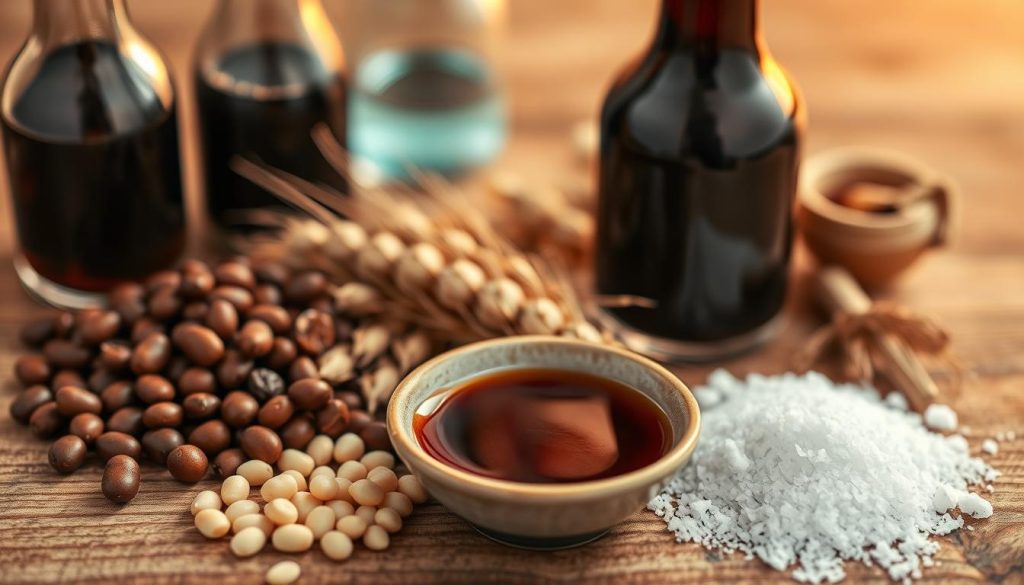
Soy sauce is a beloved condiment that adds depth to cuisines worldwide. It originated in China over 2,200 years ago. This seasoning is made from fermented soybeans, wheat, and salt1.
Soy sauce isn’t pure soybean liquid. It contains a mix of ingredients, with soybeans playing a key role2. Japanese and Chinese soy sauces have different soybean-to-wheat ratios2.
Modern techniques have changed how soy sauce is made. Traditional methods can take months or years to ferment. New acid hydrolysis techniques produce soy sauce in just 20 to 35 hours2.
These methods affect the taste and complexity of the sauce. Each region has its own unique soy sauce recipe.
Key Takeaways
- Soy sauce originated in China over 2,000 years ago
- Soybeans are a primary ingredient, but not the only component
- Fermentation time varies from hours to years
- Different regions have unique soy sauce recipes
- Modern techniques have shortened production time dramatically
Understanding Traditional Soy Sauce Production
Soy sauce is a key part of Asian cuisine. It’s made through a complex fermentation process. This process turns simple ingredients into a flavorful condiment3.
The Basic Ingredients and Ratios
Traditional soy sauce uses a careful mix of ingredients. These include soybeans, wheat, salt, and specific mold cultures.
Japanese-style soy sauces often use equal parts soybeans and wheat. This creates a unique sweet flavor3. Different types of soy sauce come from these basic ingredients.
- Soybeans
- Wheat
- Salt
- Specific mold cultures
| Soy Sauce Type | Characteristics |
|---|---|
| Koikuchi | Most common Japanese soy sauce, accounts for over 80% of market4 |
| Usukuchi | Saltier variant, with 15% market share4 |
| Tamari | Higher soybean content, stronger flavor3 |
Fermentation Process and Timeline
Fermentation is key to soy sauce’s rich taste. It uses controlled microbial cultures to change raw ingredients. Aspergillus oryzae plays a big role in this process3.
Aging soy sauce takes time and patience. Traditional soy sauces age for at least 6 months. Premium versions may ferment for years to develop complex flavors43.
Traditional vs Modern Manufacturing Methods
Traditional methods use slow fermentation. Modern techniques like chemical hydrolysis are faster. However, traditional brewers say this quick process lacks the deep flavor of natural fermentation3.
Keeping traditional brewing methods alive is important. It ensures soy sauce remains a symbol of culinary skill. This connects us to centuries of food history3.
Soy in soy sauce: Composition and Nutritional Content
Soy sauce is a complex flavor enhancer with minimal soy protein. It’s made from soybeans, wheat, salt, water, and microorganisms like Aspergillus oryzae5. Chinese sauces use an 80:20 soybean-to-wheat ratio, while Japanese versions prefer a 50:50 blend5.
A tablespoon of soy sauce contains 8-15 calories, 1 gram of protein, and no fat67. The main concern is sodium, with one tablespoon providing 38% of the daily recommended intake67. Use soy sauce sparingly, especially if you’re watching your sodium intake.
Fermentation greatly affects soy sauce’s flavor and nutrition. Traditional methods take years, while modern techniques produce sauce in days5. Experts suggest moderate consumption to enjoy its taste without overdoing sodium.
Dark soy sauce may offer antioxidant benefits, but more research is needed6. Enjoy soy sauce’s unique flavor in moderation for the best balance of taste and health.
FAQ
What exactly is soy sauce?
Soy sauce is a liquid condiment made from fermented soybeans, wheat, salt, and water. It adds rich, umami depth to dishes. Brands like Kikkoman and Lee Kum Kee have made it a global pantry staple.
How are soybeans transformed into soy sauce?
The traditional process involves fermenting soybeans with koji, wheat, and salt. This fermentation can take months to develop the sauce’s flavor and color. Modern methods have streamlined this process, but core principles remain similar.
How much actual soy is in soy sauce?
Soy sauce contains little soy protein. The fermentation breaks down the soybeans, making it more of a flavor enhancer. Different varieties may have varying soy content, but it’s generally low.
Is soy sauce gluten-free?
Traditional soy sauce contains wheat, so it’s not gluten-free. Tamari is a gluten-free alternative that uses little to no wheat. It’s suitable for those with gluten sensitivities.
What’s the difference between light and dark soy sauce?
Light soy sauce is thinner and saltier, used for seasoning. Dark soy sauce is thicker, slightly sweeter, and used for color and depth. Each type brings a unique flavor to different dishes.
How should I store soy sauce?
Store opened soy sauce in a cool, dark place or refrigerate. Most commercial soy sauces last up to a year if properly sealed. Always check the bottle for specific storage instructions.
Can soy sauce go bad?
Soy sauce has a long shelf life due to its high salt content. However, it can lose flavor and quality over time. Signs of spoilage include off-odors, color changes, or mold growth.
Source Links
- Soy sauce – https://en.wikipedia.org/wiki/Soy_sauce
- What to Know About Soy Sauce – https://www.webmd.com/diet/what-to-know-soy-sauce
- A Guide to Soy Sauce Varieties – https://www.seriouseats.com/do-you-know-your-soy-sauces-japanese-chinese-indonesian-differences
- Basics: Japanese soy sauce – all you need to know (and then some) – https://www.justhungry.com/handbook/just-hungry-handbooks/basics-japanese-soy-sauce-all-you-need-know
- Chemical and Sensory Characteristics of Soy Sauce: A Review – https://pmc.ncbi.nlm.nih.gov/articles/PMC7581291/
- Soy Sauce: Benefits, Uses, And Nutritional Facts- HealthifyMe – https://www.healthifyme.com/blog/soy-sauce/
- How Is Soy Sauce Made and Is It Bad for You? – https://www.healthline.com/nutrition/is-soy-sauce-bad-for-you

