
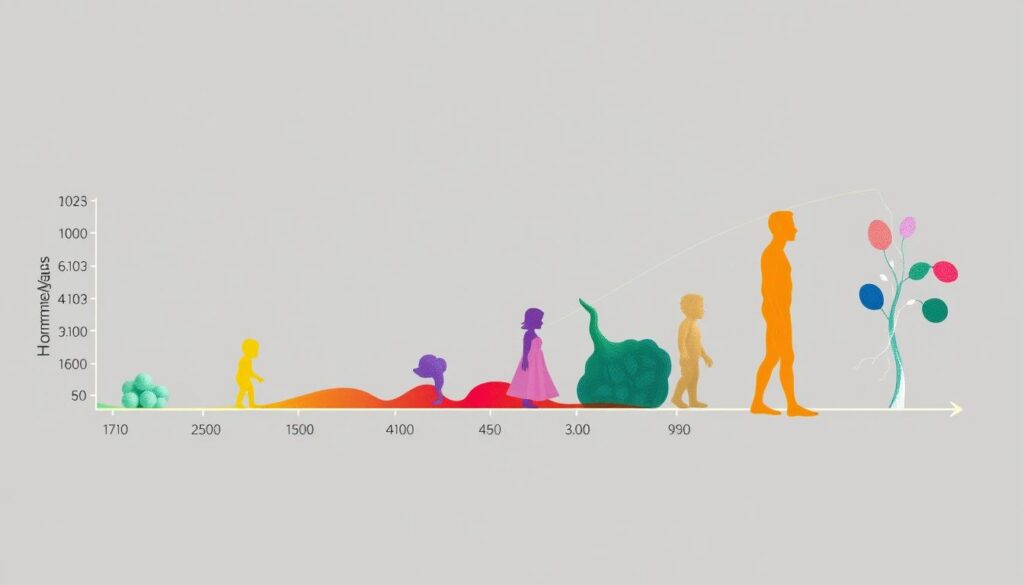
Testosterone is vital for male development and function. It changes throughout your life, affecting your health and wellness1.
Your testosterone peaks at 18 and slowly declines in adulthood1. After 40, levels drop 1-2% yearly2. This natural process impacts many aspects of male health.
Testosterone levels vary at different life stages. Young adults range from 300-1000 ng/dL. Middle-aged men see a gradual decline to 200-900 ng/dL3.
Tracking testosterone becomes more important as you age2. Over a third of men above 45 have below-normal levels2.
Healthy male testosterone levels are usually 450-600 ng/dL. Levels under 300 ng/dL are considered low1.
Key Takeaways
- Testosterone levels peak around age 18 and gradually decline
- Normal testosterone ranges vary by age group
- Annual decline is typically 1-2% after age 40
- Monitoring testosterone levels is crucial for male health
- Lifestyle factors can influence hormone production
Understanding Testosterone’s Role in Your Body
Testosterone is vital for male health. It affects muscle growth, emotions, and more. Your body’s hormone balance impacts many aspects of your physical and mental health.
Testosterone levels change throughout your life. This can lead to andropause and hormone imbalance. Knowing how this hormone works helps maintain good health.
The Science Behind Testosterone Production
Leydig cells in your testicles make testosterone. Levels are highest in the morning and drop during the day4.
Late-onset male hypogonadism affects about 2% of men over 40. It’s often linked to obesity and Type 2 diabetes4.
- Testosterone regulates muscle mass
- Controls fat distribution
- Influences bone density
- Impacts sexual function
Key Functions of Testosterone in Male Health
Testosterone is crucial for your physical and mental health. Low levels can cause serious problems:
- Reduced muscle mass
- Potential depression
- Erectile dysfunction
- Risk of osteoporosis
How Testosterone Converts to Estradiol
Your body changes some testosterone into estradiol, a type of estrogen. A study of 400 healthy men showed interesting results.
Both testosterone and estradiol levels greatly affect libido and erectile function5.
| Hormone | Primary Function | Impact on Body |
|---|---|---|
| Testosterone | Muscle development | Increases strength |
| Estradiol | Bone density | Regulates fat distribution |
Understanding your hormone balance is key to maintaining overall health and wellness.
The link between testosterone and estradiol is complex. It shows how androgen deficiency and hormone regulation work in your body.
Testosterone Levels by Age: What’s Normal for You
Knowing your testosterone levels is key to good health. Adult males usually have 265 to 923 ng/dL of testosterone in their blood6. These levels change as you age.
Men start to see a slow drop in testosterone around age 307. Let’s look at normal levels for different ages:
Testosterone affects many parts of your health. Low testosterone can cause less energy, weight gain, and mood swings. You might feel these things if your levels drop too low:
- Reduced energy levels
- Weight gain
- Low mood
- Potential erectile dysfunction7
You can boost testosterone naturally by changing your lifestyle. Try these steps:
- Regular physical activity
- Maintaining a healthy diet
- Limiting alcohol intake
- Managing stress levels7
“Know your body, understand your hormone levels, and take proactive steps towards optimal health.”
If you’re worried about your testosterone, talk to a doctor. They might suggest testosterone replacement therapy if your levels stay low7.
Signs and Symptoms of Changing Testosterone Levels
Testosterone is vital for your health. Knowing its changes helps spot hormone imbalances early. Your body changes as you age, affecting testosterone production.
Physical Changes You Might Notice
Low testosterone can cause various physical symptoms. You might experience:
- Reduced sex drive
- Erectile dysfunction
- Increased body fat
- Decreased muscle mass and strength
- Reduced endurance
The American Urology Association defines low testosterone as less than 300 ng/dL. About 2.1% of men may have Testosterone Deficiency Syndrome (TD)8.
Research shows 30% of overweight men have Low-T. This compares to only 6.4% of men with normal weight8.
Mental and Emotional Impact
Hormone levels affect more than physical health. Hormone imbalance can greatly impact your mental well-being. Common mental symptoms include:
- Depressed mood
- Difficulty concentrating
- Reduced motivation
- Potential mood swings
“Understanding your body’s hormonal changes is key to maintaining overall health and quality of life.”
Effects on Muscle Mass and Bone Density
Men naturally lose 3-5% of muscle mass per decade after 30. This loss speeds up after 60, partly due to decreasing testosterone.
Low testosterone can decrease bone density. This increases the risk of osteoporosis. Medical research confirms these effects.
Normal testosterone levels in men range from 300 to 1,000 ng/dL9. If you have ongoing symptoms, see a doctor. They can help with low testosterone symptoms and treatment options.
Conclusion
Healthy testosterone levels are vital for your overall well-being. These male hormones affect physical and mental health. Testosterone levels naturally change as you age10.
After 30, testosterone typically drops about 1% yearly. This decline can impact various aspects of your health11.
Andropause is a crucial period of hormonal changes. Many men experience less energy, muscle changes, and mood shifts12. A detailed study shows individual experiences can vary greatly.
Lifestyle choices can support natural testosterone production. Exercise, good nutrition, and stress management are helpful. Quality sleep and a healthy weight also play important roles.
If symptoms persist, consult a healthcare professional. They may suggest testosterone replacement therapy for your specific needs11.
Every man’s hormonal journey is unique. Regular check-ups and understanding your body’s signals are important. A holistic health approach can help you manage testosterone changes confidently.
FAQ
What is testosterone and why is it important?
Testosterone is the main male sex hormone. It’s crucial for sexual development, muscle mass, and bone density. This hormone impacts your physical and mental health, affecting muscle strength and energy levels.
How do testosterone levels change as I age?
Testosterone peaks in adolescence and early adulthood. After 30, it declines by 1-2% yearly. This drop is normal, but significant decreases can affect your life quality.
Normal ranges vary by age. Levels typically decrease from 252-916 ng/dL in your 40s to 156-819 ng/dL in your 70s.
What are the signs of low testosterone?
Low testosterone can cause reduced sex drive and erectile dysfunction. It may increase body fat and decrease muscle mass and strength. Mental health impacts can include mood changes and concentration difficulties.
You might also notice smaller testicles and reduced bone density.
How can I naturally maintain healthy testosterone levels?
Support testosterone production with a healthy lifestyle. Exercise regularly and eat a balanced diet. Maintain a healthy weight and manage stress effectively. Get quality sleep and avoid excessive alcohol and drug use.
When should I consider testosterone replacement therapy?
Consider therapy if you have persistent low testosterone symptoms confirmed by medical tests. It’s for men with diagnosed low testosterone. Always pursue this under careful medical supervision.
How is testosterone produced in the body?
Leydig cells in your testicles produce testosterone. Some converts to estradiol, a form of estrogen. This conversion affects bone mass and fat distribution. As you age, natural production decreases.
What time of day is best for testosterone testing?
The Endocrine Society suggests morning testing after overnight fasting. Testosterone levels naturally fluctuate, with highest levels typically in the morning. If results are low, your doctor may recommend repeat testing.
Can low testosterone lead to other health problems?
Untreated low testosterone can contribute to heart disease, diabetes, and osteoporosis. It impacts muscle mass too. Men lose about 3-5% of muscle mass per decade after 30.
Source Links
- Testosterone Levels by Age: Normal Levels for Males and Females – https://www.healthline.com/health/low-testosterone/testosterone-levels-by-age
- How Aging Affects Testosterone and Muscle Mass in Men – https://www.hss.edu/article_muscle-mass-testosterone.asp
- Testosterone Levels by Age – Atlantic Urology Specialists – Serving Myrtle Beach and the Grand Strand – https://atlanticurologyclinics.com/blog/testosterone-levels-by-age/
- Testosterone: What It Is, Function & Levels – https://my.clevelandclinic.org/health/articles/24101-testosterone
- Understanding How Testosterone Affects Men – https://www.nih.gov/news-events/nih-research-matters/understanding-how-testosterone-affects-men
- What are normal testosterone levels? Ages, males, females, and more – https://www.medicalnewstoday.com/articles/323085
- What Is A Normal Testosterone Level For Your Age? – https://www.medichecks.com/blogs/testosterone/what-is-a-normal-testosterone-level-for-your-age
- Low Testosterone: Symptoms, Diagnosis & Treatment – https://www.urologyhealth.org/urology-a-z/l/low-testosterone
- Testosterone Levels: Normal Levels by Age, Gender, and More – https://www.verywellhealth.com/testosterone-levels-5212199
- Testosterone and Health Outcomes – Testosterone and Aging – https://www.ncbi.nlm.nih.gov/books/NBK216175/
- What are normal male testosterone levels? – Centre for Men’s Health – https://www.centreformenshealth.co.uk/what-are-normal-male-testosterone-levels
- Serum Total Testosterone Level and Identification of Late-Onset Hypogonadism: A Community-Based Study – https://icurology.org/DOIx.php?id=10.4111/kju.2013.54.9.619

