
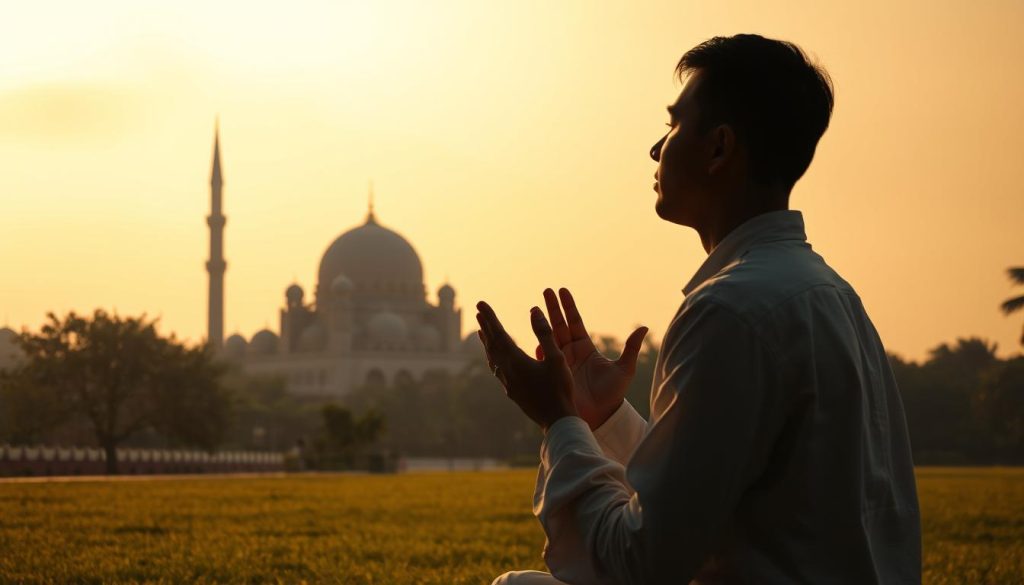
Becoming a Muslim is a transformative journey of spiritual discovery. It offers a path of profound meaning for those seeking a deeper connection with God. A Muslim is someone who submits to God’s will, transcending all boundaries1.
The Shahada declaration is the primary gateway to embracing Islam. By reciting “La ilaha illa Allah, Muhammadur rasoolu Allah”, individuals officially become Muslims2. This powerful statement means “There is no true god but God (Allah) and Muhammad is the Messenger of God”.
Every year, thousands of Americans explore the path to Islam. People from diverse backgrounds find a spiritual home in this faith1. The conversion process welcomes individuals from various ethnicities, including African American, Euro-American, and Hispanic communities.
An estimated 25% of American Muslims are converts3. This reflects the dynamic and inclusive nature of the Islamic faith. Each person’s journey is unique, but the fundamental steps remain consistent.
These steps include understanding the beliefs and making a sincere declaration of faith. Embracing a new spiritual identity is also part of the process. The Muslim community welcomes new converts with support and guidance.
Key Takeaways
- Becoming a Muslim involves a sincere declaration of faith
- The Shahada is the central ritual in converting to Islam
- Conversion transcends racial and ethnic boundaries
- Muslims welcome new converts with support and guidance
- The process is deeply personal and spiritually transformative
Understanding the Fundamentals of Islamic Faith
Islamic faith is a deep spiritual journey of submission and peace. It guides believers toward spiritual fulfillment and divine connection. Islam means “peace and submission” in Arabic, capturing the essence of Muslim beliefs4.
What Islam Truly Means
Islamic teachings focus on surrendering to Allah (God). This shapes every part of a believer’s life. Submission brings inner peace through spiritual discipline and divine guidance5.
Core Islamic Beliefs
Islamic faith rests on key principles that shape a Muslim’s worldview:
- Belief in One God (Allah)
- Belief in Angels4
- Belief in Divine Scriptures
- Belief in Prophets
- Belief in the Day of Judgment4
- Belief in Divine Predestination4
The Five Pillars of Islam
These practices form the core of Islamic worship and community:
- Shahada: Declaration of faith in Allah5
- Salah: Five daily prayers5
- Zakat: Giving 2.5% of wealth to charity5
- Sawm: Fasting during Ramadan5
- Hajj: Pilgrimage to Mecca5
These pillars help Muslims grow spiritually. They connect believers with the global faith community5.
How to Become a Muslim: The Conversion Process
Embracing Islam is a profound spiritual journey. It welcomes people from all walks of life. The process is deeply personal yet beautifully simple6.
Becoming a Muslim means submitting to God. It involves accepting a transformative Islamic way of life6. The first step is reciting the shahada, a declaration of faith.
The shahada states: “La ilaha illa Allah, Muhammadur rasoolu Allah”. This means “There is no god but God, and Muhammad is the messenger of God”6.
This declaration shows your sincere belief. It marks your entry into the global Muslim community of about 2 billion people6.
- Understand the core beliefs of Islam
- Recite the shahada with conviction
- Seek guidance from local Muslim communities
When you convert to Islam, you receive spiritual renewal. This includes forgiveness of past sins and the promise of eternal Paradise6.
Essential requirements for conversion include:
- Believing the Quran is God’s literal word
- Accepting Islam as your chosen path
- Committing to worship only God
You can declare your faith privately. However, many find strength in converting at a mosque. There, supportive community members can guide your first steps6.
Essential Practices After Converting to Islam
Embracing Islam requires dedication and continuous learning. New Muslims must adapt gradually to Muslim practices. Creating a support system with other converts can ease the transition and provide guidance.
Learning the faith is like climbing a ladder. Focus on establishing personal practices rather than mimicking others. Approach spiritual development with self-kindness, recognizing challenges as part of growth.
Daily Prayers and Their Importance
Daily prayers are crucial in Muslim practices. New converts should learn Salah in Arabic and English. This establishes a profound spiritual connection.
Local Islamic centers offer resources to help master these essential rituals7.
Dietary Requirements and Lifestyle Changes
Islamic lifestyle involves significant dietary changes. Muslims must follow halal food guidelines and avoid alcohol. This commitment represents a holistic approach to spiritual and physical well-being8.
Building Connection with the Muslim Community
Connecting with local Muslims is vital for spiritual growth. Participate in study circles and attend Islamic lectures. Engage in community events to deepen your understanding of faith7.
These connections provide emotional support and practical guidance. They’re essential throughout your spiritual journey9.
FAQ
What does it mean to be a Muslim?
Being Muslim means submitting to Allah’s will and following Prophet Muhammad’s teachings. It’s a spiritual journey of faith and practice. Muslims strive to live by Islamic principles of compassion, peace, and righteousness.
Is converting to Islam difficult?
Converting to Islam is simple. The main step is declaring the Shahada, or testimony of faith. This involves sincerely proclaiming that Allah is the only god and Muhammad is His messenger.
The process is personal and can be done with local mosque support. Many Muslim communities offer guidance for new converts.
Do I need to know Arabic to become a Muslim?
Learning Arabic helps understand the Quran and perform prayers, but it’s not required. Many new Muslims learn Arabic over time. Translations are available to help understand Islamic teachings.
What are the fundamental beliefs in Islam?
Core beliefs include Tawhid (oneness of God), angels, divine scriptures, and prophets. Muslims also believe in the Day of Judgment and divine predestination.
Islam emphasizes a direct relationship with Allah. Following Prophet Muhammad’s guidance is central to the faith.
What changes will I need to make in my lifestyle?
Converting to Islam involves new practices like five daily prayers and following halal dietary guidelines. Muslims avoid alcohol and pork, dress modestly, and fast during Ramadan.
Islam offers a holistic approach to living. It covers spiritual, physical, and social aspects of life.
How will the Muslim community support me after conversion?
Muslim communities warmly welcome new converts. Most mosques offer support programs, study circles, and mentorship. These resources help you learn Islamic practices and connect with other Muslims.
Is there a formal ceremony for converting to Islam?
The main “ceremony” is declaring the Shahada, which can be done privately or publicly. Many new converts declare their faith before Muslim witnesses as a meaningful spiritual moment.
How can I learn more about Islamic practices?
Many resources are available, including mosque classes, online courses, and Islamic books. YouTube lectures and community study groups are also helpful. Connecting with knowledgeable Muslims is encouraged in Islam.
Do I have to change my name when I become a Muslim?
Changing your name isn’t mandatory in Islam. Some converts choose to adopt a Muslim name. It’s a personal choice and not required for practicing the faith.
How do I start practicing daily Islamic rituals?
Start by learning prayer basics, understanding the Qibla direction, and practicing simple daily supplications. Many mosques offer beginner classes to help new Muslims learn these essential practices.
Source Links
- Becoming a Muslim – https://pluralism.org/becoming-a-muslim
- BBC – Religion – Islam: Beginner’s guide to Islam – https://www.bbc.co.uk/religion/religions/islam/conversion/beginner_1.shtml
- Conversion to Islam – https://en.wikipedia.org/wiki/Conversion_to_Islam
- Chapter 1: Islamic Beliefs and Teachings – https://www.alislam.org/book/pathway-to-paradise/islamic-beliefs-teachings/
- Major Themes – Islamic Beliefs, Law And Practice | Muslims | FRONTLINE – https://www.pbs.org/wgbh/pages/frontline/shows/muslims/themes/beliefs.html
- IFI Becoming a Muslim – https://islamicfoundation.ie/discover-islam/becoming-a-muslim/
- What You Should Know About Converting to Islam – https://www.learnreligions.com/how-to-convert-to-islam-2004198
- Common Mistakes Converts Can Make7 min read – https://www.whyislam.org/common-mistakes-converts-can-make/
- What is Your Best Advice for a New Eager Convert to Islam? | About Islam – https://aboutislam.net/counseling/ask-about-islam/best-advice-for-a-new-eager-convert-to-islam/

