
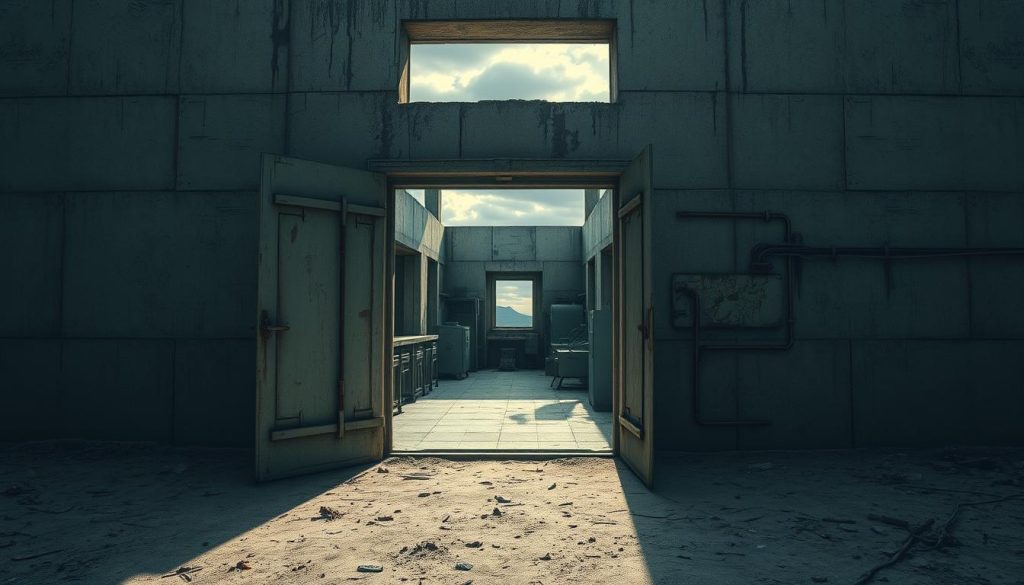
Planning for nuclear emergencies is crucial for survival. A fallout shelter can boost your family’s chances during a nuclear event1. A basic shelter can protect four people in a 10 x 10 x 10 feet space1.
Nuclear shelter building requires understanding radiation shielding principles. The design must consider thermal risks from nuclear weapons1. Effective planning is key for proper radiation protection.
DIY underground bunkers are affordable for emergency prep. They cost around $1,000 and provide essential safety2. With teamwork, you can build one in two days or less2.
Key Takeaways
- Fallout shelters are crucial for nuclear emergency survival
- Basic shelters can protect 4 people in a compact space
- DIY construction is possible with minimal investment
- Radiation protection requires strategic design and materials
- Emergency preparedness saves lives during nuclear events
Planning Your Underground Shelter Location
Building survival bunkers demands careful preparation and strategic planning. Many security-conscious Americans are investing in underground shelters for safety. Your shelter’s location is crucial for protection during emergencies.
Selecting Stable Ground and Safe Distance
Choosing the right location for blast shelters involves several critical factors. Prioritize stable ground with a solid geological foundation. Look for areas with minimal landslide risk and distance from potential hazards.
A nuclear weapon can create thermal pulses that set areas ablaze up to 20 miles away3. Position your shelter strategically to minimize exposure to potential blast zones.
- Solid geological foundation
- Minimal risk of landslides
- Distance from potential hazard zones
Analyzing Local Topography and Water Tables
Understanding local terrain is vital for successful underground shelter construction. The ideal water table should be at least 4 feet deep4. This ensures proper drainage and structural integrity.
Avoid areas with shallow water tables. These can weaken your shelter’s foundation and compromise its safety.
| Location Criteria | Recommended Specifications |
|---|---|
| Water Table Depth | Minimum 4 ft (1.2 m) |
| Ground Stability | Firm, well-drained soil |
| Distance from Hazards | Beyond thermal pulse radius |
Creating Construction Blueprints
Developing comprehensive blueprints is key to building a robust underground shelter. Consider precise measurements and structural calculations. Choose materials suited to local conditions and integrate safety systems.
- Precise measurements and structural calculations
- Materials suited to local environmental conditions
- Integrated safety and ventilation systems
A well-planned shelter must be self-sufficient for long-term occupation5. Account for food, water, power, and oxygen needs. Careful planning transforms your shelter into a comprehensive survival solution.
Shelter Infrastructure and Safety Features
Doomsday prepping demands careful planning of vital systems to sustain life in emergencies. A strong bomb shelter needs top-notch support mechanisms. These systems must be tough and have backups to protect people.
Air filtration is key for shelter survival. Good ventilation stops harmful gas buildup and ensures clean air. The ventilation setup should include specialized NBC filters for effective removal. A hand-operated pump can provide backup air if power fails.
Water management is crucial for bomb shelters. A good water plan includes storage and filtration systems. Experts suggest installing a rainwater or groundwater filter. They also recommend keeping a 90-day water supply.
Energy-saving solutions like LED lights and diesel generators support these systems. They help minimize resource use while keeping people alive6.
Emergency power is essential for doomsday prepping. Diesel or propane generators offer reliable power with a longer shelf life than gasoline. Regular upkeep and checks keep the shelter working and safe from radiation6.
FAQ
What exactly is a fallout shelter?
A fallout shelter protects people from radioactive fallout after a nuclear event. These underground structures block harmful radiation. They create a safe space for survival during nuclear emergencies.
How much does it typically cost to build a fallout shelter?
Fallout shelter costs range from ,000 to 0,000. The price depends on size, complexity, and location. Basic shelters start around ,000.
Advanced bunkers with comprehensive safety systems cost much more. These offer better protection against radiation.
Can I convert an existing space into a fallout shelter?
Yes, you can modify basements, underground garages, or storm cellars for nuclear shelter use. Reinforce walls and add proper air filtration systems.
Create radiation shielding using concrete, earth, or special protective barriers. These steps help ensure safety during emergencies.
What are the most critical systems needed in a fallout shelter?
Essential systems include air filtration, water purification, and emergency power generation. Radiation-proof communication equipment, food storage, and waste management are also crucial.
Having backup systems is important for long-term survival. This ensures continued protection during nuclear emergencies.
How long can people survive in a well-prepared fallout shelter?
A well-equipped bunker can support people for 2-4 weeks. This covers the highest radiation risk period after a nuclear event.
Advanced shelters with good resource management may allow for longer survival. Proper planning and supplies are key.
What materials provide the best radiation protection?
Dense materials like concrete, packed earth, and lead offer the best protection. Specialized radiation-blocking composites are also effective.
Thick walls of at least 3 feet help reduce radiation. Using multiple layers of different materials increases safety.
Do I need professional help to build a fallout shelter?
While DIY is possible, expert help is highly recommended. Consult emergency preparedness experts, structural engineers, and nuclear safety professionals.
They ensure proper design, structural integrity, and thorough radiation protection. Their knowledge helps create a safer shelter.
How do I choose the best location for an underground shelter?
Pick locations away from potential nuclear targets on stable ground with good drainage. Consider ground composition and water table levels.
Check the proximity to potential blast zones. Ensure easy construction access. Avoid areas with high flood risk.
What supplies should I stock in my fallout shelter?
Stock non-perishable food, water purification systems, and medical kits. Include radiation detection equipment and communication devices.
Keep spare parts for critical systems, clothing, and sleeping gear. Store enough supplies to last at least 2-4 weeks.
Can existing buildings provide adequate radiation protection?
Some buildings offer better protection than others. Concrete structures and underground spaces can provide partial protection.
Buildings with thick walls also help. However, purpose-built shelters with special materials offer the best radiation shielding.
Source Links
- How to Build a Fallout Shelter (with Pictures) – wikiHow – https://www.wikihow.com/Build-a-Fallout-Shelter
- How to build a cheap DIY underground bunker to protect you from nuclear fallout, in 6 steps – https://www.businessinsider.com/cheap-diy-underground-bunker-fallout-shelter-2023-5
- What are Bomb Shelters, Fallout Shelters, and Bunkers? How to Prepare – https://ussaferoom.com/fallout-shelter-bomb-shelter-bunkers/
- How to Build an Underground Bunker (with Pictures) – wikiHow – https://www.wikihow.com/Build-an-Underground-Bunker
- Planning for your underground bunker or bomb shelter | Fortified Estate – https://fortifiedestate.com/underground-bunker/
- How To Build An Underground Bunker You Could Live In – https://buildingelements.com/how-to-build-underground-bunker/

