
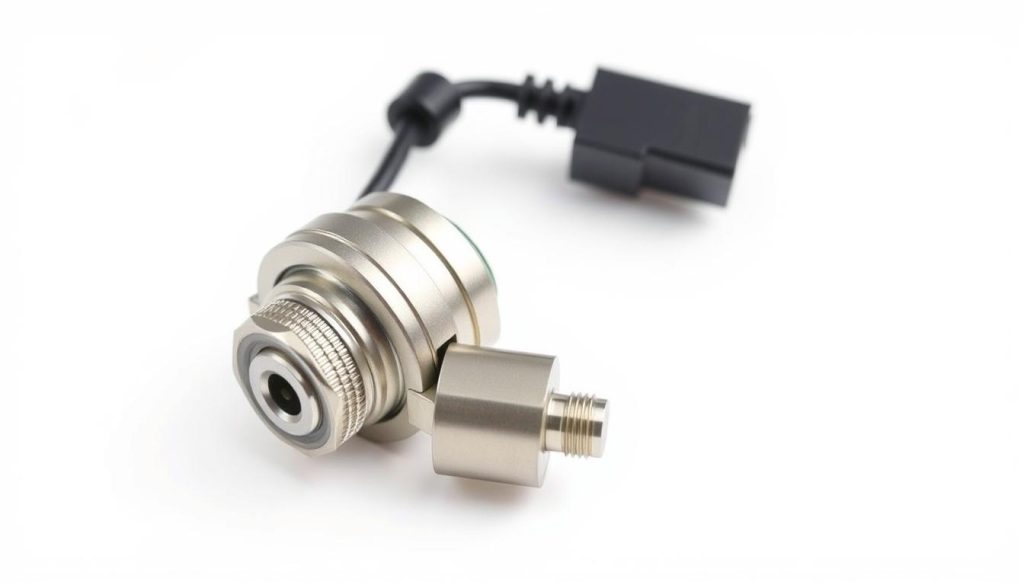
Your car’s oxygen sensor is vital for top performance and fuel efficiency. Replacing it can boost your car’s health and cut harmful emissions1. Failing sensors can cause many problems that affect your driving.
Oxygen sensors watch exhaust gases and help your engine make precise fuel adjustments. Knowing how to fix these sensors can save money and prevent damage1.
Oxygen sensors usually last between 50,000 and 100,000 miles. This depends on how you drive1. A bad sensor can drop fuel economy by up to 20%1.
Key Takeaways
- Oxygen sensors are crucial for engine performance and emissions control
- Regular maintenance can prevent costly repairs
- Signs of sensor failure include reduced fuel efficiency
- Replacement costs range from $100 to $300
- DIY replacement is possible with proper tools and knowledge
Understanding Oxygen Sensors and Their Importance
Oxygen sensors are vital in modern automotive Engine Diagnostics. They monitor oxygen levels in exhaust gases, providing feedback to your car’s engine control unit2. These small devices ensure optimal vehicle performance and serve as critical Emissions Components.
Most vehicles have multiple oxygen sensors in the exhaust system. Typically, cars have at least two sensors: one before and one after the catalytic converter3. These sensors help maintain the perfect balance of air and fuel.
What is an Oxygen Sensor?
Robert Bosch developed oxygen sensors in the late 1960s. They became standard in all cars made after 19802. Their main job is to watch exhaust gas makeup.
- Monitor exhaust gas composition
- Regulate fuel supply
- Optimize engine performance
Signs of a Failing O2 Sensor
Spotting a failing oxygen sensor is key for Automotive Maintenance. Look out for these red flags:
- Illuminated “check engine” light2
- Decreased fuel efficiency (10-20% increase in fuel consumption)3
- Rough engine idle
- Failing emissions tests2
Impact on Vehicle Performance
A faulty oxygen sensor can cause big problems. It may lead to poor fuel economy and higher emissions2. It can also damage important engine parts like the catalytic converter.
Regular checks can prevent these issues. They help keep your vehicle running at its best3.
How to Change an Oxygen Sensor
DIY car enthusiasts can replace O2 sensors with the right approach. Four-cylinder engines typically have 2 sensors, while V6 and V8 engines usually have 44. Most home mechanics can finish this task in under an hour, saving up to £1504.
You’ll need specific tools for O2 sensor replacement. These include a specialized O2 sensor socket, floor jack, jackstands, and various screwdrivers4. Take care not to damage the electrical connector or contaminate the sensor4.
To help loosen the old sensor, run the engine for 1-2 minutes4. Mark two connectors – one for front sensors and one for rear5. Remove at least two zip-ties to free the wires5.
When installing the new sensor, apply anti-seize compound to the threads. Be careful not to touch the ceramic part4. Hand-tighten the sensor first to prevent cross-threading. Then, use a wrench to secure it firmly5.
Replacing an oxygen sensor can boost your vehicle’s performance and fuel efficiency. Look out for signs of a failing sensor. These include loss of power, fluctuating idle, and poor fuel economy4.
If you’re unsure about any step, it’s best to consult a professional mechanic. Safety should always be your top priority when doing car repairs.
FAQ
What exactly is an oxygen sensor?
An oxygen sensor monitors exhaust gases in your vehicle’s emissions control system. It sends data to the engine control unit. This helps maintain the best air-fuel ratio for efficient combustion and lower emissions.
How do I know if my oxygen sensor needs replacement?
Signs of a failing oxygen sensor include decreased fuel efficiency and poor engine performance. You might notice rough idling, a lit check engine light, or failed emissions tests. An unusual exhaust smell can also indicate a problem.
How difficult is it to change an oxygen sensor?
Changing an oxygen sensor is a moderate DIY task. You’ll need basic tools and some mechanical knowledge. Required items include an oxygen sensor socket, anti-seize compound, and the correct replacement sensor.
Many car owners can do this repair. However, those unsure about automotive work should consult a professional mechanic.
How many oxygen sensors does a typical vehicle have?
Most vehicles have multiple oxygen sensors. They’re usually placed before and after the catalytic converter. The exact number depends on your car’s make, model, and engine type.
What tools do I need to change an oxygen sensor?
You’ll need an oxygen sensor socket or wrench and anti-seize compound. Other tools may include a jack, jack stands, and protective gloves.
You might also need a wrench to disconnect the electrical connection. Always check your vehicle’s repair manual for specific requirements.
How long does an oxygen sensor typically last?
Most oxygen sensors last between 60,000 to 100,000 miles. This varies based on driving conditions and vehicle maintenance. Some sensors may fail earlier due to extreme temperatures or poor fuel quality.
Can a bad oxygen sensor damage my car?
A failing oxygen sensor can reduce fuel efficiency and increase emissions. It may damage the catalytic converter and cause poor engine performance. If ignored, it can lead to more serious engine and exhaust system problems.
How much does it cost to replace an oxygen sensor?
The cost of replacing an oxygen sensor varies by vehicle make and model. The part usually costs between and 0. Professional installation can add to 0 in labor costs.
DIY replacement can save you money on labor. Always consult your car’s manual before attempting any repairs.
Source Links
- Replacing a Broken Oxygen Sensor: What You Need to Know – Insights from South Charlotte Hyundai – https://www.southcharlottehyundai.com/blog-replacing-a-broken-oxygen-sensor-what-you-need-to-know-insights-from-south-charlotte-hyundai.htm
- The Best Auto Repair Service in the Pensacola Area! – DeBroux Automotive – https://debrouxautomotive.com/the-importance-of-oxygen-sensors/
- Making Sense of Sensors: The Oxygen Sensor – https://www.delphiautoparts.com/resource-center/article/making-sense-of-sensors-the-oxygen-sensor
- Oxygen sensor replacement – https://haynes.com/en-gb/tips-tutorials/oxygen-sensor-replacement
- DIY: Post-cat O2 (oxygen) sensors replacement (w/pics) – https://www.e46fanatics.com/threads/diy-post-cat-o2-oxygen-sensors-replacement-w-pics.812590/

