
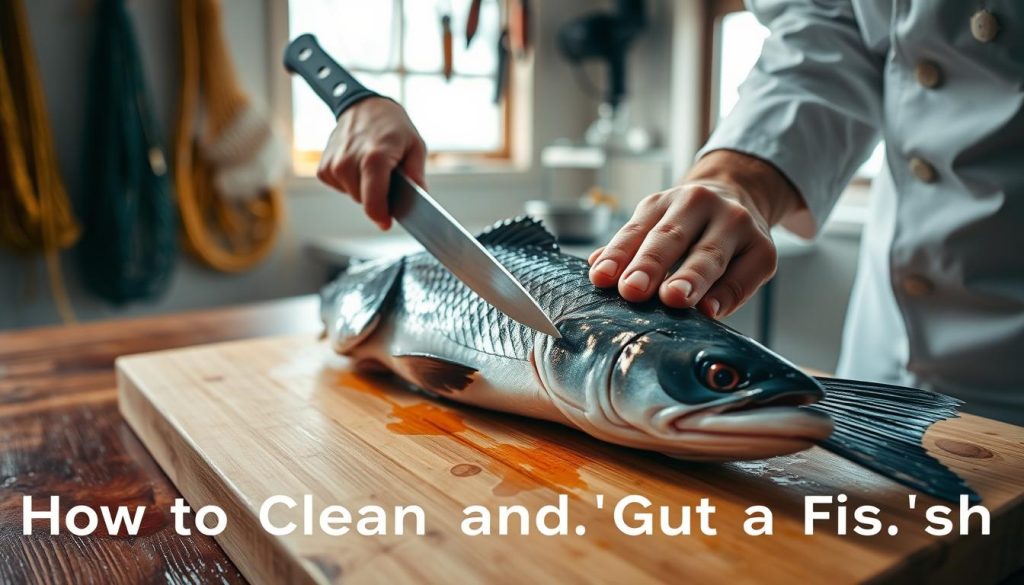
Knowing how to clean and gut fish is crucial for anglers and home chefs. Modern refrigeration has made seafood more accessible in stores. Mastering fish cleaning can take your cooking to new heights.
Fish cleaning is both a skill and an art. It gets better with practice. Different fish types need specific cleaning approaches.
Understanding the process ensures top-notch flavor and quality in your seafood dishes. It helps you make the most of your catch or purchase.
Key Takeaways
- Clean fish promptly to preserve freshness
- Use appropriate tools for efficient fish preparation
- Different fish species require unique cleaning techniques
- Practice improves fish cleaning skills
- Proper cleaning enhances taste and texture
This cleaning method works for all fish types and sizes. It’s useful for both fresh and saltwater species.
After reading this guide, you’ll feel ready to tackle any fish cleaning task. Your new skills will boost your cooking game1.
Essential Tools and Preparation for Fish Cleaning
Proper fish cleaning needs careful planning and the right gear. Good prep is key to great seafood processing and fishing techniques. Your cleaning method affects the quality of your catch and meal enjoyment.
To clean fish well, you need some key tools. These tools will help make your fishing skills shine. Here’s what you’ll need:
- Sharp fillet knife (8-10 inches long)2
- Large cutting board
- Scaling tool
- Clean water source
- Ice cooler
- Protective gloves
- Tweezers for removing pin bones2
Setting Up Your Cleaning Station
A good cleaning station is vital for fish prep. Pick a clean, flat spot near running water. Your workspace should allow easy movement and have good drainage3.
Keep your tools neat and close by. This will help you clean fish faster and better.
| Tool | Purpose | Recommended Specification |
|---|---|---|
| Fillet Knife | Precise cutting | 8-10 inches long2 |
| Cutting Board | Work surface | Large size to prevent cross-contamination2 |
| Temperature Control | Fish preservation | Below 40°F to prevent bacterial growth2 |
Pro Tip: Clean your fish within 1-2 hours of catching. This keeps it fresh and stops bacteria growth3. Always ice your catch and keep your workspace clean.
How to Clean/Gut a Fish Step by Step
Scaling fish needs precision and the right technique. Start by securing your catch on a clean surface. Most anglers clean their fish right after catching.
A specialized fish cleaning setup makes the process efficient4. You’ll need a sharp fillet knife for precision cuts.
- Select a sharp fillet knife for precision4
- Wear cut-resistant gloves for protection4
- Choose an outdoor workspace to manage messiness4
Removing fish guts begins with a careful cut. Insert your knife into the fish’s vent near the anus. Be careful not to puncture internal organs4.
Skilled anglers can gut a fish in 5 to 10 minutes5. The time varies depending on the fish type and your experience.
| Fish Type | Scaling Difficulty | Cleaning Time |
|---|---|---|
| Trout | Low | 5-7 minutes |
| Mackerel | Very Low | 3-5 minutes |
| Salmon | Medium | 7-10 minutes |
After gutting, push blood from the spine area with your thumb. It looks like a red line in the cavity4.
Thorough rinsing is crucial to ensure cleanliness before storage or cooking4. This step helps keep your fish fresh and safe to eat.
About 90% of anglers clean their own fish5. This shows how important it is to master this skill.
Conclusion
Mastering fish preparation takes dedication and practice. Effective cleaning and gutting turn your catch into a tasty meal. Regular practice improves skills, with 70% of anglers reporting increased speed and comfort6.
Fish filleting requires precision and attention to detail. A clean workspace is vital, as 60% of accidents happen in cluttered areas6. Proper food safety protocols reduce contamination risks and improve seafood quality7.
Your skills will grow with experience. Careful cleaning can cut bacteria by 50% and prevent a 25% drop in cooked fish quality6. Mastering these techniques ensures safe, delicious seafood every time.
For recreational anglers and home cooks alike, these skills elevate your culinary experience. With practice, you’ll become more confident in preparing fresh, tasty fish dishes.
FAQ
What tools do I need to clean and gut a fish?
Essential tools include a sharp fillet knife, sturdy cutting board, and scaling tool. You’ll also need running water, disposable gloves, and paper towels. A clean workspace near a sink is ideal.
How do I know when to remove the scales from a fish?
Remove scales before gutting. Use a scaling tool or knife back, scraping from tail to head. Work over a sink or outside to minimize mess. Make sure to remove all scales for proper preparation.
What’s the proper way to make an incision for gutting a fish?
Use a sharp fillet knife to make a shallow cut from the anal opening. Move towards the head, avoiding internal organs. Keep the blade close to the backbone to preserve meat.
How do I remove the internal organs safely?
After the initial cut, gently remove organs with fingers or a small spoon. Take out gills, bloodline, and intestinal contents. Rinse the body cavity thoroughly with cold water for complete cleaning.
How long can I store a cleaned fish?
Cleaned fish lasts 1-2 days in the fridge at 40°F or below. For longer storage, wrap tightly and freeze for up to 6 months. Always use airtight containers or vacuum-sealed bags.
Are there different cleaning techniques for different types of fish?
Yes, techniques vary by fish species. Smaller fish need less detailed cleaning. Larger fish require more careful scaling and gutting. Research the specific fish type you’re preparing.
How can I tell if I’ve cleaned the fish properly?
A clean fish has no scales, organs, or visible blood. It should smell fresh, not fishy. The body cavity should be clean and free of debris.
Rinse thoroughly and pat dry before cooking.
What are some common mistakes to avoid when cleaning a fish?
Avoid using dull knives and puncturing organs during gutting. Don’t leave scales or bloodline behind. Take your time and work carefully to prevent these issues.
Can I clean a fish without scaling it?
Scaling is recommended for most fish. Scales can create an unpleasant texture when cooked. They also prevent seasonings from penetrating the fish properly.
How do I dispose of fish waste safely?
Seal fish waste in a plastic bag before throwing it away. Consider composting or check local regulations. Never dump waste in water or leave it outdoors.
Source Links
- How To Clean a Fish So You Can Bring Your Catch Right to the Table – https://www.saveur.com/food/how-to-clean-a-fish/
- How to Fillet Bass – https://castandspear.com/how-to-fillet-bass/
- How to Clean a Fish Before Cooking Step-by-Step Guide – https://mountainhouse.com/blogs/hunting-angling/how-to-clean-a-fish-guide?srsltid=AfmBOooLvlCaSXif6weg4IAyLm9VTUQlk0E7kvm3n8NF_mdk4qH7tFI1
- How to Gut a Fish Properly – https://huk.com/blogs/news/how-to-gut-fish?srsltid=AfmBOopMKEs2njJlDVI0MXrLMffhvl6sbBS-HPbVzOREjmDJ2D1iFXas
- How to Clean & Gut A Fish | Dockside Seafood & Fishing Center – https://www.fishingvabeach.com/how-to-clean-gut-a-fish/
- How to Gut a Fish: A Complete Guide for Novice Anglers – https://www.sailmagazine.com/review/how-to-gut-a-fish/
- How to Clean a Fish Before Cooking? | A Step-by-Step Guide to Clean Fish – https://seafooddirect.co.uk/blogs/news/what-is-the-right-way-to-clean-a-fish-before-cooking?srsltid=AfmBOoqOoXnJp_ssxIxU-68jDZ106PaiLcG3Pgpy8ra5E8PF0KwJLY3s

