
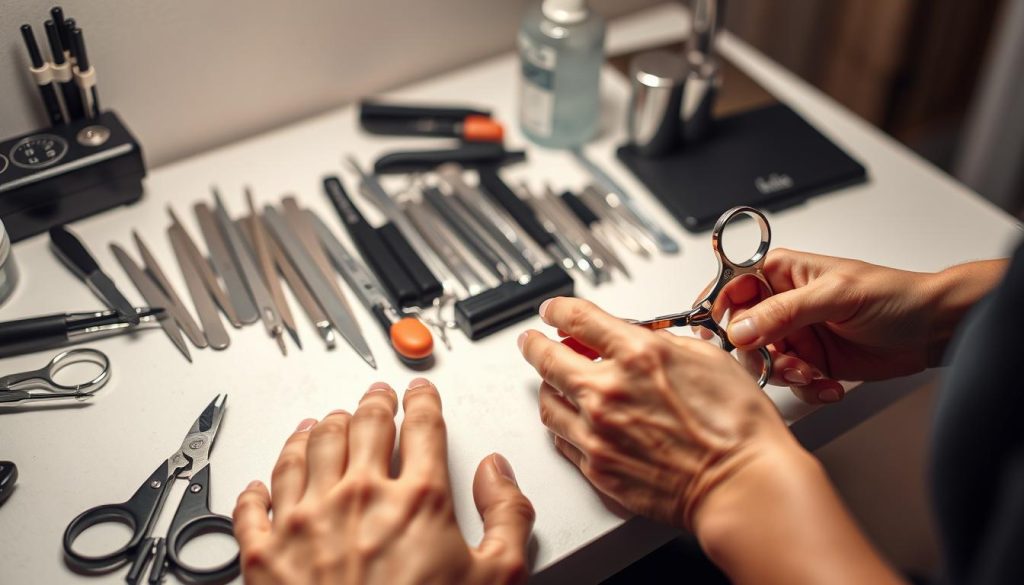
Good nail care is vital for hand health and hygiene. Proper trimming prevents issues and keeps nails looking neat. Experts suggest trimming nails every few weeks for best results1.
Nail cutting isn’t just about using clippers. Many people make mistakes that can damage their nails. Clipping straight-on can cause bending and injury1.
Leave 1-2 millimeters of “white” space at the nail tip. This ensures a clean, healthy look1. Use your shortest nail as a guide for uniform length1.
For a precise cut, clip the nail three or four times across the top1. This method gives better control and a neater finish.
Key Takeaways
- Trim nails every few weeks for optimal nail care
- Avoid cutting nails straight-on to prevent damage
- Use an emory board for smooth nail shaping
- Maintain 1-2 millimeters of white nail tip
- Practice gentle, directional filing to prevent breakage
Essential Tools and Preparation for Nail Care
Having the right tools is crucial for proper nail care. The right equipment can transform your grooming routine. Let’s explore the essentials for nail maintenance.
Clean hands are vital for effective nail care. Wash your hands thoroughly with soap. This prevents infections and creates a clean workspace.
Selecting the Perfect Nail Clippers
Nail clippers are key tools for nail care. Different nail types need specific clipper designs.
- Smaller, rounded-blade clippers for fingernails
- Larger, straight-blade clippers for big toes
- Specialized toenail scissors for thick toenails2
Pre-Trimming Nail Preparation
Nail care involves more than just cutting. Consider these essential steps:
- Remove old nail polish completely3
- Use a non-acetone nail polish remover for gentler treatment4
- Massage cuticle softener for 10-20 seconds3
- Use a cuticle pusher to prepare nails3
Experts suggest using a nail file after clipping. This smooths edges and prevents damage. Different file types help achieve various nail shapes.
| Nail Care Tool | Primary Function | Recommended Use |
|---|---|---|
| Nail Clippers | Trimming nails | Weekly maintenance |
| Nail File | Shaping and smoothing | After every trim |
| Cuticle Pusher | Preparing nail beds | During nail care routine |
Regular nail care keeps your hands clean and healthy. It prevents bacteria buildup and maintains overall hand hygiene.
How to Cut Your Fingernails and Toenails
Proper nail trimming keeps nails healthy and attractive. The right approach prevents problems and maintains their best appearance. Regular care is essential for both fingernails and toenails5.
Experts suggest a specific nail shaping method. Make small cuts across the nail, moving from one side to the other6. This prevents bending or weakening the nail structure.
Fingernails grow about 2.5 millimeters each month. Regular trimming keeps them at a manageable length7.
- Use sharp, clean nail clippers
- Cut nails straight across to prevent ingrown nails5
- Avoid cutting nails too short to prevent pain6
Nail filing is crucial after cutting. Use gentle, long strokes from the side to the center6. Choose an emery board with 180 grit or higher for smooth edges7.
Toenails are thicker than fingernails. Cut them carefully and file gently to avoid damage6.
Pro tip: Always file in one direction to maintain nail strength and prevent damage5.
After trimming, apply moisturizing lotion with ceramides or hyaluronic acid. This keeps nails flexible and prevents splitting6. Short nails are easier to maintain and reduce dirt accumulation7.
Conclusion
A consistent nail care routine is vital for healthy nails. Expert techniques can transform your nail maintenance approach with professional nail care strategies. Regular attention prevents infections and keeps your hands and feet looking great8.
Nail care is more than just trimming. Older folks should focus on nail health, especially toenails8. Experts advise monitoring nail conditions, particularly for those with health concerns9.
Trim nails every two to eight weeks, depending on growth rate. This helps prevent overgrowth and potential infections89.
Proper nail care is an investment in your hygiene and health. Use clean tools and cut nails straight across. Keep them moisturized to prevent common nail problems.
Following these expert guidelines will help you develop a solid nail care routine. This promotes stronger, healthier nails and supports your overall well-being.
FAQ
How often should I cut my nails?
Trim fingernails every 1-2 weeks and toenails every 6-8 weeks. This schedule may vary based on your nail growth rate. Regular upkeep prevents issues and keeps nails looking neat and healthy.
What’s the correct way to cut curved or thick nails?
Use sharp, high-quality clippers designed for your nail type. Make multiple small cuts to prevent splitting or cracking. For thick nails, soak in warm water first to soften them.
Consider using professional-grade clippers with extra leverage for thick nails. These tools make the job easier and more effective.
How can I prevent ingrown nails?
Cut nails straight across, avoiding curved or rounded edges. Don’t cut them too short, and use clean, sharp clippers. Wear shoes that fit well and don’t crowd your toes.
Maintain good foot hygiene to prevent issues. If ingrown nails persist, consult a podiatrist or dermatologist for professional advice.
What’s the difference between fingernail and toenail clippers?
Fingernail clippers are smaller with a straight cutting edge. Toenail clippers are larger, more robust, and often have a curved blade. Using the right clipper ensures a clean cut and reduces nail damage risk.
How do I properly care for my nail tools?
Clean tools after each use with rubbing alcohol or disinfectant. Keep them dry and store in a clean place. Replace clippers and files when they become dull or show wear.
Proper tool care maintains optimal nail hygiene. It prevents rust and bacterial growth, ensuring safe and effective nail care.
Can cutting nails incorrectly cause health problems?
Yes, improper nail cutting can lead to ingrown nails, infections, and nail splitting. It may also cause bacterial or fungal growth. Always use clean tools and cut nails carefully.
Avoid cutting too close to the skin or rounding edges too much. These practices increase the risk of complications.
What should I do if I accidentally cut my nail too short?
Apply antibiotic ointment to prevent infection. Cover with a bandage if there’s bleeding. Avoid cutting that nail again until it has grown out completely.
Use gentle nail care techniques and allow time for healing. This approach prevents further damage and promotes healthy nail growth.
Are there special considerations for diabetic individuals when cutting nails?
Diabetic individuals should be extra careful when cutting nails due to circulation issues. It’s often best to have nails professionally trimmed. Always check for cuts or infections.
Consult a healthcare professional about the best nail care approach. They can provide personalized advice for safe nail maintenance.
Source Links
- The Right Way to Clip Your Nails – https://www.gq.com/story/how-to-clip-your-nails
- Essential Nail Care Tools – Tammy Taylor Beauty – https://tammytaylornails.co.za/essential-nail-care-tools/
- Nail Prep Routine in 6 Steps – https://www.nimblebeauty.com/blogs/posts/7-steps-to-prep-your-nails-to-perfection?srsltid=AfmBOopQ_dm41LeSvrj1U6OXlPjPTeZwt7zRsm6JC4LXccgqd0MtzQGh
- Fingernail do’s and don’ts – https://www.mayoclinic.org/healthy-lifestyle/adult-health/in-depth/nails/art-20044954
- How to Trim Your Nails – https://www.webmd.com/beauty/how-to-trim-your-nails
- How to Cut Your Nails Correctly According to Experts – https://www.wikihow.com/Cut-Your-Fingernails-and-Toenails
- How to Cut Nails With and Without Clippers – https://www.healthline.com/health/how-to-cut-nails
- Cutting Your Toenails – Tailem Bend Pharmacy – https://www.tailembendpharmacy.com.au/health-info/feet-care/cutting-your-toenails
- How to Properly Cut Diabetic Toenails – https://www.footandanklegroup.com/how-to-properly-cut-diabetic-toenails/

