
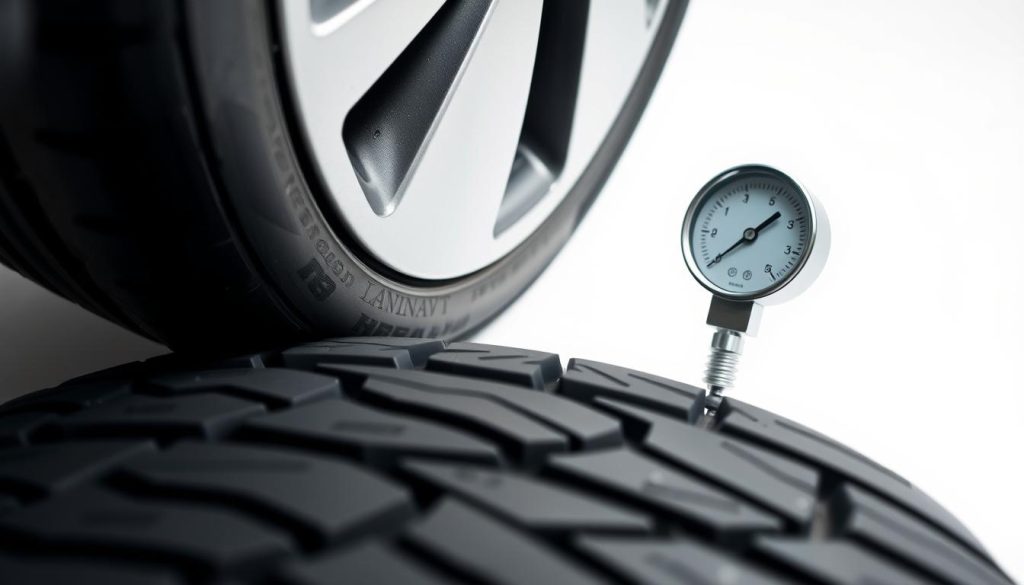
Proper tire inflation is crucial for your car’s safety and performance. Most car tires need 32 to 35 pounds per square inch (psi). This ensures optimal driving conditions1.
Regular tire care boosts your vehicle’s overall performance. Underinflated tires can reduce fuel efficiency by 0.2% per 1 PSI drop. This impacts your car’s fuel economy and tire lifespan23.
Tire inflation requires precision and safety. Many drivers make mistakes, like using the wrong pressure. They often use the maximum pressure on the tire’s sidewall1.
Understanding correct inflation prevents issues and ensures safer driving. It’s about more than just adding air to your tires.
Key Takeaways
- Check tire pressure monthly for optimal performance
- Use the recommended PSI for your specific vehicle
- Understand how temperature affects tire pressure
- Proper inflation improves fuel efficiency
- Regular maintenance prevents potential tire-related issues
Understanding Proper Tire Pressure and Safety
Proper tire pressure is vital for car safety and performance. It affects fuel efficiency and driving stability. Regular tire maintenance is crucial for your vehicle’s wellbeing.
https://www.youtube.com/watch?v=qyB83JAuPDE
Tire pressure changes over time. Most tires lose about 1 PSI each month. Temperature shifts can also affect pressure. A 10-degree change can cause a 1 PSI difference.
Finding Your Vehicle’s Recommended PSI
Your car’s ideal tire pressure is usually between 28 and 36 PSI. To find the exact number for your vehicle, check these places:
- Driver’s side door jamb sticker
- Vehicle owner’s manual
- Tire sidewall information
When to Check Tire Pressure
Check your tire pressure at least once a month. It’s especially important to check:
- Before long trips
- During seasonal temperature changes
- After driving extended distances
Impact of Incorrect Tire Pressure on Vehicle Performance
Wrong tire pressure can harm your car’s safety and performance. Underinflated tires use 3-4% more fuel. They can also wear out 20% faster.
Overinflated tires can make braking and handling worse. This can create dangerous driving situations.
Proper tire maintenance is not just about performance—it’s about ensuring your safety on the road.
Pro tip: New cars have Tire Pressure Monitoring Systems (TPMS). These alert you when tire pressure drops below 25% of the recommended PSI4.
Essential Tools and Equipment for Fill Air in a Car’s Tires
Every driver needs a few key tools to maintain proper tire pressure. A reliable tire gauge is crucial for flat tire prevention. It accurately measures tire pressure, ensuring optimal performance5.
An air compressor is vital for inflating tires. You can choose from various options:
- Portable air compressors for emergency roadside use
- Stationary compressors at gas stations
- Home air compressors with automatic shut-off features6
Regular tire pressure checks prevent safety issues. Sadly, 70% of drivers skip this important task5. A good tire gauge helps monitor your vehicle’s tire health6.
| Tool | Purpose | Recommended Frequency |
|---|---|---|
| Tire Pressure Gauge | Measure tire pressure | Monthly |
| Air Compressor | Inflate tires | As needed |
| Valve Stem Tool | Remove valve caps | During tire pressure checks |
These tools can save you money and boost your vehicle’s safety. Proper tire care improves fuel efficiency by up to 3%.
It also significantly extends tire life56. Investing in these tools is a smart choice for any driver.
Step-by-Step Tire Inflation Process
Proper tire inflation is key for car upkeep and fuel savings. Knowing how to inflate tires safely is vital for drivers. Start by finding a good spot and getting the right tools.
First, take off the valve stem cap. Check the current tire pressure. Most car tires need 30-35 psi. Always check your car’s manual for the right pressure7.
To add air, attach the compressor nozzle firmly. Add air in short bursts. Recheck pressure often to avoid over-inflation8.
After filling, inspect your tires closely. Look for even wear. Make sure all four tires have the same pressure. Tires lose about 1 psi each month.
Regular checks help your car run better and save gas. Proper inflation can make tires last longer. This saves money on replacements78.
FAQ
How often should I check my car’s tire pressure?
Check tire pressure monthly and before long trips. Do this when tires are “cold” for accuracy. Cold tires haven’t been driven for at least three hours.
Where can I find the recommended tire pressure for my vehicle?
Find recommended tire pressure (PSI) in three places. Check the driver’s side door jamb, owner’s manual, or inside the fuel door. Use the manufacturer’s recommendation for best performance and safety.
What happens if I drive with underinflated or overinflated tires?
Underinflated tires increase fuel use and cause uneven wear. They also reduce handling and may lead to tire failure.
Overinflated tires make rides rougher and decrease traction. They’re also more likely to get damaged by road hazards.
Can I use any air compressor to fill my car tires?
Most air compressors work, but choose one with a pressure gauge. The nozzle should fit your tire valve. Gas stations often have air pumps.
You might want to buy a portable air compressor for home use.
How do I know if I’ve inflated my tires to the correct pressure?
Use a good tire pressure gauge to check PSI after adding air. Add air slowly and check often to avoid over-inflating.
The tire should match the recommended pressure when cold.
Are tire pressure monitoring systems (TPMS) reliable?
TPMS helps but doesn’t replace manual checks. These systems only warn you when pressure is very low. Keep checking your tire pressure by hand regularly.
How does tire pressure affect fuel efficiency?
Proper tire inflation improves fuel efficiency by reducing rolling resistance. Underinflated tires can lower fuel economy by up to 3%. This extra cost adds up over time.
What tools do I need to check and inflate my tires?
You need a reliable tire pressure gauge and access to an air pump. A valve cap tool might be useful.
A portable air compressor can be handy for emergencies.
Source Links
- How to Put Air in Tires: Expert Tips – https://www.ebay.com/motors/blog/how-to-put-air-in-tires-expert-tips/
- How to Properly Inflate Your Car Tires – https://www.firestonecompleteautocare.com/blog/tires/car-tire-inflation/
- How To Put Air In Car Tires And Why Tire Inflation Matters | Top Grade Tire – https://topgradetire.com/how-to-put-air-in-car-tires/
- Recommended Tire Pressure for your tires | Pirelli – https://www.pirelli.com/tires/en-us/car/driving-and-tire-tips/how-to-read/recommended-tire-pressure
- Guide to Safely Inflate a Car Tire: Tips for Proper Pressure – https://www.acg.aaa.com/connect/blogs/4c/auto/how-to-safely-inflate-a-car-tire
- How to Inflate Car Tires: A Step-by-Step Guide | HEART Certified Auto Care – https://heartautocare.com/how-to-inflate-car-tires-a-step-by-step-guide/
- How to Fill Tires with Air (with Expert-Backed Tips) – https://www.wikihow.com/Fill-Air-in-a-Car’s-Tires
- A Step-by-Step Guide to How to Put Air in Car Tire – https://www.carhub.ca/blog/step-by-step-guide-how-to-put-air-in-car-tire/

