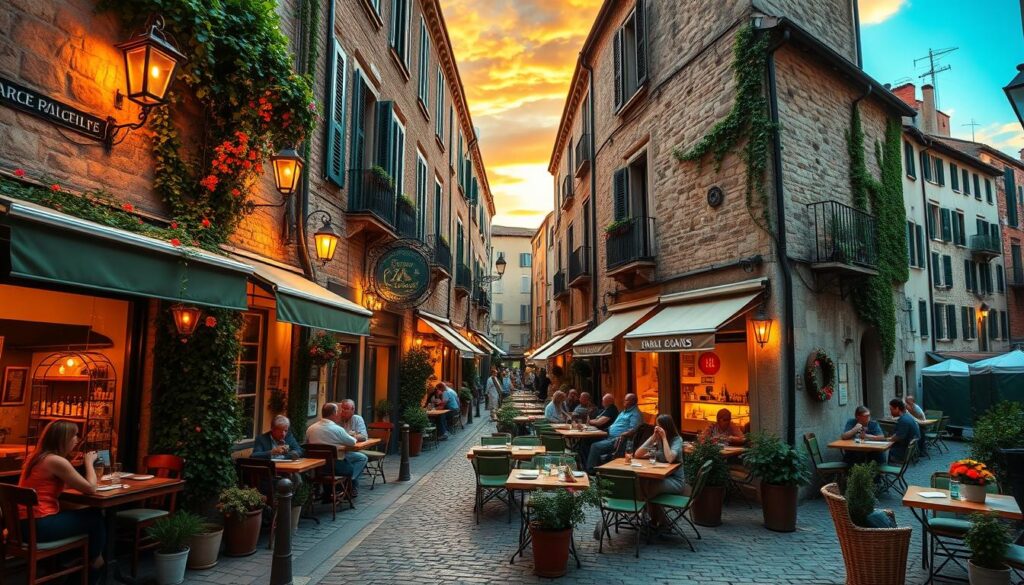
Genuine local restaurants can turn your European trip into an unforgettable experience. Your food adventure starts by learning to navigate diverse dining spots across Europe1. Finding real local eateries takes strategy and a spirit of exploration.
Look for places that draw in local diners. Rick Steves suggests checking out side streets for authentic local food2. Skip spots with big, multilingual menus or “We speak English” signs.
Aim for a true local food experience. Pick restaurants with small, handwritten menus featuring seasonal ingredients1. These often point to quality dining spots using fresh, local products.
Family-owned restaurants usually offer the most rewarding and authentic meals1. They’re great for experiencing real local flavors and traditions.
Key Takeaways
- Explore side streets for authentic local restaurants
- Look for small menus with seasonal ingredients
- Prioritize restaurants filled with local diners
- Avoid tourist-oriented dining establishments
- Embrace family-owned restaurants for genuine experiences
Understanding the Local Cuisine
European culinary traditions offer a rich tapestry of flavors. Each region boasts unique dishes and cooking methods. Understanding these nuances will make your dining experience truly memorable.
Local cuisine tells a story of culture and history. Chefs now focus on local sourcing as a key trend. In fact, 44% of chefs see it as the top culinary development3.
Discover Regional Specialties
Europe’s regions have distinct culinary identities. Here are some key specialties to try:
- Tuscan cuisine: Hearty dishes with local vegetables and meats
- Mediterranean coastal regions: Seafood-focused meals
- Alpine areas: Robust, warming dishes with local cheeses
Explore Unique Ingredients
Understanding local ingredients is key to appreciating authentic cuisine. Seek out restaurants that follow the zero-kilometer philosophy. This means they serve locally sourced products4.
| Region | Signature Ingredient | Typical Dish |
|---|---|---|
| Provence, France | Lavender | Herbed Lamb |
| Tuscany, Italy | Olive Oil | Ribollita Soup |
| Spain | Saffron | Paella |
Learn About Traditional Cooking Methods
“Cooking is about passion, and it’s a way to celebrate local traditions and ingredients.” – Unknown Chef
Traditional cooking methods vary across Europe. Rural kitchens often use slow-cooking techniques. Urban restaurants may employ more precise preparation methods.
Each approach reflects the local culinary heritage. By exploring these regional nuances, you’ll become a true culinary explorer. You’ll experience the authentic heart of European gastronomy3.
Tips for Finding Authentic Local Eateries
Finding real local eateries takes more than luck. Smart strategies can help you discover true food gems. These tips will transform your dining experience.
Local dining scenes can be tricky to navigate. But with the right approach, you’ll uncover hidden gems. These places offer unforgettable meals and genuine cultural experiences.
Ask Locals for Recommendations
Locals are your best resource for finding authentic restaurants. They know the tastiest spots tourists often miss.
- Hotel staff
- Taxi drivers
- Shop owners
- Neighborhood residents
These people can point you to off-the-beaten-path dining spots5. Their insider knowledge is invaluable for food explorers.
Use Food Apps and Websites
Digital platforms can be a great help in your restaurant search. Here are some top recommendations:
- Yelp (with 33 million monthly unique visitors)5
- OpenTable (over 44 million monthly visitors)5
- Tripadvisor for location-based searches5
“The internet has revolutionized how we discover local dining experiences” – Food Travel Expert
Look for Family-Owned Establishments
Family-run restaurants often provide the most authentic culinary experiences. They usually maintain traditional recipes and use local ingredients.
- Maintain traditional recipes
- Use local ingredients
- Offer genuine cultural dining atmospheres
Check Social Media for Reviews
Social platforms offer real-time insights into local eatery hotspots6. Online reviews influence 94% of diners when searching for new restaurants5.
Pro tip: Look for restaurants with small menus in the local language. This often signals an authentic, local-focused establishment.
Dining Etiquette and Local Customs
European dining customs vary greatly across countries. Understanding these nuances can enhance your culinary experience. It’s crucial to research local etiquette before your trip to dining practices.
Know the Dining Hours
European restaurants operate on diverse schedules. In Spain, dinner often starts around 9 PM, much later than in Northern Europe. Knowing these differences helps you plan your meals and adapt to local customs7.
Familiarize Yourself with Table Manners
Table etiquette varies between countries. In France, keeping hands visible on the table is polite. Russians, Italians, and Colombians traditionally hold knives in the right hand and forks in the left7.
Middle Eastern cultures encourage eating with the right hand only. In Britain, it’s impolite to talk or chew with an open mouth8.
Understand Tipping Practices
Tipping customs differ across European restaurants. France and Italy typically include service charges in the bill7. Splitting the bill is considered rude in some countries.
Being aware of these practices will help you navigate local dining experiences respectfully. You’ll feel more at ease and enjoy your meals with confidence.
FAQ
How can I find authentic local restaurants in Europe?
Ask locals, hotel staff, or concierges for genuine eatery recommendations. Seek family-owned spots on quieter streets away from tourist hubs. Use food apps and social media for reviews of lesser-known places.
Look for restaurants with small menus in the local language. Avoid tourist traps by exploring a few blocks beyond major attractions. Choose places filled with locals for a true culinary experience.
What should I look for in a genuine local restaurant?
Search for eateries with handwritten or daily-changing menus. This often indicates fresh, seasonal ingredients. Look for places packed with local workers during lunch hours.
Seek restaurants that embrace the zero-kilometer philosophy of serving local goods. Avoid establishments with pushy hosts trying to lure you inside.
How important are regional specialties when dining in Europe?
Regional specialties are key to experiencing authentic European cuisine. Each area boasts unique culinary traditions, ingredients, and cooking methods. For example, Tuscan cuisine features hearty dishes with local vegetables and meats.
Focus on seasonal offerings and regional dishes. This approach allows you to truly appreciate the local food culture.
What dining etiquette should I be aware of in European restaurants?
Dining hours vary across countries. In Spain, dinner is typically later than in Northern Europe. Learn local table manners, like keeping hands visible in France.
Tipping practices differ between countries. In many European restaurants, you’ll need to ask for the check when ready to leave.
Are there reliable quick-service options in European cities?
Yes, chain restaurants like Paul in France or Pret a Manger in Great Britain offer reliable quick meals. These can be good choices when you need a fast, quality meal.
For a more authentic experience, balance chain options with local eateries. Try family-owned restaurants to get a true taste of the local cuisine.
How can I avoid tourist traps when dining out?
Steer clear of restaurants near major attractions with large, translated menus. Look for places with smaller menus in the local language that change often.
Choose restaurants filled with locals, especially during lunch hours. Explore a few blocks away from tourist centers for more authentic dining options.
Source Links
- This Is How Rick Steves Finds His Favorite Restaurants in Europe – https://www.travelandleisure.com/how-to-pick-a-local-restaurant-when-traveling-according-to-rick-steves-7372822
- Restaurant Qualities Rick Steves Is Looking For When Picking A Place To Eat In Europe – Explore – https://www.explore.com/1546987/restaurant-qualities-rick-steves-looks-for-when-picking-place-eat-europe/
- Local and Regional Food Systems – https://foodprint.org/issues/local-regional-food-systems/
- Food Tourism Fundamentals: Seven Global Best Practices to Celebrate & Develop Your Destination’s Cuisine – https://www.milespartnership.com/how-we-think/article/food-tourism-fundamentals-seven-global-best-practices-to-celebrate-develop
- The 11 Top Restaurant Review Sites in 2023 – https://www.lightspeedhq.com/blog/restaurant-review-sites/
- 7 Restaurant SEO Tips to Boost Your Online Presence – https://www.touchbistro.com/blog/restaurant-seo-tips/
- Restaurant Etiquette Around the World | Lightspeed – https://www.lightspeedhq.com/blog/restaurant-etiquette-around-the-world/
- 9 extraordinary food etiquette rules from around the world – https://www.trafalgar.com/real-word/food-etiquette-rules/