
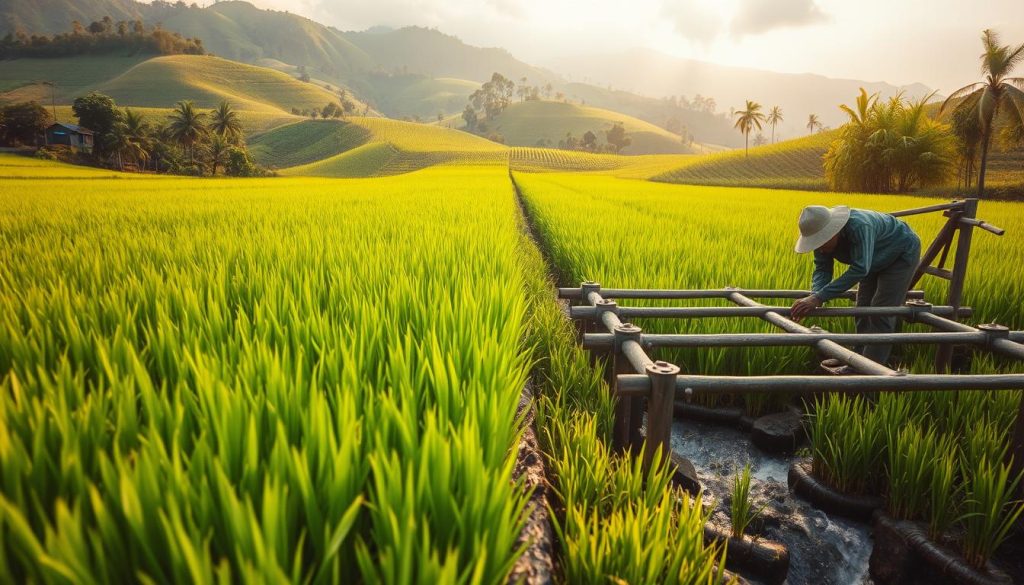
Rice cultivation can be an exciting adventure for home gardeners. It transforms your garden into a productive agricultural space. Modern techniques offer versatile options for growing this staple crop1.
Rice is a warm-season cereal grain that thrives in diverse environments. It adapts well to various growing conditions across different regions2. Rice plants typically grow to three to four feet tall3.
Rice farming requires understanding its unique growth needs. The crop needs warm temperatures, ample sunlight, and consistent moisture to develop properly1. Home gardeners can grow rice in containers, raised beds, or traditional garden plots.
Key Takeaways
- Rice can be grown in various settings, not just traditional paddies
- Warm temperatures and consistent moisture are crucial for rice growth
- Rice farming is possible for home gardeners with proper technique
- Different rice varieties suit different growing conditions
- Successful rice cultivation requires understanding plant needs
Understanding Rice Cultivation Basics
Rice is a vital grain in global nutrition and agriculture. Paddy cultivation has supported millions for thousands of years4. Half the world’s population relies on rice as a staple food.
Over 90% of rice production happens in Asia4. Rice is an annual semi-aquatic grass from the Poaceae family.
It belongs to the Oryza genus, specifically the Oryza sativa species5. The plant grows in various environments, making rice production possible in many places.
Rice Plant Characteristics
Rice plants have unique growth patterns. They typically grow to about 1.2 meters (4 feet) tall4.
Each plant can produce 3-12 tillers5. A single plant can generate 70-100 grains per panicle5.
- Typical height of about 1.2 meters (4 feet)4
- Can produce 3-12 tillers per plant5
- Each plant can generate 70-100 grains per panicle5
Growing Requirements for Rice
Successful rice irrigation and growth need specific conditions. Sunlight, temperature, water, and soil pH are key factors.
- Sunlight: Minimum six to eight hours daily5
- Temperature range: 55°F to 80°F (13-27°C)5
- Water levels: 2-6 inches for lowland varieties5
- Soil pH: Tolerant between 3.5 to 8.55
Best Rice Varieties for Home Growing
Home gardeners can pick upland or lowland rice varieties. Upland rice grows in hardiness zones as low as 4a.
Lowland varieties do well in zones 9a to 10b5. Your local climate and garden conditions will guide your choice.
How to Grow Rice in Your Garden
Growing rice at home is an exciting adventure. It doesn’t require extensive agricultural expertise. Rice cultivation can be straightforward when you understand basic planting techniques6.
You’ll need a sunny spot for your rice garden. The soil temperature should be around 75 degrees Fahrenheit7.
Preparing for rice planting involves several key steps:
- Choose a location with full sun exposure5
- Ensure soil has good drainage
- Select appropriate rice varieties for your climate
Seeds usually sprout within one week of sowing7. Home gardeners can expect about 10 pounds of rice per 100 square feet6.
The entire growing process takes 90 to 180 days6. Container gardening is great for those with limited space.
Rice can thrive in just 1-2 inches of water. Plant seedlings 3-4 inches apart in rows 9-12 inches wide6.
“Growing rice is more accessible than most gardeners realize” – Agriculture Expert
Try popular varieties like ‘Carolina Gold’ or ‘Black Madras’ in your garden7. These varieties offer unique traits and a rewarding cultivation experience.
Conclusion
Growing rice at home connects gardeners to ancient agricultural traditions. It requires patience and careful attention to detail. Expect a challenging but rewarding journey from seed to harvest8.
Seeds typically take about 30 days to mature after flowering. Weather conditions play a crucial role in successful rice yield. Understanding rice production helps gardeners appreciate the complexity of commercial farming.
Research shows innovative practices can greatly impact crop performance. Some farmers use techniques like intermittent field drying to reduce environmental impact. This method can cut methane emissions by over 60 percent8.
Growing rice offers a chance to connect deeply with our food system. Yield varies based on conditions, techniques, and rice variety. Gardeners who invest time and care will find great satisfaction in harvesting their own grains.
This hands-on experience transforms agriculture from a distant concept to a personal journey. Each challenge in rice growing is a chance to learn. From seed selection to harvesting, the process is as rewarding as the final crop.
Celebrate small successes as you grow your own rice. Enjoy bringing this staple crop from your garden to your table. It’s a unique experience that’s worth the effort.
FAQ
Can rice be grown outside of traditional flooded paddies?
Yes, rice can thrive beyond flooded fields. Home gardeners can grow it in containers, raised beds, and small garden plots. The secret is keeping the soil moist and providing the right conditions.
What are the basic requirements for growing rice at home?
Rice needs warm temps (70-85°F) and lots of sun (6-8 hours daily). It also requires rich, well-draining soil and constant moisture. A 3-6 month warm growing season is essential.
How long does it take to grow rice from seed to harvest?
Most rice takes 90 to 180 days from planting to harvest. The exact time depends on the variety and growing conditions. Short-season types mature faster than long-grain varieties.
What types of rice can I grow in my home garden?
Great home garden options include short-grain Japanese rice and medium-grain California varieties. Quick-maturing Carolina Gold is another good choice. Pick varieties that suit your local climate and growing season.
Do I need special equipment to grow rice?
Not really. Basic gardening tools are enough to start. You’ll need containers, good potting soil, seeds, and a watering system. Home gardeners can use simple containers or garden beds.
How often should I water rice plants?
Rice plants need steady moisture. For container growing, keep the soil damp but not waterlogged. In garden beds, maintain moisture like other veggies. Never let the soil dry out completely.
Can I grow rice in a cold climate?
Growing rice in cold climates is tricky but possible. Look for short-season, cold-hardy varieties. Try starting seeds indoors or using greenhouse protection. Choose a warm spot in your garden.
How do I harvest rice at home?
Harvest when grains turn golden and hard. Cut stalks near the base and let them dry completely. Thresh by beating stalks to separate rice kernels from the plant.
What common challenges might I face when growing rice?
Pest control and keeping soil moist are common issues. Preventing fungal diseases and ensuring enough heat and sun can be tricky. Choose the right variety for your climate to overcome these challenges.
Is homegrown rice different from store-bought rice?
Homegrown rice can be fresher and more flavorful. It offers a unique connection to the growing process. The taste may vary based on variety and conditions, giving you a personal culinary experience.
Source Links
- How To Grow Rice: Planting, Care, & Harvesting Practices – https://eos.com/blog/how-to-grow-rice/
- Yes, You Can Grow Rice in Your Garden—Here’s How – https://www.bhg.com/how-to-grow-rice-7096328
- How Rice Grows – https://www.usarice.com/thinkrice/discover-us-rice/how-rice-grows
- Rice | Description, History, Cultivation, & Uses | Britannica – https://www.britannica.com/plant/rice
- How to Plant, Grow, and Care for Rice – https://www.epicgardening.com/how-to-grow-rice/
- Growing Rice – Mother Earth News – https://www.motherearthnews.com/organic-gardening/growing-rice-how-to/
- A Beginners Guide to Growing Rice — Johnny Appleseed Organic – https://www.johnnyappleseed.com/blog/a-beginners-guide-to-growing-rice
- Rice. Half of Humanity Eats It. And Climate Change Is Wrecking It. (Published 2023) – https://www.nytimes.com/interactive/2023/05/20/climate/rice-farming-climate-change.html

