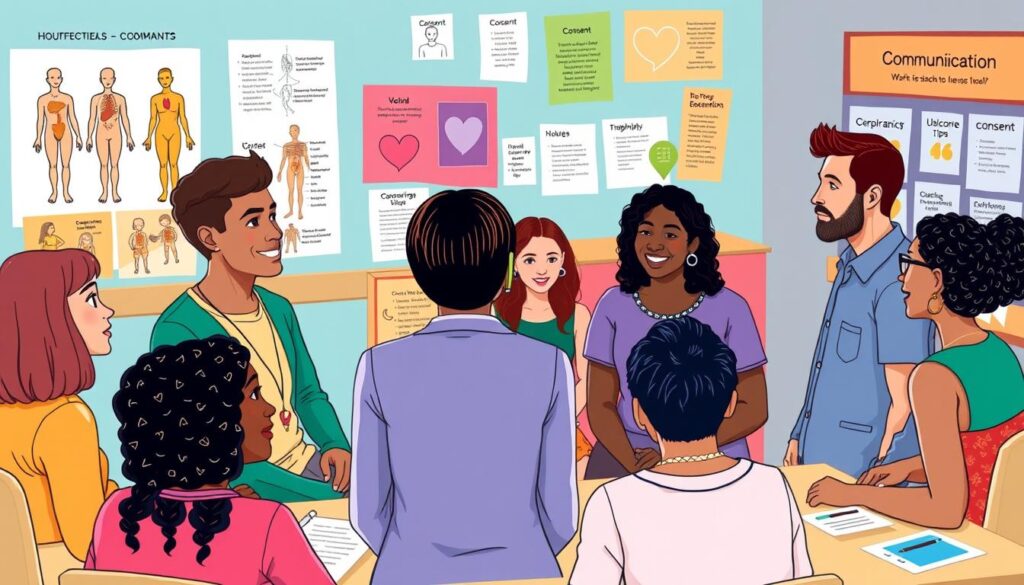
Sexual curiosity is a natural part of human development. It requires thoughtful guidance and understanding. Your journey into sexual health education starts with open, honest conversations.
These talks respect individual boundaries and promote healthy awareness1. Sexual education goes beyond biological facts. It’s about building understanding, respect, and communication skills2.
Kids and teens need age-appropriate information about sexuality. Accurate sexual health education equips them for complex experiences2. Understanding consent, boundaries, and personal safety is crucial1.
Constructive dialogues about sexual curiosity prevent misinformation. They also reduce potential risks. Comfortable discussion environments empower young people to make informed decisions1.
Key Takeaways
- Sexual curiosity is a normal part of human development
- Open communication supports healthy sexual understanding
- Age-appropriate education promotes personal safety
- Consent and boundaries are fundamental to sexual health
- Honest conversations reduce potential risks and misconceptions
Understanding Consent in Sexual Relationships
Sexual consent is crucial in sex education. It’s more than a simple “yes” or “no”3. Intimate relationships need understanding, respect, and clear communication about personal boundaries.
Consent is complex and nuanced. It’s not a one-time event. Instead, it’s an ongoing process of mutual agreement and respect4.
What is Consent?
Consent is an enthusiastic agreement between partners about sexual activities. It involves clear verbal communication and ongoing mutual understanding. It also includes respect for personal boundaries and the ability to withdraw consent anytime.
The Importance of Continuous Consent
Studies show challenges in understanding sexual consent. About 20-25% of university students have had unwanted sexual experiences4. Moreover, 31% reported experiencing sexual behaviors against their will5.
| Consent Communication | Verbal Frequency |
|---|---|
| Intimate Touching | 22.0% |
| Oral Sex | 43.5% |
| Vaginal-Penile Sex | 57.4% |
| Anal Sex | 80.1% |
How to Discuss Consent With Your Partner
Sexual well-being education promotes open, honest talks about boundaries. Effective consent discussions involve:
- Creating a safe, non-judgmental environment
- Using clear, affirmative language
- Actively listening to your partner
- Respecting each other’s comfort levels
“Consent is not just about permissions, but about mutual respect and understanding.” – Sexual Health Expert
Consent is a dynamic, ongoing conversation. It requires empathy, communication, and genuine care for your partner’s feelings and boundaries3.
Effective Communication for a Better Experience
Open and honest talks are key in sexual relationships. Understanding curiosity helps build respectful, safe, and fun connections6. Good communication creates a space where partners feel heard and valued7.
Sharing Desires and Boundaries
Teens learn to express personal limits in sex ed. Sharing your wishes and boundaries builds trust and respect6. This helps avoid mix-ups and keeps both partners feeling safe.
- Express your comfort levels openly
- Listen actively to your partner’s needs
- Be honest about your boundaries
Using Affirmative Language
Healthy curiosity involves using clear, positive words. Focus on what you want, not what you don’t. Positive talk can make sexual experiences7. It creates a supportive and excited mood.
The Role of Non-Verbal Communication
Body language speaks volumes. Studies show that consent often comes through non-verbal signs6. Watch your partner’s reactions, face, and overall comfort.
Checking In With Each Other
Regular check-ins during intimate moments are crucial. Ask how your partner feels and if they want to continue. This ongoing talk ensures mutual respect and consent6.
“Communication is the key to unlocking a fulfilling and respectful sexual relationship.”
| Communication Strategy | Benefit |
|---|---|
| Open Dialogue | Builds Trust |
| Active Listening | Enhances Understanding |
| Continuous Consent | Ensures Comfort |
Preparing for a Comfortable Sexual Experience
A safe environment is key for positive sexual experiences. Learn about personal boundaries and create a secure space. Sexual education teaches that comfort involves physical and emotional preparation8.
Safe sex practices protect your health. Know about contraception and prevention methods. Few high school students use both condoms and effective birth control regularly9.
Be proactive about protection and regular health screenings9. Open communication and mutual respect build intimacy. Create an atmosphere of trust and emotional connection.
Pay attention to your partner’s comfort levels. Maintain ongoing consent throughout your interaction. Sexual education stresses mutual understanding and respect in intimate moments8.
Prioritize safety, comfort, and emotional well-being as you explore sexuality. Each experience is unique. Prepare mentally and physically for more positive encounters.
FAQ
What is sexual curiosity and is it normal?
Sexual curiosity is a normal part of human development. It varies by age and helps children learn about their bodies and relationships. This natural process ranges from basic questions about body parts to more detailed information seeking.
At what age should I start talking to my child about consent?
Introduce consent concepts early. Start with simple ideas like not forcing hugs or respecting tickling boundaries. As they grow, cover personal boundaries and social relationships. Gradually expand to more complex consent dynamics.
How do I create a comfortable environment for discussing sexual topics?
Be open and non-judgmental when discussing sexual topics. Use clear language and provide age-appropriate information. Listen actively and create a safe space for questions. Be ready for ongoing conversations as your child’s understanding develops.
What are the key elements of teaching consent to children?
Teaching consent involves respecting personal boundaries and understanding body autonomy. Recognize both verbal and non-verbal communication. Emphasize mutual respect and start with simple concepts like asking before touching.
Gradually introduce discussions about personal space and comfort levels. This helps children understand and practice consent in various situations.
How can I support my child’s healthy sexual development?
Maintain open communication and provide accurate information to support healthy sexual development. Answer questions honestly and create a judgment-free environment. Tailor discussions to their developmental stage and focus on body positivity.
Remember that sexual education evolves as children grow. Emphasize respect and personal boundaries throughout their development.
What should I do if my child shows sexual curiosity?
Respond calmly and provide age-appropriate, honest information when your child shows sexual curiosity. Avoid showing shock or embarrassment to encourage future open communication. Use these moments to build trust and share accurate information.
How do I discuss safe sex practices with my teenager?
Be direct and comprehensive when discussing safe sex with teenagers. Cover protection, contraception, STI prevention, and emotional aspects of sexual relationships. Emphasize consent, communication, and mutual respect. Provide reliable resources and be available for ongoing, non-judgmental conversations.
What is continuous consent, and why is it important?
Continuous consent means regularly checking in with your partner during intimate situations. It involves respecting boundaries and understanding that consent can be withdrawn anytime. Teaching this concept develops healthy relationship skills and ensures mutual respect.
Source Links
- Consent and sexual consent: talking with children and teenagers – https://raisingchildren.net.au/school-age/connecting-communicating/tough-topics/sexual-consent-how-to-talk-with-children-teens
- 8 Ways to Teach Kids about Consent and Healthy Boundaries – https://endsexualviolencect.org/8-ways-to-teach-kids-about-consent-and-healthy-boundaries/
- I Want You to Want Me to Want You [and vice versa]: The Simple Complexity of Sexual Consent – https://jods.mitpress.mit.edu/pub/hqglqga6
- Defining and Measuring Sexual Consent within the Context of University Students’ Unwanted and Nonconsensual Sexual Experiences: A Systematic Literature Review – https://pmc.ncbi.nlm.nih.gov/articles/PMC10666479/
- Sexual Consent Across Diverse Behaviors and Contexts: Gender Differences and Nonconsensual Sexual Experiences – https://pmc.ncbi.nlm.nih.gov/articles/PMC9554284/
- Sexual health: How consent, communication and curiosity can enhance your sexual satisfaction – https://theprairienews.com/26949/features/sexual-health-how-consent-communication-and-curiosity-can-enhance-your-sexual-satisfaction/
- Curiosity 101: How an Open Mind Will Enrich Your Sexual Education – https://goodcleanlove.com/blogs/making-love-sustainable/sexual-education-starts-with-curiosity?srsltid=AfmBOooBrL6N-s2cFkCk2Wm8ra7M41rar3N0O5fDlLUMmYjeDT1O5H9H
- Sex Exploration – https://www.positivediscipline.com/articles/sex-exploration
- The Importance of Access to Comprehensive Sex Education – https://www.aap.org/en/patient-care/adolescent-sexual-health/equitable-access-to-sexual-and-reproductive-health-care-for-all-youth/the-importance-of-access-to-comprehensive-sex-education/?srsltid=AfmBOooG5Pg__cI0iUzzFts5xaoLvLSofut4DACb538g62_dndELvqER