
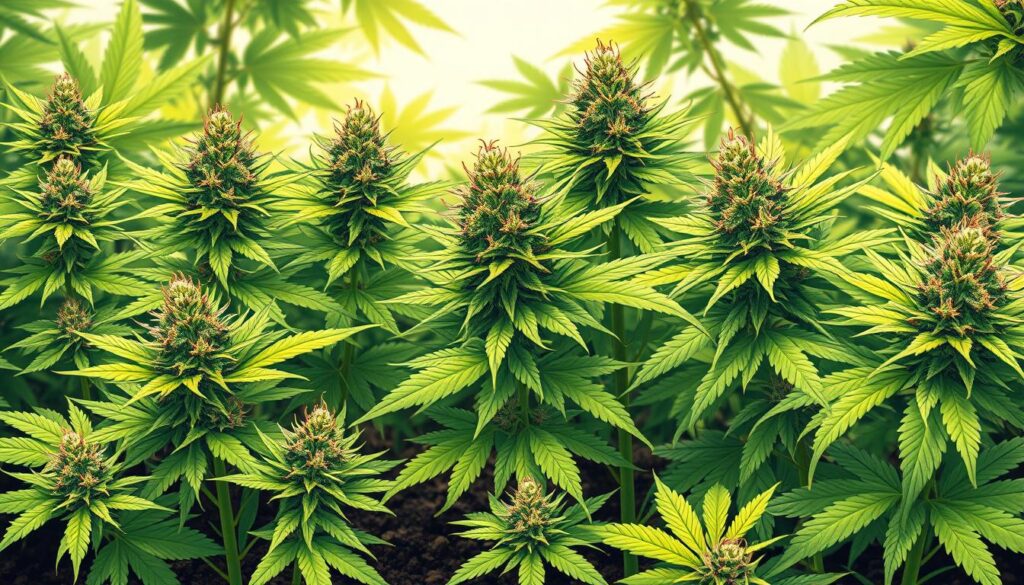
Spotting marijuana plants takes sharp eyes and specific know-how. It’s all about noticing unique features that set them apart. Key visual clues make weed identification straightforward1.
Marijuana leaves stand out with their multiple points or “fingers”. Mature plants usually have five to seven fingers. Indica leaves typically show 5-7 points, while sativas often have 7-131.
But there’s more to it than just leaves. The plant’s overall look, bud structure, and colors are important too. Indica buds are often tight and dense1.
Sativa buds, on the other hand, tend to be looser. They have a unique “foxtail” shape that sets them apart1.
Careful observation is key for accurate pot plant recognition. Some plants, like Japanese Maple, can look similar. Learning the subtle differences is crucial1.
Key Takeaways
- Marijuana leaves have 3-13 points, typically 5-7 in mature plants
- Different cannabis species have unique leaf structures
- Bud shape and density vary between Indica and Sativa strains
- Visual identification requires careful observation
- Some plants can be mistaken for marijuana
Understanding Marijuana Plant Characteristics
Cannabis plants have unique features that set them apart. These traits help identify different marijuana strains. Knowing these characteristics is key for spotting cannabis2.
Common Leaf Shapes and Sizes
Cannabis sativa has palmate leaves with sharp-lobed edges. These leaves usually have 3-7 leaflets. The leaflets measure 5-18 cm long and 3-18 cm wide2.
Leaf structure varies among cannabis types. This makes identification both challenging and interesting.
- Leaf shape: Palmately compound
- Leaflet count: 3-7 individual leaflets
- Leaf margin: Coarsely toothed or serrated
Color Variations in Leaves and Buds
Cannabis plants show a range of colors. They can be light to dark green. Some strains even have unique purple hues3.
Growth Patterns and Height Differences
Cannabis plants vary greatly in growth patterns. Different species and strains can range from 0.3 to 3 meters tall2.
Indica and sativa, the two main types, have distinct growth traits:
| Strain Type | Height | Growth Characteristics |
|---|---|---|
| Indica | Shorter | Bushy, compact structure |
| Sativa | Taller | More spaced nodes, elongated structure |
Understanding these unique characteristics is key to mastering marijuana species identification.
Observing leaf shapes, colors, and growth patterns is crucial. These skills help you spot cannabis and tell different strains apart3.
Distinguishing Between Cannabis Species
Cannabis has diverse species with unique traits. Understanding these differences is key for identifying growth stages. Careful assessment helps recognize subtle variations among cannabis types.
Indica vs. Sativa: Botanical Insights
Cannabis sativa and Cannabis indica are the main species. They differ in looks and chemical makeup.
- Sativa plants typically grow taller with narrow leaves
- Indica plants are shorter and bushier with broader leaves
- Sativa strains tend to have higher THC content4
- Indica strains often have higher CBD levels5
Hybrid Varieties: Nature’s Genetic Blend
Hybrid cannabis mixes traits from indica and sativa plants. These unique cultivars offer balanced features. Growers and users enjoy diverse options with hybrids.
Medical vs. Recreational Strains
The cannabis industry now classifies plants by chemical profiles or “chemovars”. This approach replaces traditional strain categories.
- Medical strains focus on therapeutic properties
- Recreational strains emphasize psychoactive experiences
- Cannabinoid content varies across different types4
“The indica vs. sativa debate should be abandoned in favor of accurate biochemical assays,” says Dr. Ethan Russo4.
Knowing cannabis species helps with cultivation, medical use, and recreational choices. Each plant’s unique chemical makeup determines its effects and benefits.
Identifying Signs of Maturity
Knowing cannabis plant maturity is key for spotting illegal grow ops. The flowering stage shows important signs of peak development. These indicators help in effective cannabis detection.
Flowering Stages and Maturity Indicators
Cannabis plants show clear signs when ready for harvest. Look for these visual cues:
- Pistil color transformation from white to orange or brown6
- Trichome color changes indicating peak THC and CBD levels6
- Approximately 70-90% of pistils darkening in color6
Bud Development and Harvesting Insights
Cannabis strains mature at different speeds. Indica strains usually flower faster, finishing in 8-9 weeks. Sativa types might need 10-12 weeks to complete.
| Strain Type | Flowering Duration | Harvest Indicator |
|---|---|---|
| Indica | 8-9 weeks | 70% pistils darkened |
| Sativa | 10-12 weeks | 30% amber trichomes |
| Hybrid | Varies | Mixed trichome colors |
Pro tip: Use a jeweler’s loupe for precise microscopic examination of trichome development6.
Watching these maturity signs closely helps in successful cannabis detection. It also aids in understanding plant growth.
Timing the harvest right ensures the best potency and flavor. Patience pays off when it comes to cannabis cultivation.
Common Pests and Diseases to Watch Out For
Cannabis plants face many threats. Pests and diseases can quickly harm your crop. Knowing these risks is key for healthy plant growth78.
Identifying Pest Infestations
Insects can harm your cannabis plants. Aphids multiply fast and damage crops78. Spider mites cause spotted leaves and hurt plant health78.
Watch for tiny spots, webs, or bugs. These are early signs during cannabis growth stages8.
Recognizing Symptoms of Plant Disease
Powdery mildew and gray mold can ruin your cannabis crop. Look for odd colors, leaf patterns, or slow growth8. Cannabis mosaic virus twists leaves and creates mottled patterns8.
A visual guide to cannabis pests helps spot issues early7.
Preventative Measures for Healthy Growth
Keep your plants safe with good growing conditions. Use natural predators like Amblyseius swirskii and keep things clean7. Control humidity, temperature, and air flow to prevent disease.
Check plants often and act fast. This helps protect your cannabis from threats8.
FAQ
How can I distinguish between male and female cannabis plants?
Male cannabis plants grow small, round pollen sacs. Female plants produce white hair-like pistils at the nodes. As flowering progresses, females develop dense, resin-covered buds.
Look for pistils changing from white to orange or brown. The growth of trichomes on buds is a key sign of plant sex and maturity.
What are the main differences between Indica and Sativa cannabis plants?
Indica plants are shorter and bushier with broader leaves and denser buds. They have a shorter flowering time and are linked to relaxing effects.
Sativa plants are taller with narrower leaves and longer flowering periods. They’re known for more energizing effects. Hybrid varieties blend traits from both types.
What should I look for when identifying mature cannabis plants?
Mature plants show darkening pistils from white to orange or brown. Trichomes on buds change from clear to cloudy to amber at peak maturity.
Buds swell and become denser as they develop. You’ll also notice increased resin production and stronger aromas.
How can I recognize common pests affecting marijuana plants?
Look for tiny spots on leaves, webbing, or visible insects like spider mites and aphids. Plant diseases can cause leaf discoloration, wilting, or unusual growth patterns.
Common issues include powdery mildew, bud rot, and root rot. These problems can seriously harm plant health.
What are the typical characteristics of cannabis leaves?
Cannabis leaves have 3-7 leaflets, each 3–18 cm long. They’re narrowly lanceolate or elliptical with long-tapering tips and coarsely toothed edges.
Leaf colors range from light to dark green, sometimes with purple hues. They have a distinct sharp, deeply lobed structure with prominent veins.
How tall can cannabis plants grow?
Cannabis plants can grow from 0.3 to 3 meters (1 to 10 feet) tall. Height varies based on strain and growing conditions.
Indica varieties are usually shorter and bushier. Sativa strains can grow much taller with more space between nodes.
What’s the difference between hemp and marijuana?
The main legal difference is THC content. Hemp has no more than 0.3% THC, while marijuana has higher levels.
Both come from the Cannabis sativa L. species. Hemp is grown for fiber and seeds. Marijuana is used for its psychoactive and medicinal properties.
Source Links
- How to Identify Marijuana Leaves – https://leafwell.com/blog/how-to-identify-marijuana-leaves
- SS-AGR-480/AG476: Cannabis sativa Plant Identification and Its Look-Alikes – https://edis.ifas.ufl.edu/publication/AG476
- Cannabis – https://en.wikipedia.org/wiki/Cannabis
- Indica vs. sativa: What’s the difference? – https://www.medicalnewstoday.com/articles/indica-vs-sativa
- Beginner’s Guide to Cannabis Plants and Strains – https://www.healthline.com/health/sativa-vs-indica
- How to Identify Mature Cannabis Plants: A Comprehensive Guide | APE Premium Cannabis – https://apepremium.com/how-to-identify-mature-cannabis-plants/
- Cannabis – Pests, Diseases and Biological Control – https://www.koppertus.com/crops/ornamentals/cannabis/
- Common Cannabis Pests and Diseases – https://www.dripworks.com/blog/common-cannabis-pests-and-diseases?srsltid=AfmBOoo6Pn-CSodOQ3ZgZ9Lw_nXcZo-dCQiPWg6ikuGR5DBmiYIiFvwb

