Emo and scene subcultures fascinate with their unique styles. They offer distinct approaches to music, fashion, and self-expression. These alternative cultures have captured the hearts of many young people12.
Emo culture began in the mid-1980s, inspired by emotional-hardcore punk music. Scene subculture followed later, emerging in the late 1990s and early 2000s12.
Both movements go beyond fashion. They represent powerful forms of personal identity. Each subculture has its own unique traits in the world of alternative fashion2.
Key Takeaways
- Emo and scene are distinct subcultures with unique musical and fashion identities
- Origins trace back to different musical movements in the 1980s and 1990s
- Each subculture has specific personality traits and fashion choices
- Social media played a crucial role in popularizing both styles
- Musical preferences differ significantly between emo and scene individuals
Origins and Historical Background
Music genres from underground scenes have shaped youth countercultures. Emo and scene styles revolutionized musical expression and fashion in recent decades34. These powerful pop culture phenomena left a lasting impact on young people.
The Birth of Emo Culture in the 1980s
Emo emerged from the Washington D.C. punk scene as a passionate subculture. The term “emo” stood for “emotional hardcore,” describing bands with vulnerable lyrics5. Pioneering groups like Rites of Spring set the stage for this unique style3.
- Originated in mid-1980s Washington D.C.
- Derived from hardcore punk scene
- Characterized by emotional and introspective music
The Evolution of Scene Style in the 2000s
Scene culture blossomed as a vibrant youth subculture in the mid-2000s. Teenagers expressed their identity through unique clothing and music preferences3. This style quickly gained popularity among young people seeking alternative forms of expression.
Musical Influences and Development
The musical landscape of these subcultures changed dramatically over time. Emo bands like Fall Out Boy and My Chemical Romance gained mainstream popularity through MTV3. Their success transformed emo into a significant pop culture phenomenon.
By the 2010s, these music genres had undergone significant changes. Emo returned to more underground sounds, maintaining its dedicated fanbase. Meanwhile, scene culture continued to influence youth fashion and musical tastes35.
Know the Difference Between Emo and Scene
Emo and scene youth countercultures showcase unique approaches to self-expression. They differ in clothing, attitude, and musical preferences. Teen trends in alternative fashion have significantly influenced these subcultures.
Fashion and Clothing Choices
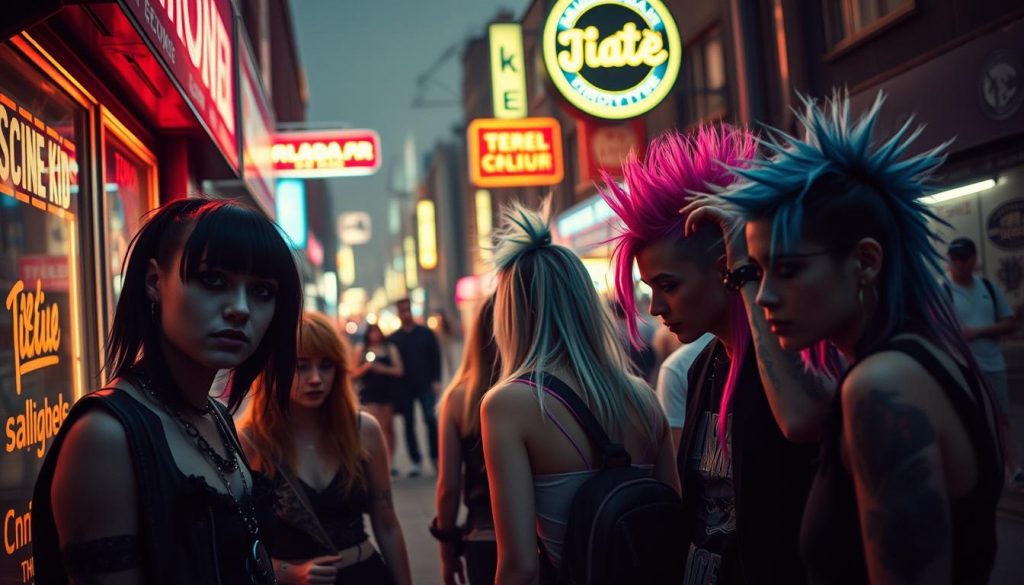
Scene kids favor bright, eye-catching colors and eclectic outfits6. Their style includes vibrant skinny jeans, androgynous elements, and large accessories.
Emo fashion leans towards darker tones, especially black7. Their wardrobe often features band merchandise and introspective clothing choices.
Hair Styles and Colors
Scene kids rock big, puffy hairstyles with long fringes and bright colors6. Emo individuals prefer side-swept bangs, with boys sporting longer hair.
Attitude and Personality Traits
Scene kids are known for being lively, cheerful, and attention-seeking7. They tend to be outgoing and emotionally brave6.
Emo individuals are often more introspective, sensitive, and deeply emotional7. Their emotional landscape is profound and complex.
- Scene: Vibrant and energetic
- Emo: Introspective and profound
These differences highlight the rich variety in alternative fashion and youth expression. Emo and scene cultures offer unique ways to showcase individuality.
Musical Preferences and Cultural Expression
Emo and scene subcultures are unique music genres in pop culture. They’re shaped by distinct musical tastes and emotional landscapes. Research has revealed how musical preferences influence these subcultures8.
Five key dimensions of musical preferences explain young listeners’ complex choices. These include Intense and Contemporary styles8.
Emo music falls under the Intense musical dimension. It features emotionally charged rock tracks with loud, aggressive sounds. Bands like My Chemical Romance and Jimmy Eat World are popular in this genre8.
These musical pieces often represent deep psychological attributes. They’re characterized by passionate and introspective qualities8.
Scene music aligns more with the Contemporary musical dimension. It incorporates percussive, electric sounds from artists like Breathe Carolina and 3OH!38.
Musical preferences in emo and scene subcultures go beyond genre classification. They reflect individual emotional experiences and social identities. Studies show that musical choices are deeply personal8.
Listeners select tracks that match their inner emotional states and social contexts. These genres express individual and collective identity in youth culture8.
Music in these subcultures is more than entertainment. It’s a language of emotional expression and social connection. It shapes personal identity in contemporary youth culture.
FAQ
What is the main difference between emo and scene styles?
Emo and scene styles differ in fashion, music, and attitude. Emo is introspective with darker clothing and emotional rock music. Scene features brighter colors, eclectic fashion, and a more energetic, party-oriented approach.
When did the emo and scene subcultures originate?
Emo emerged in the 1980s from the post-hardcore punk scene. Scene culture developed in the early 2000s as a distinct but related alternative style.
Both subcultures evolved from underground music scenes into broader cultural movements.
How can I identify the difference between emo and scene hairstyles?
Emo hairstyles have side-swept bangs, often covering one eye, with darker colors like black or brown. Scene hairstyles are vibrant, featuring bright, multi-colored hair with dramatic and elaborate styling.
Scene hair often includes teased or spiked elements for added flair.
What kind of music do emo and scene subcultures listen to?
Emo music is emotional, introspective rock with bands like My Chemical Romance and Fall Out Boy. Scene music is upbeat, incorporating electronic elements and pop influences.
Scene tunes have a more energetic and dance-oriented sound.
Are emo and scene the same thing?
No, emo and scene are distinct alternative subcultures. Emo focuses on emotional depth and introspection. Scene emphasizes high-energy and bold self-expression.
What are the typical clothing choices for emo and scene styles?
Emo fashion includes black skinny jeans, band t-shirts, and darker, subdued colors. Scene style embraces bright, eye-catching colors and mix-and-match patterns.
Scene clothing choices are designed to stand out in a crowd.
How do the attitudes differ between emo and scene individuals?
Emo individuals are often seen as introspective, sensitive, and emotionally deep. Scene people tend to be outgoing, energetic, and focused on creating attention-grabbing presences.
Source Links
- Emo vs Scene – Difference and Comparison – https://www.diffen.com/difference/Emo_vs_Scene
- The difference between emo and scene / Scene | WeLoveEmo – https://weloveemo.jouwweb.nl/scene/the-difference-between-emo-and-scene
- Emo: A Short History – https://teachrock.org/lesson/emo-a-short-history/
- Emo – https://en.wikipedia.org/wiki/Emo
- The secret history of emo music – Interview Magazine – https://www.interviewmagazine.com/music/secret-history-emo-music
- Scene (subculture) – https://en.wikipedia.org/wiki/Scene_(subculture)
- Difference Between Emo and Scene – https://www.differencebetween.net/miscellaneous/difference-between-emo-and-scene/
- The Song Remains the Same: A Replication and Extension of the MUSIC Model – https://pmc.ncbi.nlm.nih.gov/articles/PMC4016970/