
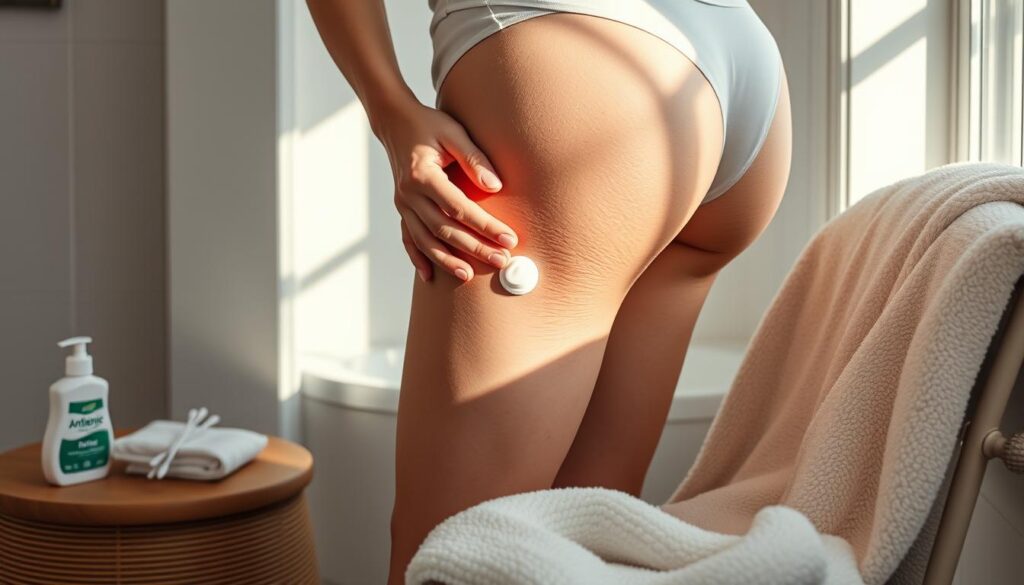
Boils on the inner thigh can be painful and annoying. They often pop up in warm, sweaty spots where skin rubs together1. Learning to handle and avoid these skin bumps is key for healthy skin2.
Staph bacteria usually cause these red, sore lumps by entering hair follicles1. If not treated right, these infections can spread fast2.
Some health issues like diabetes can make you more likely to get boils1. People with lots of skin friction or extra weight might get them more often2.
Key Takeaways
- Boils are common skin infections in areas with friction
- Staphylococcus aureus bacteria typically cause boils
- Maintaining good hygiene helps prevent skin infections
- Do not attempt to squeeze or pop boils
- Seek medical attention for persistent or severe boils
Understanding Boils on Inner Thigh: Causes and Symptoms
Groin boils are painful skin infections that develop in the inner thigh area. These uncomfortable bumps, called furuncles, are often caused by bacterial infections. Staphylococcus aureus is the main culprit behind these infections3.
Knowing the symptoms and causes can help you manage and prevent these skin issues. Let’s explore the key aspects of groin boils to better understand this condition.
Common Symptoms and Appearance
Boils on the inner thigh start as small, red, tender bumps. They grow over time and become more painful. These furuncles often develop through several stages.
- Initial red, swollen area
- Hardening and increasing pain
- Formation of white or yellow pus center
- Eventual drainage of infected material
Furuncles can vary in size and typically last for a few weeks3. Not all red bumps are boils. It’s important to tell them apart from other skin problems like acne or insect bites4.
Main Causes and Risk Factors
Several factors can make you more likely to get groin boils. These include medical conditions, lifestyle choices, and exposure to bacteria.
| Risk Category | Contributing Factors |
|---|---|
| Medical Conditions | Diabetes, compromised immune system, eczema, psoriasis |
| Lifestyle Factors | Tight clothing, excessive sweating, poor hygiene |
| Bacterial Exposure | Close contact with infected individuals |
About 20% of people carry Staphylococcus aureus long-term. This increases their risk of developing boils3. Inner thighs are prone to boils due to friction and moisture buildup4.
“Prevention is always better than cure when it comes to managing skin infections.”
Note: If you experience recurring boils or severe symptoms, consult a healthcare professional for proper diagnosis and treatment.
Home Treatment Options and Remedies
Boils on your inner thigh need careful attention and proper home care. Good treatment methods can help manage these painful skin infections. They can also promote faster healing5.
Natural Healing Strategies
Warm compresses are key in treating boils. Apply a warm, clean cloth to the area for 10-15 minutes. Do this 3-4 times daily.
This method helps draw out infection and reduce pain6.
- Clean the area with antibacterial soap after drainage
- Cover the boil with sterile bandages
- Avoid touching or squeezing the boil
Natural Remedies with Healing Properties
Several natural treatments can support your healing process:
- Tea tree oil: Antibacterial properties help fight infection5
- Turmeric: Contains curcumin that may accelerate healing5
- Castor oil: Provides anti-inflammatory benefits5
Personal Hygiene Practices
Strict personal hygiene is vital in preventing boil spread and recurrence. Wash hands often and use clean towels. Avoid sharing personal items5.
Wash bedding and clothing at high temperatures to kill bacteria6.
“Prevention is always better than cure when managing skin infections.”
Over-the-counter pain relievers like acetaminophen can help manage discomfort. See a doctor if the boil persists or becomes more painful6.
Medical Interventions and Professional Care
Professional medical help is vital when home remedies don’t work for inner thigh boils. Knowing when to seek expert care can prevent complications and ensure proper treatment7.
Professional Treatment Options
Your doctor may suggest several approaches for stubborn boils:
- Incision and Drainage: A doctor carefully opens and drains the boil to remove infected material8
- Antibiotic Treatment: Oral or topical antibiotics prescribed to fight bacterial infections7
- Culture testing to identify specific bacterial strain
Warning Signs Requiring Medical Attention
Seek medical help if you notice these symptoms:
- Boil does not heal within two weeks
- Experiencing fever or chills
- Boil appears soft and spongy
- Multiple boils clustering together7
If you have health issues like diabetes, getting medical help is crucial8. Untreated boils can lead to serious infections spreading to other body parts.
Quick professional care can stop more serious health risks from untreated boils.
Early professional treatment can prevent more serious health risks associated with untreated boils.
Conclusion
Tackling boils on the inner thigh demands a holistic approach to skin health. Understanding the causes is key for effective management9. Good hygiene and a strong immune system are crucial in preventing and treating these infections. Implementing skin health strategies can greatly improve your condition9.
Most boils can be treated at home with proper care. Warm compresses, good hygiene, and symptom monitoring are essential steps9. Seek medical help if your boil lasts over two weeks or shows concerning signs9.
Prevention is the best way to manage inner thigh boils. Boost your immunity through healthy habits and good hygiene. Wear breathable clothes and practice careful skin care9. Avoid close contact with people who have staph infections.
Everyone’s experience with boils is different. Pay attention to your body and get professional advice when needed. Approach skin health with patience and care. Your effort in managing these conditions can greatly improve your overall well-being.
FAQ
What causes boils on the inner thigh?
Boils mainly result from Staphylococcus aureus bacteria entering hair follicles. Risk factors include poor hygiene, sweating, obesity, diabetes, and tight clothing. About 20% of people carry the bacteria long-term.
How can I treat a boil at home?
Apply warm, antiseptic compresses to the boil for 10 minutes, four times daily. Keep the area clean with antibacterial soap. Use over-the-counter pain relievers and cover the boil with sterile gauze.
Avoid squeezing or picking at the boil. Maintain good personal hygiene to prevent further infection.
When should I see a doctor about a boil?
Seek medical help if the boil is very painful or doesn’t heal within weeks. Also, consult a doctor if it spreads, won’t drain, or causes fever.
People with diabetes, autoimmune conditions, or at risk for endocarditis should see a healthcare professional quickly.
How can I prevent boils on my inner thigh?
Maintain excellent personal hygiene and wear breathable clothing. Keep skin clean and dry. Wash towels and bedding at high temperatures.
Avoid sharing personal items and use proper hair removal techniques. Managing underlying health conditions can also help prevent boils.
Are boils contagious?
Boils can spread through direct skin contact or shared personal items. The bacteria can transfer between people. Practice good hygiene and wash hands often.
Avoid touching or sharing items with an open boil to prevent spreading the infection.
How long do boils typically last?
Most inner thigh boils develop gradually and last for a few weeks. They swell, fill with pus, and eventually drain.
With proper home care, many boils heal within 1-3 weeks. Severe cases may need medical help.
Can certain medical conditions increase my risk of developing boils?
Yes, conditions affecting your immune system or skin health can increase boil risk. Diabetes, obesity, eczema, and psoriasis make you more prone to skin infections.
Autoimmune disorders can also make you more susceptible to developing boils on the inner thigh.
Source Links
- Boils – https://www.healthdirect.gov.au/boils
- Boils: Treatments, Causes, and Symptoms – https://www.webmd.com/skin-problems-and-treatments/boils
- Boils on the inner thigh: Symptoms, causes, and treatment – https://www.medicalnewstoday.com/articles/321082
- Boils on Inner Thigh: Identification, Treatment, and More – https://www.healthline.com/health/boils-on-inner-thigh
- 10 Ways to Get Rid of Your Boils at Home – https://www.healthline.com/health/home-remedies-for-boils
- Boils and carbuncles-Boils and carbuncles – Diagnosis & treatment – Mayo Clinic – https://www.mayoclinic.org/diseases-conditions/boils-and-carbuncles/diagnosis-treatment/drc-20353776
- Boils on the Inner Thigh: Symptoms, Causes, Treatments – https://resources.healthgrades.com/right-care/skin-hair-and-nails/boil-on-inner-thigh
- Boils – https://www.mountsinai.org/health-library/diseases-conditions/boils
- Boils on Skin: Symptoms, Causes, Treatment and Home Remedies – https://www.carehospitals.com/diseases-conditions/boils-on-skin

