
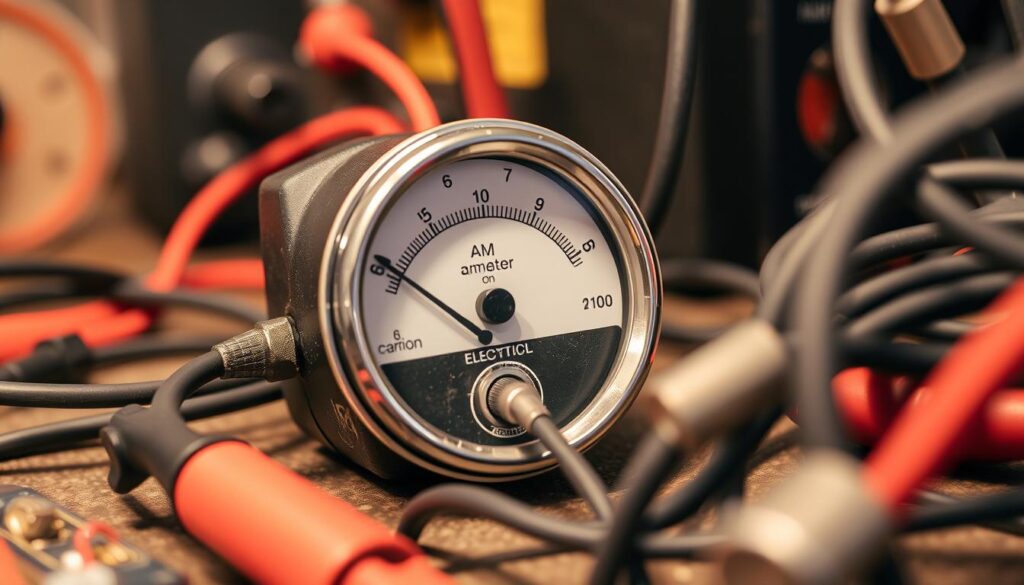
Measuring amperage is crucial for understanding electrical systems and managing power use. This skill helps diagnose issues and prevent hazards. Amperes (amps) measure the rate of electron flow in circuits.
Electrical devices and household circuits depend on precise current measurements. Most home circuits are rated for 15-20 amps. Standard outlets deliver up to 120 volts.
Knowing amperage helps calculate power consumption and avoid circuit overloads. This guide covers the basics of amperage measurement. You’ll learn about tools and techniques for accurate readings.
We’ll explore methods for measuring Direct Current (DC) and Alternating Current (AC). These currents are used in different electrical applications1.
Key Takeaways
- Amperage measures electron flow in electrical circuits
- Household circuits typically range from 15-20 amps
- Different tools are needed for measuring DC and AC current
- Understanding amperage prevents electrical system failures
- Safety is paramount when measuring electrical current
Understanding Amperage and Its Importance
Electrical current powers modern technology. Amperage is key for working with electrical systems. An Amps measurement tool reveals insights about power use and circuit performance2.
Amperage, in amps or amperes, shows electrical current flow in a circuit2. It’s like water in a pipe. More amps mean more electrical current moving3.
What is Amperage?
An ampere meter quantifies electrical current. One amp is the current from one volt through one ohm resistance2.
Your current rating shows the electrical flow in a specific circuit3.
Why Measure Amps?
- Determine safe wire sizes
- Assess battery discharge rates
- Ensure electrical system safety
- Monitor power consumption
Common Applications of Amperage Measurement
| Application | Typical Amp Range |
|---|---|
| Household Appliances | 15-30 Amps4 |
| HVAC Systems | Up to 30 Amps4 |
| Personal Electronics | 1-5 Amps3 |
Pro tip: Amperage knowledge helps manage electrical systems better. This applies to homeowners, technicians, and DIY fans.
“Electricity is the lifeblood of modern technology, and amperage is its pulse.” – Anonymous Electrical Engineer
Mastering amperage measurement gives you deeper electrical system insights. It ensures safer, more efficient power management4.
Tools Needed to Measure Amps
Measuring electrical current requires specialized tools for accurate amp readings. These tools help track and analyze electrical current. Choosing the right amp meter is crucial for both DIY enthusiasts and professional electricians.
Different tools offer unique capabilities for measuring electrical current. The right amps reader can greatly improve your electrical measurements. Let’s explore some essential tools for measuring amps.
Multimeter Essentials
A digital multimeter is versatile for measuring electrical current. It can measure voltage, resistance, and amps with precision. When selecting a multimeter, look for these key features:
- Range of measurement up to 10 amps DC5
- Multiple reading function to enhance accuracy5
- Safety ratings and insulation protection
Clamp Meter Overview
Clamp meters offer a non-invasive way to measure electrical current. They use Hall-effect sensors to measure amps without breaking the circuit6.
| Clamp Meter Feature | Specification |
|---|---|
| DC Current Range | Up to 1000A5 |
| Max/Peak Hold | Captures peak current readings6 |
| Current Transformer | 1x and 10x multiplier openings6 |
Non-Contact Voltage Tester
A non-contact voltage tester quickly detects electrical current without direct contact. It adds an extra layer of safety when working with electrical systems. This tool is handy for initial checks.
Remember: Always prioritize safety when measuring electrical current and use appropriate protective equipment.
Consider your project’s needs when choosing an amp meter. Think about the electrical systems you’ll be working with. Each tool has its own benefits for safe and accurate current measurement.
Safety Precautions When Measuring Amperage
Electrical safety is vital for amperage measurement. Proper precautions prevent dangerous accidents when using electric current gauge equipment. Understanding the risks is crucial for safe work practices.
Wear Protective Gear
Protecting yourself is essential for safe amperage measurement. Always wear rubber insulating gloves to shield against electrical hazards7. Keep at least 5 feet away from water and electrical sources7.
- Use rubber insulating gloves
- Wear safety glasses
- Use non-conductive tools
Inspect Equipment Before Use
Check your electrical measurement tools thoroughly before use. Look for damage or wear on multimeters and probes. Make sure cord insulation is intact and plugs are in good shape7.
| Equipment Check | What to Look For |
|---|---|
| Multimeter | Intact probes, no visible cracks |
| Electrical Cords | Secure insulation, no fraying |
| Safety Devices | Functioning Ground Fault Circuit Interrupters (GFCIs) |
Understand Circuit Risks
Electric current can be hazardous. Currents above 0.01 amps with voltages over 36V are risky. Never attempt DIY electrical repairs without proper training7.
For complex electrical issues, call professional electricians right away7.
“Safety is not an accident. It’s a conscious choice.” – Unknown Electrical Safety Expert
Always put your safety first when measuring amperage. Be aware of potential electrical hazards throughout the process.
How to Use a Multimeter to Measure Amps
A multimeter is a crucial tool for measuring electrical current. It helps you safely assess current ratings in various electrical systems. Precision is key when working with electricity.
Choose the right ampere meter for your needs. Digital multimeters offer advanced features like auto-ranging. They also have easy-to-read displays, perfect for frequent users.
Preparing Your Multimeter
To get started with measuring amps, follow these essential steps:
- Ensure the multimeter is set to the correct current measurement mode
- Insert the black probe into the “COM” socket
- Insert the red probe into the “A” or amperage socket
- Select the appropriate current range
Measuring DC Amperage
For direct current (DC), break the circuit and connect the multimeter in series. Safety is paramount – always disconnect power before making connections8.
Remember: The human body can only safely tolerate currents around 0.01 Amps8.
Measuring AC Amperage
For alternating current (AC), switch your multimeter to the AC setting. Use the formula I(A) = P(W) / V(V) to calculate amps. This helps determine current flow in AC circuits.
| Measurement Type | Recommended Approach |
|---|---|
| DC Measurement | Break circuit, connect in series |
| AC Measurement | Use AC mode, ensure proper range |
| Safety Limit | Stay below 0.01 Amps |
Practice these steps to master using your multimeter. You’ll soon measure electrical current safely and effectively. Remember, safety always comes first when working with electricity.
Using a Clamp Meter for Amp Measurement
A clamp meter makes measuring electrical current easy. This handy tool lets you check current without interrupting circuits. It’s a safe and efficient way to measure amps.
Choosing the Right Clamp Meter
Pick a clamp meter that fits your needs. Look for the right current range and AC/DC capabilities. Check the accuracy rating for precise measurements.
- Current measurement range matching your needs9
- AC and DC current capabilities9
- Accuracy rating for precise measurements9
Step-by-Step Clamp Meter Use
Using a clamp meter is simple. Set it to the correct mode first. Then, place the meter’s jaws around a single wire.
Keep at least 1 inch away from the wire while measuring. Finally, check the display for your reading.
- Ensure the clamp meter is set to the correct measurement mode
- Position the meter’s jaws around a single conductor10
- Maintain at least 1 inch of distance from the conductor during measurement10
- Read the display carefully
Interpreting Results
Know how to read your amp meter. Current readings below 0.5 A will display a flashing center dot, while currents above 0.5 A show a steady icon10. Some advanced clamp meters can measure up to 600 amps9.
“A clamp meter is the most appropriate tool for measuring electrical current with precision and ease.”
For best results, check your meter’s specs. Always follow the manufacturer’s guidelines when taking measurements. This ensures you get accurate readings every time.
Measuring Amperage in Household Appliances
Understanding household appliance current ratings is key for managing electrical consumption. Measuring amps helps monitor energy use and prevent electrical overloads. This knowledge is crucial for home safety.
Common Appliances and Their Amp Consumption
Household appliances draw different amounts of current. Here’s a breakdown of typical amperage measurements:
- Hair Dryers: Require 10.0 amps and 2200 watts11
- Washing Machines: Use up to 10 amps and 2200 watts11
- Laptops: Consume less than 0.5 amps and up to 100 watts11
- Mobile Phone Chargers: Use less than 0.5 amps11
Safely Accessing Household Circuits
Most homes have an electrical service capacity between 100 to 200 amps12. Safety is crucial when measuring amperage. Always follow these guidelines:
- Turn off power at the main circuit breaker
- Use a reliable multimeter or clamp meter
- Wear appropriate protective gear
Tips for Accurate Amperage Measurement
- Calculate expected current using the formula: Amps = Watts / Volts
- Compare measured values with manufacturer specifications
- Check for any unusual variations in current rating
Always prioritize safety when working with electrical measurements.
Homes built after the 1960s usually have main service panels with circuit breakers. These panels provide 240-volt current12. Knowing your home’s electrical capacity helps prevent overloads.
This knowledge ensures safe operation of your household appliances. It’s an important step in maintaining a secure home environment.
Measuring Amps in Automotive Circuits
Automotive electrical systems are complex networks that need precise measurement techniques. Using an electric current gauge helps diagnose and solve vehicle electrical problems. You can tackle these issues with accuracy and confidence.
Understanding Automotive Electrical Systems
Modern vehicles rely on electrical systems that need careful monitoring. Most passenger cars use a 12-volt system13. This setup requires specialized measurement techniques.
An Amps measurement tool is crucial for understanding electricity flow in vehicle circuits14. It helps pinpoint issues and ensure proper functioning.
Tools Specific for Car Circuits
Accurate current measurement in automotive systems requires specific tools. An ampere meter is essential for these tasks. Key tools for automotive electrical diagnostics include:
- Digital multimeter
- Inductive current clamp
- Automotive-specific electrical test equipment
Testing Battery Management Systems
Battery management systems need precise current measurement. A starter motor can draw several hundred amps while cranking the engine13. Proper testing involves:
- Checking battery terminal current draw
- Measuring alternator output
- Verifying electrical system integrity
Remember, accurate amperage measurement is key to maintaining your vehicle’s electrical health.
Safety comes first when measuring automotive circuits. Use the right electrical diagnostic tools for best results. One amp represents 6.3 million trillion electrons flowing per second13.
Precise measurement is vital for top vehicle performance. It helps keep your car running smoothly and efficiently.
Troubleshooting Amperage Measurement Issues
Measuring electrical current can be tricky, even for pros. Challenges can affect your measurement accuracy. Knowing these issues helps get reliable current rating results.
Identifying Common Problems
Electrical measurement errors often come from simple mistakes. Here are key issues to watch for:
- Incorrect meter settings for current measurement15
- Mistakenly setting the multimeter to voltage instead of current16
- Improper probe placement in measurement sockets16
Ensuring Proper Connections
Proper connections are vital for measuring electrical current. Always double-check your setup. Select the right current range on your meter16.
For safety, multimeters typically handle up to 10 amps of current17.
“Prevention is better than repair when it comes to electrical measurements.”
Maintaining Your Equipment
Regular maintenance prevents measurement errors. Consider these tips:
- Calibrate your multimeter regularly
- Inspect leads and probes for damage
- Clean connection points
- Store equipment in a dry, safe environment
Wrong amperage measurement can cause circuit damage and blown fuses. It may also lead to device overheating15.
Follow these guidelines to reduce errors. You’ll protect your equipment and yourself16.
Real-World Examples of Amperage Measurement
Amperage measurement is vital in our daily lives and industrial operations. It ensures electrical safety and efficiency in homes and large facilities. Understanding this concept helps us use electricity wisely and safely.
Residential Settings: Energy Insights
At home, amperage measurement reveals power use and prevents electrical dangers. Circuit breakers usually range from 15 to 30 amps. Knowing these limits helps avoid overloading.
Measuring appliances’ electric current can show unexpected energy use. This knowledge helps you make smarter choices about your electricity consumption electrical measurement techniques.
Industrial Applications: Precision and Safety
Industries need precise amperage measurement. LED lighting systems show this well. A 400-Watt Metal Halide fixture uses 1.64 amps. An equivalent 150-Watt LED fixture uses only 0.54 amps18.
Such measurements ensure efficient power distribution and prevent system overloads. They also help optimize energy use in industrial settings.
- Efficient power distribution
- Preventing electrical system overloads
- Optimizing energy consumption
Personal Projects: DIY Electrical Work
DIY fans need to know how to measure amps. It’s key for electronics or home improvements. An electric current gauge helps you:
- Verify circuit compatibility
- Ensure safe electrical connections
- Monitor power requirements
Accurate amperage measurement isn’t just technical—it’s about protecting your devices and yourself.
Remember, knowledge is power—especially with electrical systems! Measuring amps keeps you safe and your devices working well.
Conclusion: Measuring Amps Made Easy
Mastering electrical current measurement is crucial for working with electrical systems. Using multimeters and clamp meters provides valuable insights into circuit operation. This skill opens doors to exciting projects and opportunities19.
Safety is paramount when using an amps reader. The techniques you’ve learned will boost your confidence in complex electrical environments. Practice with simple circuits first, then progress to more challenging measurements.
Each measurement deepens your understanding of electrical systems. Keep experimenting and stay curious about this fascinating field20.
Next Steps in Your Electrical Learning
Expand your knowledge through online courses and electrical engineering textbooks. Connect with professional electricians to gain practical insights. Your journey in understanding electrical current is just beginning.
Keep honing your skills and exploring the world of electrical systems. The more you learn, the more doors will open for you.
FAQ
What exactly is amperage?
Amperage measures the flow of electric charge through a circuit. It’s the amount of electricity moving through a wire at any moment. One amp is the current produced by one volt acting through one ohm of resistance.
Why is measuring amperage important?
Measuring amperage helps prevent circuit overloads and ensures electrical system safety. It’s crucial for determining appropriate wire sizes and assessing battery performance. This measurement also helps understand the power consumption of electrical devices and appliances.
What tools do I need to measure amps?
The main tools for measuring amperage are multimeters, clamp meters, and non-contact voltage testers. Multimeters are versatile, measuring voltage, resistance, and current. Clamp meters measure current without breaking the circuit.
Non-contact testers quickly detect electrical current. Each tool serves a specific purpose in amp measurement.
Is it safe to measure amperage at home?
You can measure amperage at home, but safety is crucial. Always wear rubber gloves and use insulated tools. Turn off power before connecting measurement devices. Avoid wet surfaces and never measure high-voltage circuits without proper training.
How do I measure amps with a multimeter?
To measure amps, insert the black probe into “COM” and the red probe into “A”. Select AC or DC amperage and set the range. Break the circuit and connect the multimeter in series.
For DC, connect the red probe to the negative terminal. The black probe goes to the negative wire.
Can I measure amperage in household appliances?
Yes, you can measure amperage in household appliances. Use a clamp meter around the power cord or check the circuit breaker panel. Always turn off power before measuring.
You can calculate expected amperage using this formula: Amps = Watts / Volts. This helps verify the appliance’s electrical consumption.
What are common mistakes when measuring amperage?
Common mistakes include using incorrect meter settings and making poor connections. Not breaking the circuit properly and choosing the wrong measurement range are also issues. Always double-check your setup and ensure secure connections.
How dangerous is electrical current?
Electrical current can be extremely dangerous. Currents as low as 0.01 amps can be hazardous with voltages over 36V. Always treat electrical systems with respect and use proper safety equipment.
What’s the difference between AC and DC amperage?
AC (Alternating Current) changes direction periodically and is found in household electricity. DC (Direct Current) flows in one direction, common in batteries and electronics. Set your multimeter to the correct current type for accurate readings.
How often should I calibrate my amp measurement tools?
Calibrate professional-grade tools annually or follow manufacturer recommendations. For home use, perform regular visual inspections and check battery levels. Verify accuracy by comparing readings with a second device.
Source Links
- AMPS, WATTS, AND VOLTS: A GUIDE TO MEASURING POWER | JP Electrical – https://jpelectric.com/blog/guide-to-measuring-power/
- What Are Amps And Why Do They Matter? – https://battlebornbatteries.com/what-are-amps/?srsltid=AfmBOoo6luUaTEMsl51jLWjUB9v-qFzaBDgUXmOmbx2KI_9WMKeRe2v1
- What Is a Watt? – https://science.howstuffworks.com/environmental/energy/question501.htm
- What Do Volts, Amps, and Watts Mean? Electricity 101 – https://blog.ecoflow.com/us/what-do-volts-amps-watts-mean/
- How To Measure DC Amps With A Multimeter – https://kaiweets.com/blogs/news/how-to-measure-dc-amps-with-a-multimeter
- Measuring amp draw from tools – https://ncwoodworker.net/forums/index.php?threads/measuring-amp-draw-from-tools.44364/
- 10 Electrical Safety Tips For The Workplace | SafetyCulture – https://safetyculture.com/topics/electrical-hazards/10-electrical-safety-rules/
- What are amps? And how to measure amps with a multimeter? – https://www.ecolithiumbattery.com/what-are-amps/
- How to Measure AMPS with a Clamp Meter – https://kaiweets.com/blogs/news/how-to-measure-amps-with-a-clamp-meter
- How to Measure Current with a Clamp Meter – https://www.fluke.com/en-us/learn/blog/clamps/how-to-measure-current?srsltid=AfmBOoqB9NXD0GNGcpgorl6xoMW12G7DXo21TgW63hnSPoSzm2-rFkDI
- Home Appliances Ratings | Electrical Safety First – https://www.electricalsafetyfirst.org.uk/guidance/safety-around-the-home/home-appliances-ratings/
- How to Determine Your Electrical Service Amps – https://www.thespruce.com/electrical-service-size-of-my-home-1152752
- Basics of Automotive Electrical Circuits – https://www.aa1car.com/library/automotive_electrical_circuits.htm
- How to Measure Amps – Coolcircuit.com – https://www.coolcircuit.com/how-to-measure-amps/
- struggling to measure current of device – https://forum.arduino.cc/t/struggling-to-measure-current-of-device/691913
- How to Use a Multimeter, Part 4: Measuring Current (amperage) – Hagerty Media – https://www.hagerty.com/media/maintenance-and-tech/measuring-current/
- All Amped Up: Ampere Measurement From a Multimeter | Cruising World – https://www.cruisingworld.com/how/all-amped-multimeter-ampere-measurement/
- Understanding Watts, Volts, and Amps – https://www.ledlightingsupply.com/blog/understanding-watts-volts-and-amps
- Simple Op Amp Measurements | Analog Devices – https://www.analog.com/en/resources/analog-dialogue/articles/simple-op-amp-measurements.html
- Audioholics Amplifier Measurement Standard – https://www.audioholics.com/audio-amplifier/basic-amplifier-measurement-techniques

