
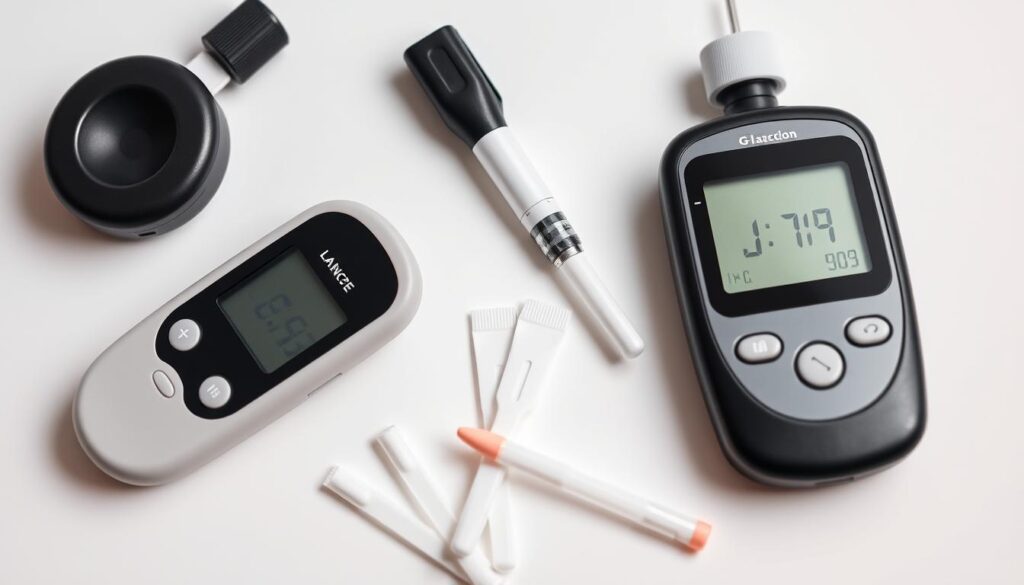
Blood Sugar Testing is vital for managing diabetes. It helps track glucose levels and prevent health problems. Self-monitoring is key for people with diabetes to stay healthy.
Testing shows how meds, food, and exercise affect glucose levels. Some diabetics check their blood sugar often. Your doctor decides how often you should test.
Most people test before meals and at bedtime. They also test two hours after eating. Some may need to check during the night too.
You might test before or after exercise. It’s also good to check when stressed. Test if you feel symptoms of low blood sugar.
Diabetes tools have improved over time. Self-monitoring is now easier than ever. You can buy testing kits without a prescription.
These kits include test strips and lancets. They also have a logbook to record your readings1.
Key Takeaways
- Blood sugar testing is essential for diabetes management
- Testing frequency varies based on individual health needs
- Multiple factors influence blood glucose levels
- Self-monitoring helps track treatment effectiveness
- Regular testing supports better health outcomes
Essential Blood Sugar Testing Equipment and Supplies
Diabetes management requires the right tools to monitor blood sugar. The correct supplies help you make smart choices about your health. Let’s explore the available options.
Blood Glucose Meters and Testing Strips
Blood glucose meters are vital for managing diabetes. These portable devices come in various models with unique features. They help track blood sugar levels accurately.
When picking a meter, consider ease of use and screen visibility. Also, look at blood sample size and data storage capabilities.
Test strips work with glucose meters to measure sugar levels. About 30.3 million Americans use these supplies for diabetes care2.
- Ease of use
- Screen visibility
- Blood sample size required
- Data storage capabilities
Lancets and Lancing Devices
Lancets are small needles used to get blood samples. Modern lancing devices offer adjustable depths for comfort. They help make blood sugar monitoring less painful3.
Continuous Glucose Monitoring Systems (CGM)
CGMs offer advanced blood sugar tracking. These devices use sensors under the skin for real-time glucose data. They provide constant updates on your sugar levels3.
- Sensor replacement every 7-14 days
- Smartphone app integration
- Real-time glucose tracking
Consult your healthcare provider to determine the most suitable monitoring approach for your specific needs3.
| Equipment Type | Key Features | Recommended Usage |
|---|---|---|
| Blood Glucose Meters | Portable, digital reading | Daily blood sugar monitoring |
| Continuous Glucose Monitors | Real-time tracking | Ongoing glucose level management |
| Lancets | Small, precise blood sampling | Blood sample collection |
Remember that 46 out of 50 U.S. states mandate insurance coverage for diabetes supplies, making management more accessible2.
Blood Sugar Testing: Step-by-Step Testing Process
Blood sugar testing is crucial for managing diabetes. It helps track your health and spot potential hypoglycemia. With practice, this process becomes a simple routine.
Before testing, gather these items:
- Blood glucose meter
- Testing strips
- Lancet
- Alcohol swab
Follow these steps for effective blood sugar testing:
- Wash and dry your hands thoroughly to prevent contamination4
- Insert a fresh test strip into your glucose meter
- Select a clean fingertip side for blood sampling
- Use the lancet to gently prick your fingertip
- Squeeze a small blood droplet
- Touch the test strip edge to the blood drop
- Wait for the meter to display your results
Diet, medication, stress, and physical activity can affect your blood sugar levels4. The American Diabetes Association suggests target levels for blood sugar. Aim for 80-130 mg/dL before meals and below 180 mg/dL two hours after eating5.
“Consistent blood sugar testing is your roadmap to understanding and managing diabetes.”
Consider recording your test results, including date, time, and relevant circumstances4. Smartphone apps can help you keep detailed logs for your doctor.
Conclusion
Mastering Self-Monitoring of Blood Glucose is vital for managing diabetes effectively. Modern tools have transformed glucose tracking. Advanced technologies now offer precise monitoring, making it easier than ever6.
Continuous Glucose Monitoring (CGM) devices capture detailed data. They allow you to share insights with your healthcare providers6. These sophisticated tools help you understand how lifestyle impacts your health7.
Structured monitoring guides your treatment plan. It helps you make informed decisions about your daily habits7. Hemoglobin A1c Tests offer a broader view of your blood sugar control8.
Effective self-monitoring requires education and consistent practice. Team up with your healthcare provider to create a personalized strategy7. Stay proactive and informed to take control of your diabetes.
FAQ
How often should I test my blood sugar?
Blood sugar testing frequency varies by diabetes type and treatment plan. Type 1 diabetics may need 4-10 daily tests. Type 2 diabetics’ testing needs differ based on insulin use and management approach. Consult your doctor for a personalized testing schedule.
What equipment do I need for blood sugar testing?
You’ll need a glucose meter, test strips, lancets, and a lancing device. A Continuous Glucose Monitoring System (CGM) is an advanced option. It tracks glucose in real-time and sends data to your smartphone or receiver.
How do I perform a blood sugar test correctly?
Wash and dry your hands thoroughly. Insert a test strip into your meter. Prick your fingertip with the lancing device.
Squeeze gently for a blood drop. Touch the strip to the blood. Your meter will show results quickly. Record your reading with relevant details like time and diet.
What is a Continuous Glucose Monitor (CGM)?
A CGM measures glucose levels continuously using a sensor under your skin. It provides real-time data and trends to a receiver or smartphone. Some CGMs need finger-stick tests for calibration, while others are factory-calibrated.
What is an A1C test, and how is it different from daily blood sugar testing?
An A1C test shows your average glucose levels over 2-3 months. It differs from daily tests that show current levels. The A1C test helps doctors assess your overall glucose control.
Can diet and exercise affect my blood sugar levels?
Yes! Diet, exercise, stress, and medication can greatly impact your blood sugar. Regular monitoring helps you understand these influences. This knowledge allows you to make informed decisions about your lifestyle and treatment.
Are there any tips for more accurate blood sugar testing?
Keep hands clean and dry before testing. Use your fingertip’s side for less pain. Follow your meter’s instructions carefully. Check test strip expiration dates and store supplies properly.
What should I do if my blood sugar is too high or too low?
For high blood sugar, follow your doctor’s advice on insulin or medication adjustments. For low blood sugar, eat quick-acting carbs like glucose tablets or juice. Have an emergency plan ready.
Always consult your healthcare team about managing extreme glucose levels. They can provide personalized guidance for your specific situation.
Source Links
- Home blood sugar testing Information | Mount Sinai – https://www.mountsinai.org/health-library/selfcare-instructions/home-blood-sugar-testing
- Diabetes Testing Supplies – https://www.usmed.com/products/diabetes-testing-supplies/
- Blood glucose meter: How to choose – https://www.mayoclinic.org/diseases-conditions/diabetes/in-depth/blood-glucose-meter/art-20046335
- Blood Sugar Monitoring: Why, How & When To Check – https://my.clevelandclinic.org/health/treatments/17956-blood-sugar-monitoring
- Blood Sugar Test: Purpose, Procedure, and Results – https://www.healthline.com/health/blood-sugar-tests
- Blood Glucose Monitoring – StatPearls – https://www.ncbi.nlm.nih.gov/books/NBK555976/
- Type 2 and Blood Glucose Checks – https://diabetes.org/about-diabetes/devices-technology/blood-sugar-checks-type-2
- Blood Glucose Test: MedlinePlus Medical Test – https://medlineplus.gov/lab-tests/blood-glucose-test/

