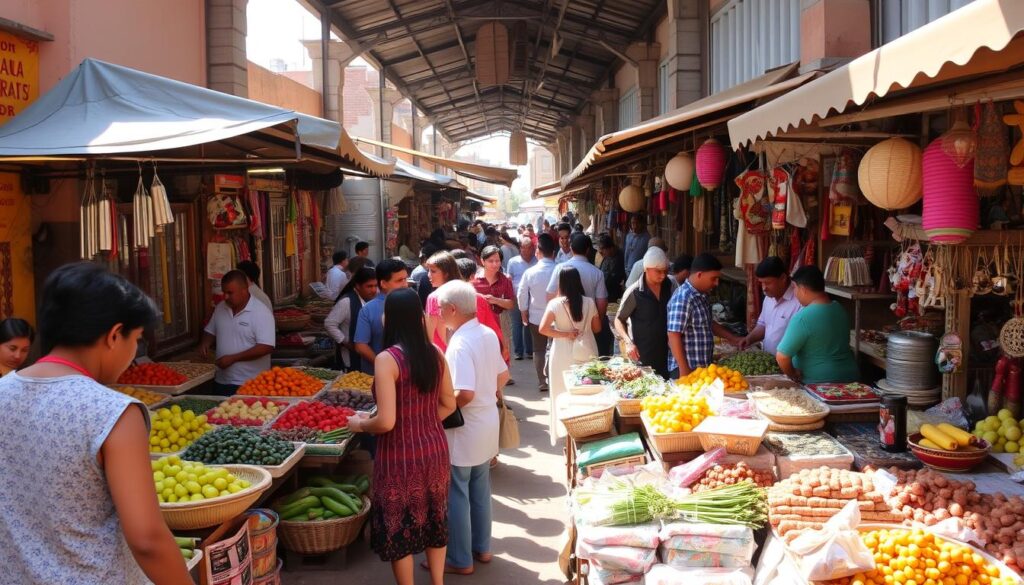
Market photography captures the true spirit of cultural experiences during travels. Local markets buzz with color, energy, and human connection. They’re perfect for documenting daily life through your camera lens.
Capturing market scenes needs more than just technical skill. It requires respect, cultural awareness, and a desire to connect with locals. Your camera becomes a bridge between worlds, preserving unique memories.
Successful market photography involves careful planning. Choose the right gear, like a 24-70mm lens for full-frame cameras. For cropped sensors, a 35mm lens works well.
Practice subtle techniques to blend in while taking photos. This helps you capture genuine moments without disrupting the scene.
Key Takeaways
- Markets are living, breathing cultural landscapes
- Respect local customs and seek permission before photographing
- Choose versatile camera equipment
- Focus on storytelling through images
- Engage authentically with local communities
- Capture candid, natural moments
Understanding Market Photography
Market photography captures local commerce and cultural experiences. It goes beyond traditional Product Photography. This visual storytelling dives into community life and economic interactions1.
What is Market Photography?
Market photography documents local marketplaces artistically. It captures vendors, products, and the surrounding atmosphere. This style blends E-commerce Photography with documentary storytelling1.
Importance of Capturing Local Markets
Photographing markets serves purposes beyond simple documentation. It preserves cultural heritage and showcases economic activities. These images provide visual narratives connecting people across regions2.
Catalog Photography techniques highlight unique products and local craftsmanship. They effectively showcase the essence of market offerings.
Types of Markets You Can Photograph
- Food Markets: Showcasing fresh produce and culinary traditions
- Flower Markets: Capturing colorful and vibrant displays
- Night Markets: Exploring evening commerce and local energy
- Artisan Craft Markets: Highlighting traditional skills and handmade goods
- Seasonal Markets: Documenting special events like Christmas markets
“Photography is the story I fail to put into words.” – Destin Sparks
| Market Type | Photographic Focus | Key Elements |
|---|---|---|
| Food Markets | Fresh Produce | Colors, Textures, Vendor Interactions |
| Flower Markets | Floral Arrangements | Colors, Lighting, Composition |
| Artisan Markets | Handcrafted Goods | Craftsmanship, Details, Cultural Significance |
Each market type offers unique chances to tell visual stories1. Develop a distinctive style and produce high-quality work. Your market photography will resonate with viewers1.
Tips for Preparing for Market Photography
Market photography needs careful prep to capture authentic, compelling images. The right approach can transform your market shots from ordinary to extraordinary. This applies to fashion, lifestyle, or food photography.
Successful market photography starts with thorough research and smart planning. Understanding the local scene helps create stunning visual stories. It’s key to capturing powerful narratives.
Researching Local Markets
Before you go, learn about the market’s unique features. This includes:
- Operating hours
- Cultural significance
- Typical vendor specialties
- Local photography etiquette3
Essential Equipment Preparation
Packing the right gear is vital for market photography. Here are some tips:
- Choose lightweight, versatile equipment4
- Pack a medium zoom lens (24-70mm)
- Bring a small flash
- Consider a 35mm lens for discreet shooting4
Timing Your Market Visit
Pick the best time for your shoot by thinking about:
- Early morning lighting conditions4
- Market activity levels
- Less crowded scenes
- Potential weather variations4
Pro tip: Be ready to adjust your camera settings on the fly. Start with ISO 400 and adapt as needed3.
Market photography is all about capturing real moments. Stay flexible and respect local customs. Let your creativity guide you through the lively marketplace.
Techniques for Capturing Stunning Market Photos
Market photography blends commercial skills with cultural storytelling. Your camera captures vibrant community life through unique visual narratives. Local markets offer rich opportunities for compelling images.
Finding Unique Perspectives
Innovative angles transform ordinary market scenes into extraordinary images. Try these strategies for compelling advertising photography:
- Get low to capture vendor interactions from a unique viewpoint
- Shoot from elevated positions to showcase market layout
- Use reflections in windows or metallic surfaces5
Mastering Natural Light
Light enhances market photographs dramatically. Natural light works best during golden hours, creating magical scenes. Early morning or late afternoon offer soft, warm illumination.
Position yourself to capture dramatic shadows and highlights. This adds depth to your images, making them more engaging.
Connecting with Local Vendors
Authentic market photography relies on building genuine connections. Always ask permission before photographing individuals. Show respect for their cultural norms.
A smile and basic local language greeting can open doors to incredible photographic opportunities. These small gestures can lead to meaningful interactions.
Photography is about capturing moments, not just images
Combine technical skills with cultural sensitivity for compelling market photographs. The best images come from genuine interactions. A deep appreciation for local traditions enhances your work.
Create market photographs that tell powerful stories through unique visual narratives. Your images will capture the essence of community life6.
Post-Processing Your Market Photos
Photo editing is key to transform raw market images into stunning visual stories. Adobe Photoshop and Lightroom are top choices for enhancing travel photography. Editing brings out authentic colors and textures that make market photos captivating.
Editing Basics for Market Photography
Start with RAW files to maximize adjustment potential without losing image quality. Use non-destructive editing in Lightroom to preserve original images while making creative changes.
The spot healing brush helps remove distracting elements. This tool enhances the visual narrative of your market scenes.
Tips for Enhancing Colors and Textures
Focus on selective editing techniques to make your market photos stand out. Adjust luminance and vibrance to bring life to fruits, textiles, and local produce.
For social media, create images that tell a story while staying true to the scene. Use noise reduction for crisp, professional-looking travel blog content.
Sharing Your Photos with the World
Engagement is crucial when sharing market photography. Video posts get 1.5x more interaction than standard image posts on Instagram7.
Write compelling captions that provide context for your photos. Showcase the unique cultural moments you’ve captured during your travels.
FAQ
What equipment do I need for market photography?
For market photography, pack a lightweight, versatile kit. Include a medium zoom lens (24-70mm), a small flash, and a 35mm lens. Choose a camera with good low-light performance and Auto ISO capability.
How do I approach photographing vendors and locals?
Always ask for permission before taking photos. Learn a few basic phrases in the local language. Show respect for those who decline.
Engage with vendors and locals professionally. Offer a friendly smile and show genuine interest in their work or products.
What are the best times to photograph markets?
Early morning provides the best lighting conditions and less crowded scenes. Golden hours offer beautiful natural light and interesting shadows. Research the market’s operating hours to find the most photogenic moments.
How can I capture authentic market scenes?
Focus on capturing candid moments, interesting characters, and expressive faces. Use wide-angle shots to showcase the market’s atmosphere. Get close-up shots of products and details.
Look for unique angles by getting low or finding reflective surfaces.
What post-processing techniques work best for market photography?
Enhance colors and textures while maintaining authenticity. Adjust white balance to capture the true market atmosphere. Use selective editing to highlight key elements.
Avoid over-processing. Focus on bringing out the vibrancy of fruits, vegetables, and textiles.
How do I handle different lighting conditions in markets?
Use Aperture Priority mode and Auto ISO for quick adjustments. Experiment with zone focusing and continuous drive mode. Look for interesting natural light sources.
Capture light filtering through market stalls or creating dramatic shadow patterns.
What types of markets are best for photography?
Different markets offer unique opportunities. Food markets showcase local cuisine. Flower markets provide colorful scenes. Night markets offer vibrant evening atmospheres.
Seasonal markets like Christmas markets present special cultural experiences. Each type offers distinct photographic challenges and opportunities.
How can I respect local customs while photographing markets?
Research local cultural norms before visiting. Learn basic language phrases. Ask for permission before taking photos.
Be sensitive to people’s preferences. Some cultures may have specific restrictions about photography. Always approach with respect and cultural awareness.
Source Links
- How To Stand Out In Today’s Photography Market – Horizon Found | Blog – https://horizonfound.com/how-to-stand-out-in-todays-photography-market/
- The Ultimate Guide to Marketing for Photographers – Aftershoot – https://aftershoot.com/blog/marketing-for-photographers/
- How to Photograph Markets – https://digital-photography-school.com/how-to-photograph-markets/
- Tips for Market Photography – James Allan – https://cameraclips05.wordpress.com/2017-newsletters/february-2017/tips-for-market-photography/
- Must-Follow Product Photography Tips (Tools + Your Options) | BigCommerce – https://www.bigcommerce.com/blog/how-to-rock-product-photography-on-a-budget/
- Product Photography: Craft a Perfect Setup in 2025 – Shopify – https://www.shopify.com/blog/12206313-the-ultimate-diy-guide-to-beautiful-product-photography
- The Photographer’s Marketing Blueprint: Strategies for Success – https://www.datadab.com/blog/the-art-of-marketing-for-photographers-capturing-attention-in-a-visual-world/