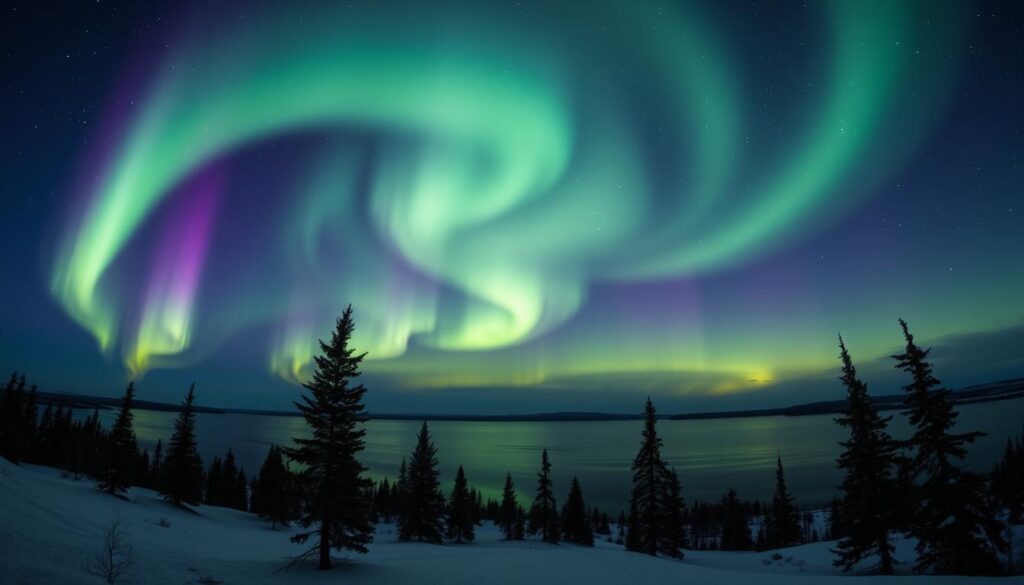
The Aurora Borealis paints the night sky with vibrant colors. It’s a photographer’s dream that requires skill, patience, and proper equipment1. The Northern Lights offer a chance to create stunning images2.
2024 will be special for aurora fans. Some of the brightest displays in over two decades are expected2. The best time to shoot is from autumn to spring12.
Your quest for Northern Lights photos will lead you to amazing places. Nordic countries like Norway, Iceland, and Finland are top spots12. These areas have dark skies and little light pollution.
From the Lofoten islands to Tromsø, each place offers unique views. You’ll have the chance to see this incredible natural wonder up close.
Key Takeaways
- The Northern Lights are most visible from autumn to spring
- 2024 will feature exceptionally bright aurora displays
- Nordic countries offer the best photography locations
- Proper camera equipment is crucial for capturing the lights
- Patience and timing are key to successful aurora photography
Understanding the Northern Lights Phenomenon
The Polar Lights are nature’s most spectacular visual displays. They captivate photographers and travelers worldwide. These Arctic Lights transform dark skies into vibrant canvases of color and movement.
The Geomagnetic Displays begin high above Earth’s atmosphere. Solar particles collide with atmospheric gases at incredible speeds. This creates stunning light shows that dance across polar skies3.
Different gases produce unique colors in the sky. Oxygen generates green and red hues. Nitrogen creates blue and purple tones3.
What Makes the Northern Lights Unique?
The Northern Lights come from complex interactions between solar activity and Earth’s magnetic field4. These celestial performances have some key features.
- Solar wind speeds up to 400 km per second4
- Displays lasting between 10-30 minutes4
- Colors ranging from green, red, blue, to violet4
Best Locations for Viewing
Prime viewing destinations for these mesmerizing light shows include:
- Norwegian Lofoten Islands
- Tromsø, Norway
- Iceland
- Finnish Lapland
- Swedish Lapland
Optimal Viewing Times
Your best chances to see the Northern Lights are during darker months. This is from late autumn through early spring. Solar activity cycles peak every 11 years, affecting aurora intensity3.
*The Northern Lights are a reminder of the extraordinary natural wonders that exist beyond our everyday perception.*
Preparing for Your Photography Trip
Capturing the Northern Lights requires careful planning and the right gear. These celestial displays offer a stunning canvas of beauty that needs special skills and equipment5.
Essential Photography Gear
Your photography toolkit for capturing the aurora should include:
- A high-performance camera with excellent ISO capabilities6
- Wide-angle lens (14-24mm recommended)5
- Sturdy carbon fiber tripod for stability6
- Extra batteries kept warm in interior pockets
Camera Settings for Aurora Photography
Perfect Northern Lights images need precise camera settings. Use the following table as a guide:
| Setting | Recommended Value |
|---|---|
| ISO | 1600-3200 |
| Aperture | f/1.4 – f/2.8 |
| Shutter Speed | 10-15 seconds |
Location and Weather Considerations
Choose your photography spot wisely. The Arctic Circle offers prime viewing of the Northern Lights from September to March5.
Safety and Preparation Tips
Prepare for extreme cold and challenging conditions to maximize your Cosmic Illumination experience.
- Dress in multiple warm layers
- Use a headlamp with red-light mode
- Check aurora and weather forecasts beforehand5
- Carry backup equipment and extra warm clothing
Good preparation turns challenges into an amazing sky-watching adventure. Your efforts will result in breathtaking photos of the celestial light show7.
Capturing Breathtaking Photos
Photographing the Northern Lights requires both skill and creativity. This unique celestial show demands special camera techniques8. Your camera settings are crucial, with full-frame and APS-C cameras offering different benefits.
Top photographers suggest using Sony Alpha 1, Canon EOS R5, or Nikon Z98. Look for cameras with high ISO, good noise reduction, and wide dynamic range. A wide-angle lens and sturdy tripod help capture the aurora’s vast display.
Include diverse landscapes to enhance your aurora shots. Photographers have captured stunning images in Alaska, Norway, Iceland, and Finland9. The lights transform icy waters, mountains, and waterfalls into magical scenes.
The aurora’s blues, purples, maroons, and greens paint the night sky9. Post-processing can boost these colors and reduce noise in high ISO shots. With increased solar activity in 2024, get ready for amazing photo opportunities.
FAQ
What causes the Northern Lights?
The Northern Lights result from solar particles colliding with atoms in Earth’s atmosphere. These collisions create flashes of colored light. The specific color depends on the atoms involved in the interaction.
Where are the best locations to view the Aurora Borealis?
The Arctic Circle offers optimal viewing conditions for the Aurora Borealis. Top spots include the Norwegian Lofoten archipelago, Tromsø, and Kirkenes. Iceland, Greenland, Finnish and Swedish Lapland also provide excellent viewing opportunities.
When is the best time to see the Northern Lights?
The prime viewing season spans from autumn to spring. Peak activity often occurs around the autumn and spring equinoxes in late September and April. November to January offers longer nights, increasing your chances of seeing this celestial display.
What equipment do I need to photograph the Northern Lights?
Essential gear includes a camera capable of high ISO settings and a wide-angle lens. You’ll also need a sturdy tripod and a remote shutter release. Don’t forget warm clothing and extra batteries to combat cold temperatures.
How can I predict Aurora activity?
The KP index measures geomagnetic activity and helps forecast aurora visibility. Higher KP values indicate better chances of seeing the lights at lower latitudes. Apps like Aurora Now and Aurora Fcst can help track potential displays.
What camera settings work best for Northern Lights photography?
Use manual mode with ISO between 800-6400 and aperture at f/2.8 or lower. Set shutter speed between 4 to 30 seconds, depending on the aurora’s brightness and movement. Experiment with different settings to capture the best possible image.
Is 2024 a good year for Northern Lights viewing?
2024 promises some of the brightest displays in over 20 years. This is due to the approaching ‘solar maximum’. This period increases the intensity and frequency of auroral activity.
What should I wear when viewing the Northern Lights?
Dress in multiple warm layers, including thermal underwear and insulated winter clothing. Wear warm boots, thick socks, gloves, and a hat. Staying warm is crucial for extended outdoor viewing sessions.
How do I choose the best location for Northern Lights photography?
Select areas away from city lights to avoid light pollution. Look for locations with interesting foreground elements like mountains or beaches. Clear skies are essential, so check both weather and aurora forecasts beforehand.
Are there any safety considerations when photographing the Northern Lights?
Always prioritize safety when photographing the Northern Lights. Use head torches with red-light options to maintain night vision. Travel with others and be aware of your surroundings. Dress for extremely cold temperatures and bring emergency supplies.
Source Links
- How to Photograph the Northern Lights (Aurora Borealis)? — Mikko Lagerstedt – https://mikkolagerstedt.com/blog//how-to-photograph-the-northern-lights-aurora-borealis
- How to photograph the Northern Lights, according to an expert – https://www.nationalgeographic.com/travel/article/how-to-photograph-the-northern-lights-according-to-an-expert
- What causes the Northern Lights? Aurora borealis explained – https://www.rmg.co.uk/stories/topics/what-causes-northern-lights-aurora-borealis-explained
- Aurora Borealis, Northern Lights Explained – https://www.icehotel.com/aurora-borealis-northern-lights-explained
- How to Photograph the Northern Lights – https://photographylife.com/how-to-photograph-the-northern-lights
- How to photograph the northern lights – https://www.visitnorway.com/things-to-do/nature-attractions/northern-lights/how-to-photograph/
- Photographing the Northern Lights – https://www.alaska.org/expert-advice/photographing-the-northern-lights
- The Ultimate Guide to Cameras for Capturing Breathtaking Northern Lights – https://medium.com/@jimmeng2013/the-ultimate-guide-to-cameras-for-capturing-breathtaking-northern-lights-78d5a9d0f985
- These 15 Photos Capture the Beauty of the Northern Lights – https://www.smithsonianmag.com/travel/these-15-photos-capture-the-beauty-of-the-northern-lights-180983291/