
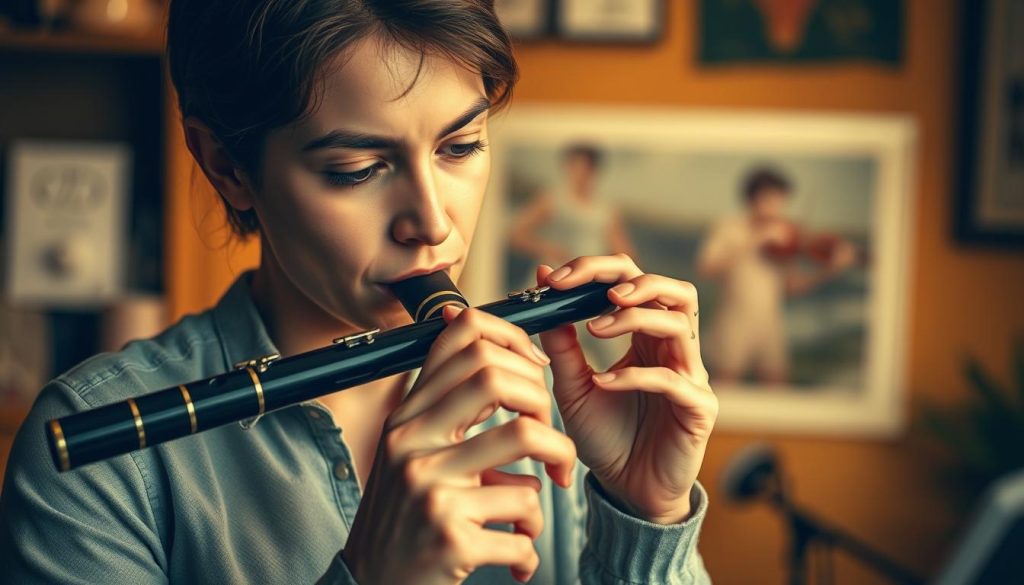
The recorder is a gateway to musical expression. This woodwind instrument has inspired musicians for centuries. It’s an easy way to start your musical journey1.
Playing the recorder can be fun and rewarding. It’s great for beginners and those looking to improve their skills2.
The recorder helps develop musical abilities. Some students quickly grasp musical concepts. Others may need more practice3.
You can start playing with little musical knowledge. It’s perfect for young musicians aged 5 to 152.
Yamaha Descant Recorders are great for beginners1. They’re easy to use and produce clear sounds.
Key Takeaways
- Recorders are accessible for beginners of all ages
- Multiple recorder sizes are available for different skill levels
- Consistent practice is crucial for musical development
- Proper technique matters more than natural talent
- Learning recorder can be a fun and rewarding experience
Essential Basics for Beginners
Learning the recorder is an exciting adventure. It offers many benefits for music lovers of all ages. These fundamental tips will set the foundation for your musical skills4.
Understanding Recorder Parts and Assembly
The recorder is a unique woodwind instrument with three main parts5. These parts are the head, body, and foot.
- Head (with the mouthpiece)
- Body (containing finger holes)
- Foot (with a bell-shaped end)
To assemble your recorder, gently twist the pieces together. Make sure the connection is secure but not too tight6.
Proper Hand Position and Technique
Correct hand positioning is key to mastering the recorder. A standard recorder has 8 total holes: 7 finger holes and 1 thumb hole6.
- Left hand covers the first three holes (index, middle, and ring fingers)
- Left thumb covers the thumb hole
- Right hand covers the remaining holes
Use the fleshy part of your fingertips to cover the holes. This will help you produce clear, crisp notes5.
Basic Breathing Techniques
Proper breathing is crucial for playing the recorder. Beginners should focus on blowing softly to avoid unwanted sounds.
- Blowing softly to avoid unwanted sounds
- Using syllables like “tu” or “du” for controlled air flow
- Starting with simple notes like B, A, and G
Don’t worry about initial squeaks or whistles. They’re normal when learning6. With practice, you’ll develop smooth, consistent tone production4.
Pro Tip: Patience and consistent practice are key to becoming a skilled recorder player!
Play the Recorder: Core Techniques and Notes
Learning the recorder starts with making clear, consistent notes. Beginners should focus on basic fingering techniques. The recorder has three parts: head, body, and foot joint7.
Start by learning the basic notes in recorder practice. The left hand plays B, A, G, C’, and D’7. Each note needs specific finger positions.
Consistent practice helps master these positions. Helpful recorder tutorials can guide your learning journey.
- Left hand notes sequence: B, A, G, C’, D’
- Right hand notes: E, low D, F-sharp
- Recommended practice time: 10-15 minutes initially
Breath control is key to playing the recorder well. Aim to produce steady notes lasting about 30 seconds8. Proper technique involves gentle, consistent airflow.
Beginners often start with simple tunes like “Mary Had a Little Lamb”8. These familiar melodies help build confidence and skills.
Pro Tip: Start with plastic recorders, which are more affordable and ideal for learning8.
As you improve, try different fingering techniques. The “half thumb” method helps play high notes7. Regular practice will boost your recorder playing skills.
Conclusion
Learning to play the recorder opens up a world of musical possibilities. It enhances cognitive abilities and improves hand-eye coordination. The recorder provides a solid foundation for understanding musical theory9.
As a beginner-friendly instrument, the recorder is accessible to aspiring musicians9. With practice, you can progress from simple tunes to complex musical pieces. The recorder’s versatility allows players to explore various musical styles9.
Every accomplished musician started as a beginner. Be patient with yourself and enjoy the music you create. Your musical journey is unique, whether you’re using a soprano recorder or exploring advanced sizes.
Keep practicing and stay curious. Let your passion for music guide you forward. The recorder continues to inspire musicians of all ages and skill levels.
FAQ
What are the different parts of a recorder?
A recorder has three main parts: the mouthpiece, middle section, and bottom section. The mouthpiece is for blowing air. The body has most finger holes. The foot joint completes the instrument.
How do I hold the recorder correctly?
Hold the recorder at a slight downward angle. Use your fingertips to cover the holes completely. Your left hand should be on top, closer to the mouthpiece.
Your right hand goes below. Keep your wrists relaxed. Maintain good posture with your back straight.
What are the first notes I should learn on the recorder?
Start with basic notes like B, A, and G. These notes are easy to produce. They form the foundation for learning more complex melodies and fingerings.
How often should I practice the recorder?
Aim for 15-30 minutes of practice daily. Even simple exercises help. Short, regular sessions are more effective than infrequent, long ones.
What breathing techniques are important for playing the recorder?
Focus on steady, controlled breathing from your diaphragm. Practice maintaining a consistent airflow for a clear, even tone. Breathe deeply and exhale smoothly, like gently blowing out a candle.
Do I need special equipment to start playing?
You’ll need a recorder. Soprano recorders are great for beginners. A music stand and sheet music are optional. Many stores offer starter kits with everything you need.
How can I improve my recorder playing technique?
Practice regularly and focus on proper finger placement. Work on breath control and start with simple songs. Consider taking lessons or using online tutorials to refine your skills.
What are the benefits of learning to play the recorder?
Playing the recorder improves hand-eye coordination and develops breath control. It enhances musical understanding and introduces you to other wind instruments. It’s a fun way to explore music and develop a new skill.
How do I clean and maintain my recorder?
Use a cleaning rod and cloth to remove moisture after playing. Store it in a protective case away from extreme temperatures. Avoid eating or drinking before playing to prevent buildup inside.
Can adults learn to play the recorder, or is it just for children?
The recorder is great for learners of all ages. Adults often enjoy it as a hobby. It’s useful for learning music theory or as a stepping stone to other instruments.
Source Links
- How to play the Recorder – Starter Guide – https://www.dsmusic.com/blogs/resources/how-to-play-the-recorder-starter-guide
- How to Play Recorder – Recorder Lessons for Beginners – https://www.learntoplaymusic.com/store/us_en/music-lessons/recorder-lessons-for-beginners-teach-yourself-how-to-play-the-recorder-free-video-available.html
- A Step-By-Step Guide to Teaching the Recorder – Oodles of Music – https://oodlesofmusic.com/2025/01/11/a-step-by-step-guide-to-teaching-the-recorder/
- Beginners Guide To Learning The Recorder | Ted’s List – https://teds-list.com/beginners-guide/beginners-guide-to-learning-the-recorder/
- 5 Steps to Master the Recorder Notes | West Music – https://content.westmusic.com/5-steps-to-master-the-recorder/
- ?How to Play the Recorder? Learn it NOW ! with【SONGS】 – https://www.recordernotes.org/how-to-play/
- How to Play the Recorder: A Step-by-Step Guide – https://www.wikihow.com/Play-the-Recorder
- How To Play The Recorder – https://www.pmtonline.co.uk/blog/2007/08/24/how-to-play-the-recorder/
- Recorder: instrument of music or instrument of torture? – https://www.voicemag.uk/blog/5456/recorder-instrument-of-music-or-instrument-of-torture

