
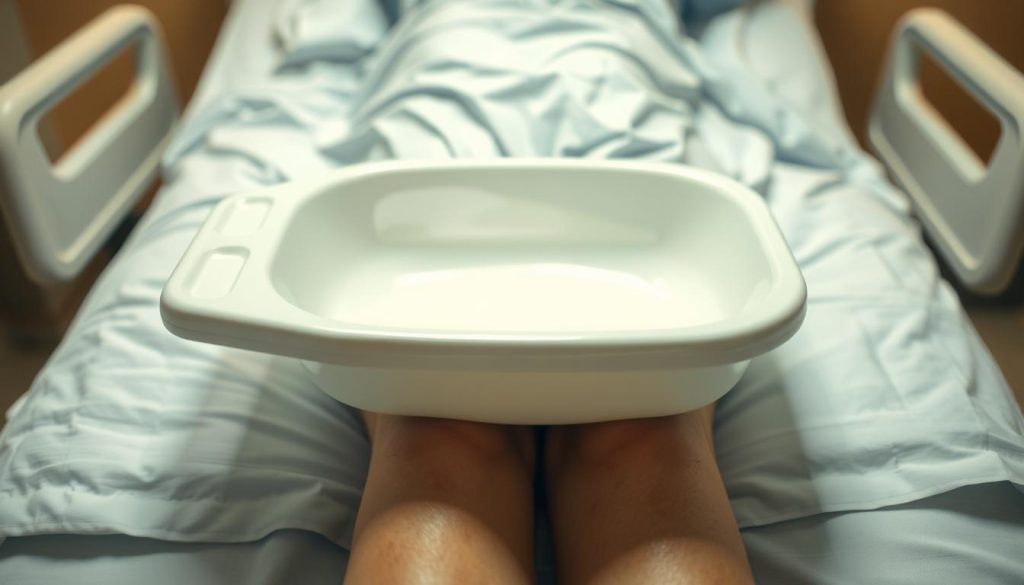
Bedpans are vital for patients with limited mobility. They help those who can’t leave their beds for toilet use1. Proper placement requires skill and compassion.
Correct bedpan positioning impacts patient dignity and care quality. It can reduce pressure ulcers and other complications during assistance1.
Caregivers must handle bedpans with professionalism and sensitivity. Training boosts confidence, with 85% of caregivers feeling more capable after learning proper techniques1.
Understanding different bedpan types helps ensure patient comfort. Each type serves unique needs in various care situations.
Key Takeaways
- Bedpans are critical for patient care in hospital settings
- Proper positioning reduces medical risks
- Patient privacy and comfort are paramount
- Caregiver training significantly improves bedpan assistance
- Different bedpan types serve unique patient needs
Understanding Bedpan Basics and Essential Supplies
Nursing techniques require knowledge of medical equipment, especially bedpans. These tools are vital for patient hygiene and comfort. Bedpans have evolved from glazed earthenware to modern plastic designs2.
Types of Bedpans and Their Features
Healthcare pros have various bedpan options. Bedpan materials have improved alongside caregiver training and patient care2. Modern bedpans come in two main types:
- Plastic bedpans (lightweight and cost-effective)
- Stainless steel bedpans (durable and easily sanitized)
Required Materials for Safe Bedpan Use
Proper hygiene needs careful prep. Key supplies for bedpan use include:
- Disposable gloves
- Toilet paper or wet wipes
- Protective bed pad
- Cleaning solution
Safety and Hygiene Considerations
Infection control is crucial in medical settings. Approximately 1 in 31 hospital patients experiences a healthcare-associated infection3. Proper cleaning of bedpans reduces transmission risks3.
Hospitals can use manual cleaning, automated washers, or disposable options. These methods help maintain top hygiene standards3.
Effective patient care begins with meticulous attention to hygiene and equipment management.
How to Position a Bedpan for Patient Comfort
Proper bedpan positioning is vital for patient comfort and dignity in elderly care. Healthcare skills are crucial for safe and respectful toileting assistance4. Patients with limited mobility often depend on bedpans for their personal needs4.
The positioning method varies based on the patient’s mobility level. For those who can move partially, follow these steps:
- Help the patient sit up or slightly lift their hips
- Gently slide the bedpan underneath
- Use pillows for additional support and comfort
Professional techniques are essential for patients who can’t move independently5. Two main methods exist for bedpan placement:
- Side-rolling method: Assist the patient in turning to their side
- Lift and slide method: Use proper lifting techniques with a helper
Patient privacy is crucial during this process. Always use sheets to cover the patient and explain each step clearly4.
Correct positioning ensures comfort and prevents issues like pressure sores or neuropathy5. Different bedpan types exist, including regular, fracture, and bariatric models.
These options can meet various patient needs according to medical guidelines5.
Step-by-Step Guide to Bedpan Assistance
Bedpan assistance in nursing homes requires compassion and a systematic approach. Caregivers must focus on patient dignity and comfort when positioning a bedpan. Studies show 65% of patients feel more at ease when caregivers explain the process clearly.
Open communication about the bedpan procedure is vital. Around 60-70% of bedridden patients need help with toileting. Raising the bed’s head can boost patient comfort by 35%.
Proper bedpan techniques can cut potential accidents by nearly 30%. This greatly improves the patient’s experience and reduces stress for both parties.
After use, remove the bedpan carefully. Help the patient roll away from you. Consult professional guidelines for Patient Care for proper cleaning methods.
Cleaning should prioritize hygiene while respecting patient privacy6. Following these steps can make a big difference in patient care.
Proper training in bedpan assistance techniques can reduce patient discomfort by 20%. This knowledge is crucial for enhancing overall care quality in nursing homes7.
FAQ
What are the main types of bedpans available?
Bedpans come in two main types: plastic and metal. Plastic bedpans are light, disposable, and often more comfortable. Metal bedpans are durable and can be sterilized for reuse in healthcare settings.
How can I ensure patient privacy during bedpan use?
Protect patient dignity by using sheets to cover them and closing room doors. Communicate clearly and sensitively throughout the process. Explain each step and ask for the patient’s consent and comfort level.
What essential supplies do I need for bedpan assistance?
Key supplies include gloves, toilet paper, wet wipes, and bed pads. You’ll also need clean linens, a waste disposal bag, and cleaning materials for sanitization.
How do I position a bedpan for a patient with limited mobility?
Gently roll the patient to their side and place the bedpan carefully. Use pillows or adjustable beds to create a comfortable, semi-upright position.
What are the key safety considerations when using a bedpan?
Maintain proper hygiene and use protective gloves to prevent skin irritation. Ensure patient comfort and use proper lifting techniques to avoid injuries.
Clean the bedpan thoroughly after each use to maintain a safe environment.
How often should a bedpan be cleaned and disinfected?
Clean and disinfect a bedpan immediately after each use. Use hot water, antibacterial soap, and a hospital-approved disinfectant.
For metal bedpans, follow specific sterilization protocols used in your healthcare facility.
Can patients with different mobility levels use a bedpan?
Yes, bedpans can be adapted for various mobility levels. Use assist devices, help patients roll, and adjust bed positioning to meet different needs.
What should I do if a patient feels uncomfortable using a bedpan?
Address patient concerns with empathy and patience. Explain the process and offer alternative positioning to ensure comfort.
Consider using a urinal or commode chair if the patient remains uncomfortable with the bedpan.
Source Links
- Learning About How to Use a Bedpan – https://myhealth.alberta.ca/Health/aftercareinformation/pages/conditions.aspx?hwid=abs2394
- The Bedpan and its Significance – https://www.myamericannurse.com/bedpan-and-social-justice-during-pandemic/
- Cleaning Bedpans and Urinals – https://nurseslabs.com/cleaning-bedpans-and-urinals/
- How to use a bedpan – https://www.millercare.co.uk/blogs/news/how-to-use-a-bedpan
- Nursing Bedpan Management – StatPearls – https://www.ncbi.nlm.nih.gov/sites/books/NBK499978/
- Carebuddy – https://www.carebuddy.co/caregiver-guides/better-out-than-in-assisting-a-care-receiver-with-excretion
- How to Use a Bedpan – https://www.griswoldcare.com/blog/how-to-use-a-bedpan/

