
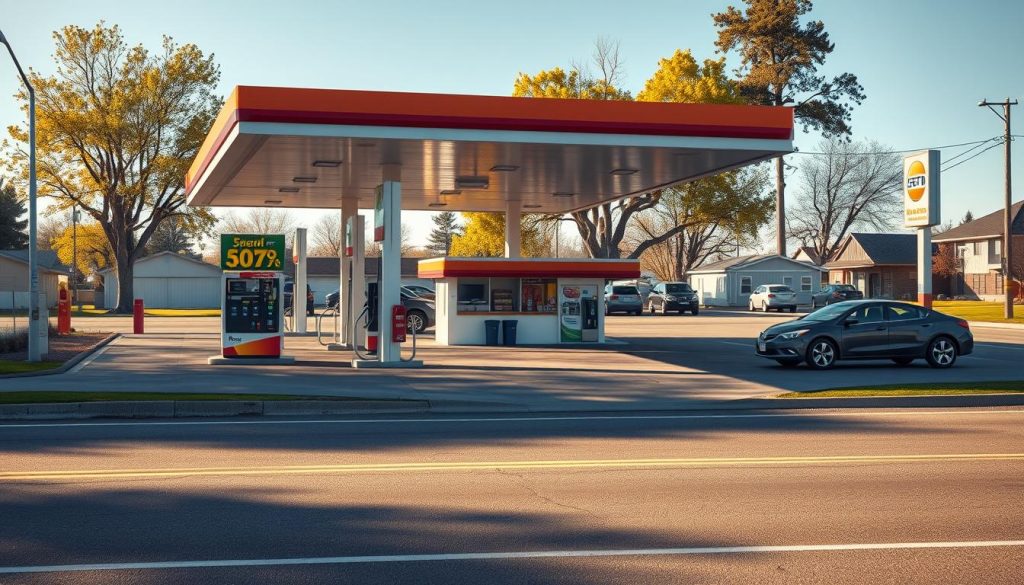
Self-service gas stations can be daunting for new drivers. Pumping your own gas is a crucial skill for most Americans. Since the 1960s, drivers have been fueling their vehicles independently1.
Knowing how to pump gas can ease anxiety at fuel stations. Most stations offer regular, premium, and diesel options1. Notably, 29% of Americans have gas station loyalty memberships for extra savings2.
Gas stations typically provide three fuel grades: Regular (87), Mid-grade (89-90), and Premium (91-94)2. Drivers can choose the best option for their vehicle. Most states allow self-service fueling, except New Jersey1.
Key Takeaways
- Learn the basics of self-service gas stations
- Understand different fuel grades and options
- Know the legal requirements for fueling
- Familiarize yourself with payment methods
- Be aware of safety precautions while fueling
Essential Preparation Before Fueling
Proper prep makes fueling smooth and safe at any gas station. Know your vehicle’s needs and payment options. This knowledge simplifies the process at the pump3.
Positioning Your Vehicle Correctly
Align your car with the pump, ensuring the fuel tank is accessible. Check the fuel indicator near the gas gauge. It shows which side your tank is on.
Position your vehicle so the nozzle reaches comfortably. Avoid stretching or creating awkward angles when fueling.
Understanding Your Car’s Fuel Requirements
Choosing the right fuel is vital for your car’s performance. Common fuel grades in the US are 93, 89, and 873. Always check your vehicle’s manual to determine the recommended fuel grade.
Using incorrect gas can harm your engine3. Stick to the recommended grade for optimal performance.
Payment Methods and Options
Modern gas stations offer many cashless payment options. Most pumps require entering a zip code when paying by card3. Here are the main payment methods:
- Credit cards
- Debit cards
- Mobile payment apps
- Fuel cards for commercial users
Pro tip: Always keep your receipt for tracking expenses and potential transaction records.
Safety is crucial when preparing to fuel. Turn off your engine before pumping gas. This is often a legal requirement3.
Stay alert and focused throughout the entire fueling process. This ensures a safe experience for everyone at the station.
Pump Your Own Gas: Step-by-Step Process
Pumping gas can seem daunting at first. But with the right tips, you’ll quickly master this essential skill. Learning how to pump your own gas is crucial for every driver.
- Check your vehicle’s fuel type recommendation
- Select the appropriate fuel grade
- Avoid overfilling the tank
Here’s a simple breakdown of the gas pumping process:
- Park correctly: Position your car near the pump. Make sure the fuel tank is on the same side.
- Turn off the engine
- Open the fuel tank cover
- Select your payment method
- Choose the correct fuel grade
Gas pump safety is vital during fueling. Stay alert and follow guidelines to prevent accidents.
| Step | Action | Safety Tip |
|---|---|---|
| 1 | Remove gas cap | Avoid smoking or using electronic devices |
| 2 | Insert nozzle | Hold nozzle firmly |
| 3 | Select fuel grade | Check vehicle manual |
Follow these steps to pump gas safely and efficiently. You’ll soon feel confident at the pump4.
Safety Measures and Common Mistakes to Avoid
Gas pump safety requires careful attention to prevent potential hazards. Understanding key precautions can help drivers minimize risks during fuel stops. Static electricity poses a significant threat at gas stations.
About 100 static-sparked fires occur annually at gas stations5. Winter months increase these risks due to low humidity conditions5.
Critical Safety Guidelines
Stay alert when fueling to protect yourself and others. Keep electronic devices away from the pump area. Avoid re-entering your vehicle during fueling.
80 percent of static fires are linked to re-entering vehicles5. Be aware of card skimming risks, which have increased by 759% recently6.
Check equipment before use and stay alert for unusual signs. This helps with pump malfunction troubleshooting.
What Not to Do While Fueling
Never smoke near fuel pumps or leave your vehicle running. Avoid using open flames and your phone while fueling. Keep the nozzle in contact with the tank opening.
This prevents static electricity build-up7. For better security, use digital wallets or contactless payment methods. These reduce the risk of card information theft6.
Emergency Procedures
Stay calm and act quickly if a fuel spill or pump malfunction occurs. For fires, alert staff, leave the area, and call emergency services.
Clean small fuel spills with an oil-only absorbent pad right away7. Always put your safety first and follow station guidelines during unexpected incidents.
FAQ
What is a self-service gas station?
Self-service gas stations let customers pump their own fuel. They’re common in the U.S., offering lower prices and more convenience. You’ll handle the entire process yourself, from positioning your car to completing the transaction.
How do I know which side of my car the gas tank is on?
Look for a small arrow next to the fuel pump icon on your dashboard. It points to the side with the gas tank. You can also check your owner’s manual or look for the fuel door.
What type of fuel should I use for my vehicle?
Check your owner’s manual or fuel door for the recommended fuel grade. Most cars use regular unleaded gasoline (87 octane). Some high-performance vehicles may need premium fuel (91-93 octane). Using the right fuel maintains your car’s performance and efficiency.
What payment methods can I use at a gas station?
Gas stations accept various payment options. These include credit cards, debit cards, cash, and mobile payment apps. Many also take contactless payments and fuel station loyalty cards.
Most pumps now offer pay-at-the-pump technology for quick transactions.
Is it safe to use my phone while pumping gas?
It’s best to avoid using your phone while fueling. The risk of sparks is low, but staying focused is important. Keep your phone away from the pump area for safety and to prevent distractions.
What should I do if the gas pump isn’t working correctly?
If you encounter a faulty pump, stop fueling right away. Notify the station attendant and don’t try to force the pump. Try another pump or visit a different station.
If you’ve been charged incorrectly, contact the station manager or your credit card company.
How can I improve my fuel efficiency?
To boost fuel efficiency, avoid topping off the tank. Fill up during cooler times and maintain proper tire pressure. Remove extra weight from your car and use the recommended fuel grade.
Drive smoothly and avoid rapid acceleration and braking.
Are there any safety precautions I should take while fueling?
Turn off your engine while fueling and don’t smoke near the pump. Touch a metal part of your car to avoid static electricity. Keep children close or in the car.
Use gloves or paper towels when handling the pump nozzle. Always replace the gas cap securely after fueling.
Source Links
- How to pump gas: Important steps to teach your teens – https://greenlight.com/learning-center/life-moments-and-milestones/how-to-pump-gas
- How To Pump Your Own Gas: 11 Steps To Do It Safely – https://www.aaa.com/autorepair/articles/how-to-pump-your-own-gas-11-steps-to-do-it-safely
- Does Your Teenager Know How to Pump Gas? – Your Teen Mag – https://yourteenmag.com/teenager-school/teens-high-school/parents-teen-driving/how-to-pump-gas
- Oregon House votes to let Oregonians to pump their own gas – https://www.opb.org/article/2023/03/20/oregon-house-votes-to-let-oregonians-to-pump-their-own-gas/
- Avoid getting burned at the pump — literally – https://www.nbcnews.com/id/wbna23354484
- How to Protect Yourself Against Card Skimmers at Gas Stations – https://www.experian.com/blogs/ask-experian/how-to-protect-yourself-against-credit-card-skimmers-at-gas-stations/
- Fueling Tips – https://www.boatus.org/clean-boating/fueling/tips

