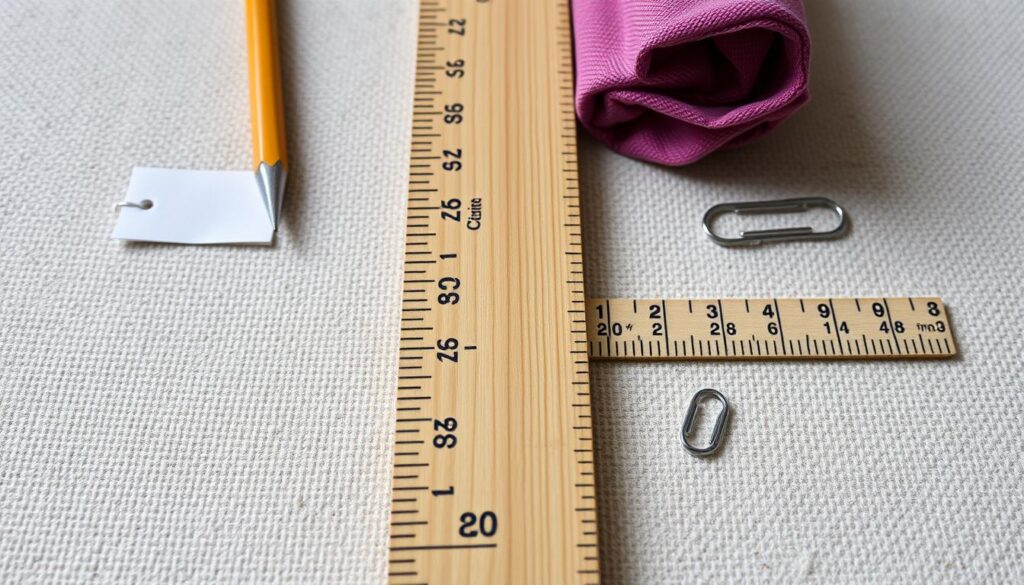
Reading a ruler is crucial for precise measurements. It’s a must-have skill for craft projects, homework, and accurate measuring. Rulers come in two main systems: imperial (inches) and metric (centimeters)12.
In the U.S., rulers are usually 12 inches long. They have markings for whole units and fractions1. The imperial system is used in the U.S., Liberia, and Myanmar.
Learning ruler reading tips can boost your measuring skills. Some rulers show inches on one side and centimeters on the other1. This makes them versatile tools for various measuring tasks.
Key Takeaways
- Rulers come in imperial and metric measurements
- Most U.S. rulers are 12 inches long
- Precision matters when reading measurements
- Different rulers have unique marking systems
- Practice is key to mastering ruler measurements
Understanding Ruler Measurements
Measuring tools ensure precision in many tasks. They’re vital for crafting and construction. This guide helps you read scales and understand basic measurement units.
Rulers come in various types for different needs. You’ll find wooden, metal, and specialized rulers. Seamstress tapes and carpenter’s rules measure inches and centimeters uniquely.
The Basic Units of Measurement
Measurement guides use two main systems: imperial and metric. Standard rulers usually have 12 inches. Each inch is divided into precise fractions.
- Imperial rulers use inches with divisions like 1/2, 1/4, 1/8, and 1/163
- Metric rulers use centimeters and millimeters, with 10 millimeters per centimeter4
Types of Rulers Available
Measurement tools come in different styles. Some use imperial units, others metric. You can also find rulers with both systems.
Common Ruler Fractions Explained
Accurate measurements rely on understanding ruler markings. On inch rulers, line lengths show specific fractions.
- Whole inch marks (longest lines)
- 1/2 inch marks (second longest)
- 1/4 inch marks (shorter)
- 1/8 inch marks (even shorter)
- 1/16 inch marks (smallest lines)4
Pro tip: Practice reading your ruler by comparing the line lengths and understanding their relationships.
Mastering ruler measurements opens up a world of precision in your projects!
Step-by-Step Guide to Reading a Ruler
Measuring accurately requires practice and patience. It’s a vital skill for DIY projects and everyday tasks. Mastering ruler reading can turn a complex task into an enjoyable learning experience5.
Aligning Your Ruler Properly
Proper ruler alignment is crucial for accurate measurements. Place the zero mark at the object’s starting point. This ensures precise readings5.
Visual alignment can be tricky for beginners. Take your time and practice to improve your skills.
Finding Whole Numbers and Inches
Start by identifying whole inches when reading measurements. Count each full inch mark from the zero point. These are the longer, more prominent lines on standard rulers6.
Inches are divided into smaller increments:
- 1/2 inch
- 1/4 inch
- 1/8 inch
Measuring with Precision: Fractions and Millimeters
For detailed measurements, learn to read ruler fractions. Each small line represents a fraction of an inch. Longer lines usually indicate significant divisions like 1/2 or 1/4 inch6.
In metric measurements, millimeters offer greater precision. Ten millimeters equal one centimeter6.
Pro Tip: Practice makes perfect! Spend time understanding your ruler’s unique markings.
Tape measure reading follows similar principles. These skills transfer to different measuring tools5. Learning these techniques early helps develop cognitive and motor skills5.
Tips and Tricks for Accurate Measurement
Mastering your Measurement Guide involves reading scales effectively. Rulers have different line divisions, some with 8 or 16 lines per inch7. Precision is crucial for accurate results in your projects.
Use a sharp pencil to mark measurements. A blunt pencil can add unwanted millimeters to your readings8. Keep ruler markings facing you and ensure the tape is flat against the object.
A comprehensive guide to measuring techniques offers valuable insights. Try using a ‘V’ mark instead of an ‘X’ for increased accuracy8.
Practice with various objects to develop a keen eye for detail. Compare measurements across imperial and metric systems. This will help you improve your Reading Scales technique.
Accurate measurement requires patience and practice. By using these tips, you’ll become a measurement expert. You’ll be capable of precise readings across various projects and disciplines.
FAQ
What’s the difference between an imperial and metric ruler?
Imperial rulers use inches with fractions like 1/16 or 1/32. Metric rulers use centimeters and millimeters, with 10 millimeters per centimeter. Most 12-inch rulers in the U.S. have both imperial and metric sides.
How do I read fractions on an inch ruler?
On an inch ruler, longest lines show whole inches. Half-inch marks are second longest, quarter-inch marks are shorter. The smallest lines typically represent 1/16 inch.
Count whole inches first. Then identify the fraction by counting smaller lines from the last whole inch mark.
What’s the smallest measurement I can typically read on a ruler?
Most standard rulers measure down to 1/16 of an inch or 1 millimeter. For more precise measurements, you might need a specialized tool or digital caliper.
How do I ensure I’m reading a ruler accurately?
Align the zero mark with the starting point of your measurement. Keep the ruler straight and the object flat against it. Take your time and double-check your measurement.
Pay close attention to the smallest lines representing fractions or millimeters. This helps ensure accuracy in your readings.
Can I use the same ruler for both imperial and metric measurements?
Many rulers are dual-sided, with inches on one side and centimeters on the other. Be aware that 30 cm is slightly longer than 12 inches.
What’s the best way to practice reading a ruler?
Measure various objects around your home or workplace. Compare imperial and metric measurements. Use online resources like measurement worksheets and instructional videos.
Consistent practice will boost your accuracy and confidence in reading rulers. Try measuring different items regularly to improve your skills.
When should I use a tape measure instead of a ruler?
Use a tape measure for longer objects or distances beyond a standard ruler’s length. Tape measures are flexible and can measure around curves or longer surfaces.
They’re ideal for home improvement projects, tailoring, or measuring larger items. Rulers work best for smaller, straight measurements.
Are there any common mistakes to avoid when reading a ruler?
Common mistakes include misaligning the zero mark and not keeping the ruler straight. Misreading fraction lines is also a frequent error.
Ensure the object is flush with the ruler. Take your time and double-check your measurements. If possible, measure twice for better accuracy.
Source Links
- How to Read a Ruler – https://home.howstuffworks.com/how-to-read-a-ruler.htm
- How to Read a Ruler—Step-by-Step with Pictures — Mashup Math – https://www.mashupmath.com/how-to-read-a-ruler
- How to Read a Ruler (and Other Simple Tricks). – https://www.instructables.com/How-to-Read-a-Ruler-and-other-simple-tricks/
- How to Read a Ruler – GeeksforGeeks – https://www.geeksforgeeks.org/how-to-read-a-ruler/
- How to Read a Ruler: Guide for Kids – https://alphapals.com/blogs/news/how-to-read-a-ruler?srsltid=AfmBOoocPT5FeF6QpDCJ7csXl2U0w0EPtIBZ5miJyWDGnZy4Z2OnAA-8
- A Beginner’s Guide to Reading a Ruler | Learn ZOE – https://www.learnzoe.com/blog/guide-to-reading-a-ruler/
- Tip on how to read a ruler and tip about measurements. – Frenchie Stamps – https://frenchiestamps.com/2021/04/tip-on-how-to-read-a-ruler-and-tip-about-measurements.html
- Tape Measure Tips – Getting The Most Out of Your Tape – https://www.thetapestore.co.uk/knowledgebase/Tape_Measure_Tips_-_Getting_The_Most_Out_of_Your_Tape.html