
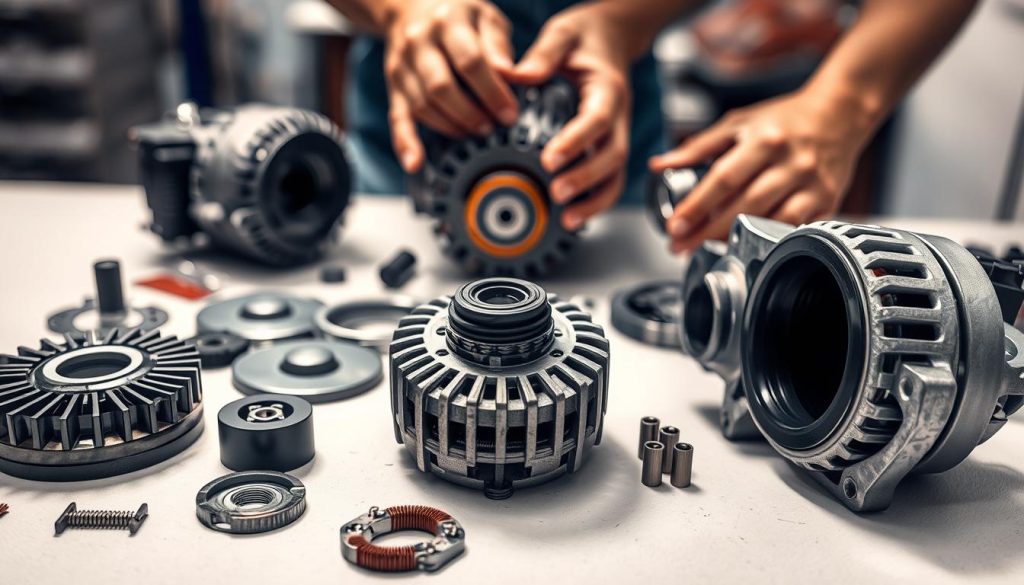
Learning to rebuild an alternator can save you money and improve your car’s electrical system. Alternators are vital for keeping your vehicle’s electrical parts working properly1.
The alternator rebuild process focuses on three main parts: the voltage regulator and two bearings. A new factory alternator costs about $600, making rebuilding a smart choice1.
Many car enthusiasts find rebuilding an alternator easier than expected. With the right tools and instructions, even beginners can fix an alternator2.
About 26% of people find alternator rebuilding helpful. This shows that DIY repairs are becoming more popular2.
By learning how to maintain alternators, you can save money and gain useful mechanical skills.
Key Takeaways
- Rebuilding an alternator can be a cost-effective alternative to replacement
- Three main components often require attention during rebuild
- Proper tools can significantly simplify the rebuilding process
- DIY alternator repair can save substantial money
- Basic mechanical skills are sufficient for most alternator rebuilds
Essential Tools and Parts for Alternator Rebuilding
Rebuilding an alternator needs careful planning and the right gear. You’ll need specific tools and parts for this task. Mechanics and DIY fans can save money by learning these skills.
Most alternators work for 7-10 years or about 80,000-150,000 miles. Professional replacement can cost $500-10003. This makes DIY repair appealing for those with mechanical know-how.
Required Tools and Equipment
To fix your alternator, you’ll need these tools:
- Socket set with various sizes
- Flathead and Phillips screwdrivers
- Pulley puller
- Digital multimeter
- Protective gloves
- Workspace lighting
Necessary Replacement Parts
Key parts for alternator upkeep include:
- Bearings
- Brushes
- Voltage regulator
- Rectifier bridge
- Serpentine belt
Alternator rebuild kits usually cost between $50-2003. Choose parts that match your car model for the best results.
Pro Tip: Always test voltage readings before and after rebuilding. A good alternator should keep 13.5-14.5V while the engine runs4.
Learning about alternator parts can help your car’s electrical system last longer. It can also prevent surprise breakdowns on the road.
Rebuild an Alternator: Step-by-Step Process
Rebuilding an alternator demands careful attention to detail. The process involves key steps to boost your vehicle’s electrical performance. Alternators made between 1971 and 1986 are great for home rebuilding projects.
Gather your tools before starting the alternator installation procedure. You’ll need basic diagnostic equipment, including an ohm meter. This meter typically costs around $12.
- Disconnect the battery for safety
- Remove the serpentine belt
- Extract the alternator from the vehicle
- Disassemble the alternator carefully
Pay close attention to critical components when taking apart the alternator. Most alternators have four main systems: housing, current-producing parts, rectifying parts, and regulating parts.
Cleanliness is crucial during this process. It prevents early component failures caused by dirt and grease.
| Component | Typical Lifespan | Replacement Considerations |
|---|---|---|
| Front Bearings | Approximately 150,000 miles | Replace if belt tension is incorrect |
| Brushes | Over 100,000 miles | Check for wear and electrical continuity |
| Voltage Regulator | Varies | Most common failure point |
The voltage regulator is the most common failure point. Luckily, it’s fairly easy to diagnose and replace. About 70% of alternator failures come from worn brushes and faulty regulators.
When rebuilding, use thermal grease on voltage regulators. This helps improve heat dissipation. Rebuilding can save you up to 50% compared to buying new.
Typical rebuild costs range from $100 to $300. The whole process usually takes 2 to 4 hours, depending on your experience level2.
Testing and Quality Assurance
Proper testing ensures your rebuilt alternator works well. It involves precise voltage measurements and systematic checks. A multimeter verifies battery voltage, which should be about 12.5 volts when the engine’s off5.
Monitor the alternator’s voltage output carefully. It should produce 13.5 to 14.5 volts when the engine runs5. Watch for voltage stability between 13 and 15 volts with electrical systems on5.
Mechanics suggest using special tools for thorough assessments. These tools help ensure reliable electrical system performance5.
Initial Testing Procedures
Do a bench test before installing the alternator. Check connections and belt tension carefully6. Use a multimeter and clip-on ammeter for precise measurements6.
These tools are crucial for accurate diagnostics. Be careful during testing to avoid short circuits or damaging parts.
Final Inspection Checklist
Do a final visual check of the alternator’s mounting, belt alignment, and connections. Make sure all parts are secure and working right.
Good maintenance prevents electrical system problems. It also helps your rebuilt alternator last longer.
FAQ
How do I know if my alternator needs rebuilding?
Watch for dimming headlights, battery warnings, or electrical issues. These signs might mean it’s time to rebuild your alternator. Alternators usually last 7-10 years, but short trips and extreme weather can shorten their life.
Is rebuilding an alternator difficult for a beginner?
Rebuilding an alternator is doable with basic tools and patience. It’s not too complex, but requires attention to detail. Following a guide and taking your time can help novice mechanics succeed.
What tools will I need to rebuild an alternator?
You’ll need a multimeter, socket set, screwdrivers, pliers, and wire brushes. Specialty tools like a bearing puller and rebuild kit are also necessary. Don’t forget safety gear such as protective glasses and work gloves.
Most of these tools can be found at auto parts stores or online retailers.
How much money can I save by rebuilding my own alternator?
Professional rebuilds cost 0-0, while DIY rebuilds run -0 for parts and tools. By doing it yourself, you could save up to 70% compared to professional service.
How long does an alternator rebuild typically take?
First-timers might need 2-4 hours to rebuild an alternator. Experienced mechanics can finish in about 1-2 hours. Time varies based on skill, tools, and the specific alternator model.
What are the most common alternator failure points?
Common failure points include worn bearings, damaged voltage regulators, and failing diode rectifiers. These parts wear out due to heat, electrical stress, and constant use. Replacing these components during a rebuild can restore alternator performance.
Can I test my rebuilt alternator before reinstalling?
Yes! Use a multimeter to check voltage output, diode function, and electrical performance. Ideal alternator output is typically between 13.5-14.5 volts. This testing ensures your rebuild was successful before reinstallation.
What warranty comes with a DIY alternator rebuild?
Most alternator rebuild kits offer a 90-day warranty. Using quality parts and following instructions carefully can match professional rebuild warranties. Some auto parts stores provide additional warranty options for rebuilt components.
Are there any risks in rebuilding my own alternator?
Risks include potential electrical system damage and improper component installation. Using low-quality replacement parts can also cause problems. Follow detailed guides and use quality parts to reduce these risks.
How often should alternators be inspected or rebuilt?
Inspect alternators every 2-3 years or 30,000 miles. Rebuilding isn’t always needed unless you notice performance issues. Regular maintenance, like checking belt tension, can extend your alternator’s life significantly.
Source Links
- Ultimate Alternator Rebuild thread – https://www.e46fanatics.com/threads/ultimate-alternator-rebuild-thread.1033609/
- How to Rebuild an Alternator (with Pictures) – wikiHow – https://www.wikihow.com/Rebuild-an-Alternator
- Alternator Repair and Replacement: What You Need to Know – https://hcsrepair.com/alternator-repair-and-replacement-what-you-need-to-know/
- How to Replace an Alternator (+ Costs Involved) – https://www.autonationmobileservice.com/i/blog/alternator-replacement/
- How to Test the Alternator in Your Car – https://www.instructables.com/How-to-Test-Your-Cars-Alternator/
- Checking the alternator | HELLA – https://www.hella.com/techworld/sg/Technical/Car-electronics-and-electrics/Starting-and-charging-system/Checking-the-alternator-41623/

