
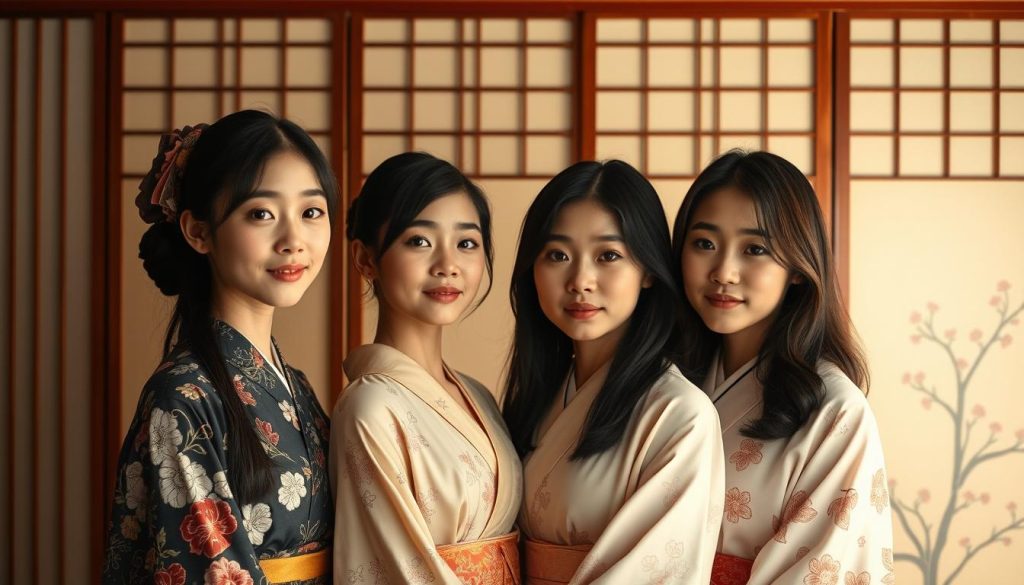
Japanese offers multiple ways to say “sister.” These terms reflect cultural respect and social dynamics. Understanding these words is key for learning Japanese family language.
Age, formality, and context shape sister terms in Japanese. “Ane” means older sister, while “imouto” refers to younger sister. The words change when talking about your own or someone else’s sister.
Eight distinct terms exist for sisters in Japanese. Each term has its own subtle meaning and proper use. These linguistic details help learners navigate social interactions accurately.
Key Takeaways
- Japanese has multiple terms for “sister” based on age and relationship
- Formal and casual terms differ significantly in usage
- Honorifics play a crucial role in sister-related terminology
- Context determines the most appropriate term to use
- Language reflects cultural respect and social hierarchy
Understanding Basic Japanese Sister Terms
Japanese sibling terminology is rich and complex. It reflects deep cultural subtleties in communication. Language learners find the ways of addressing sisters fascinating1.
Japanese has many terms for sisters. Each term has unique meanings and respect levels. Learning these terms can boost your language skills2.
Exploring Formal Sister Terminology
Japanese has respectful ways to address older sisters in formal settings. “Oneesan” (お姉さん) is a polite term for an older sister or young woman1.
“Oneesama” is the most formal version. It uses the “-sama” honorific to show the highest respect1.
| Term | Meaning | Context |
|---|---|---|
| Oneesan | Older Sister | Polite, general usage |
| Oneesama | Older Sister | Most formal, highest respect |
| Ane | Own Older Sister | Casual, when talking about sister |
Casual Sister Expressions
In informal situations, Japanese speakers use relaxed terms. “Aneki” is a casual way to refer to an older sister2.
These casual expressions create a sense of closeness among friends. They help build connections when discussing sisters1.
- Aneki: Informal term for older sister
- Imouto: Specifically means younger sister
- Shimai: Plural term for sisters
Using these terms shows more than just language skills. It demonstrates understanding of Japanese social dynamics and communication styles2.
Say Sister in Japanese: Cultural Context and Usage
Japanese sister terminology reflects complex social dynamics. The language has eight distinct words for “sister”. Each word carries unique cultural significance and social implications.
These terms consider age relationships, social context, and formality levels. They also account for the speaker’s relationship to the person discussed.
- Age relationship between siblings
- Social context of conversation
- Level of formality required
- Relationship to the person being discussed
“Ane” is a casual term for one’s own older sister. “Oneesan” is more formal and can mean “young lady” or “miss”.
The plural term “Shimai” (姉妹) refers to multiple sisters collectively. Regional variations and context influence the choice of appropriate sister terminology.
“Aneki” shows respect for someone else’s older sister. “Anegohada” describes a person with sisterly caring instincts.
Mastering these nuanced terms demonstrates deep cultural sensitivity and linguistic sophistication.
Japanese sibling language extends beyond blood relations. Children often use familial terms to address non-relatives. This practice showcases the language’s rich social communication patterns3.
Conclusion
Japanese sister terminology offers insight into family language and cultural communication. It reveals deep-rooted respect and social dynamics. Each term reflects the protective nature of sibling relationships and age hierarchy4.
Mastering these linguistic subtleties is key for cross-cultural communication. Choosing the right term shows cultural sensitivity when speaking Japanese to family members. Japanese family language requires attention to context and relationships5.
Cross-cultural understanding through language is complex and rewarding. Modern Japanese families maintain strong traditions of respect and connection. Mastering these nuances helps bridge cultural gaps and fosters meaningful interactions.
Patience and practice are essential. Embrace the complexity of Japanese sister terms as a growth opportunity. Each word learned brings you closer to genuine cultural understanding and communication.
FAQ
What is the most common way to say “sister” in Japanese?
“Oneesan” (お姉さん) is the formal term for an older sister. “Imouto” (妹) refers to a younger sister. In casual settings, “aneki” (あねき) is used for an older sister.
How do Japanese terms for sister change based on context?
Japanese sister terms vary depending on several factors. These include the speaker’s relationship, age difference, and whether it’s your sister or someone else’s. “Oneesan” can refer to your older sister or respectfully address a young woman.
Are there different terms for biological sisters versus other women?
Yes! “Shimai” (姉妹) refers to sisters collectively. Specific terms like “oneesan” or “imouto” are used for individual sisters. More respectful language is typically used when referring to someone else’s sisters.
How important is age in Japanese sibling terminology?
Age is crucial in Japanese language and culture. Terms for older and younger sisters are distinct. This reflects the cultural emphasis on hierarchical relationships and respect for age differences.
Can I use these sister terms with people who aren’t my actual sisters?
Absolutely! Terms like “oneesan” can respectfully address young women who aren’t your biological sisters. It’s a common way to show politeness in Japanese social interactions.
What’s the difference between formal and casual sister terms?
Formal terms like “oneesan” (お姉さん) are more polite. They’re used in formal situations or with strangers. Casual terms like “aneki” are for informal settings, typically among family or close friends.
How do I say “my sister” in Japanese?
When talking about your sister, use different terms based on her age. “Ane” (姉) is for your older sister, while “imouto” (妹) refers to a younger sister.
In polite conversation, add “watashi no” before these terms to say “my.” This shows respect and clarity in Japanese communication.
Source Links
- How to Say Sister in Japanese: 6 Different Ways – https://www.wikihow.com/Say-Sister-in-Japanese
- Japanese Sister – How To Say Sister In Japanese | Interac – https://interacnetwork.com/how-to-say-sister-in-japanese/
- Japanese Sibling Terminology – TV Tropes – https://tvtropes.org/pmwiki/pmwiki.php/UsefulNotes/JapaneseSiblingTerminology
- What Is The Japanese Kanji For Sister? | How To Say Sister In Japanese – https://shop.japantruly.com/blogs/learn/japanese-kanji-for-sister?srsltid=AfmBOopKSbMQGMzNXn9eAltu8eNTYEPrQLQzFw39tCYXqyNy-qVPfnpA
- Learn How to Talk About Your Family in Japanese – https://www.japanesepod101.com/blog/2019/12/06/japanese-family-words/

