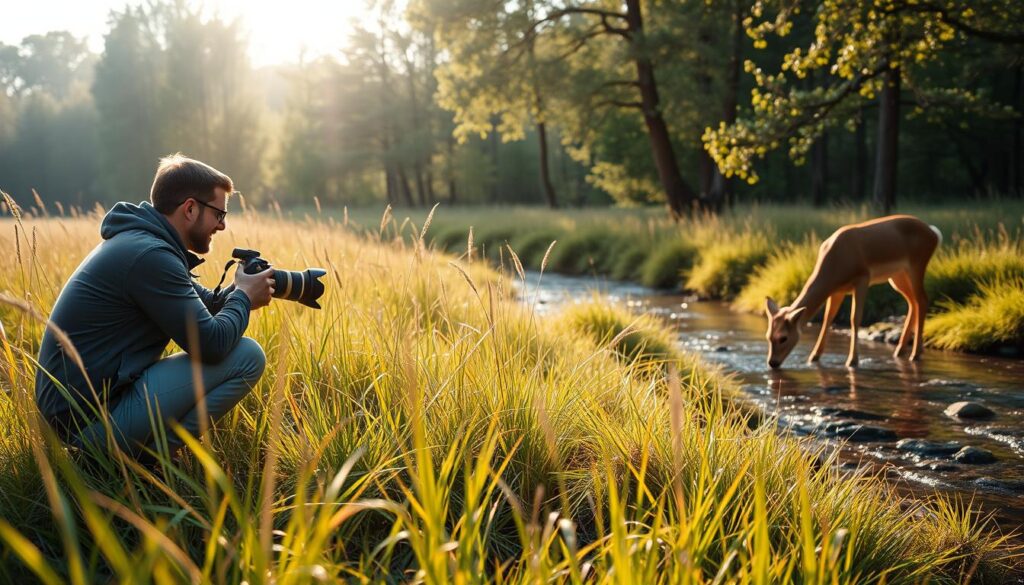
Wildlife photography starts in your backyard. Parks and nature reserves near you offer amazing chances to capture biodiversity. You don’t need to travel far to find great subjects.
Learn about local wildlife with patience and smart observation. Use apps like iNaturalist and Merlin Bird ID to identify potential photo subjects. Knowing animal habits and homes helps you take better conservation-focused pictures.
Cities are surprising hotspots for wildlife photos. Animals adapt to urban life, creating unique scenes. Your photos can show how wildlife and city spaces work together.
Good gear matters for wildlife photography. Pro cameras can handle ISO from 64 to 11,400. Zoom lenses reaching 600mm help capture clear, detailed animal shots1.
Key Takeaways
- Start wildlife photography in local ecosystems
- Use research apps to identify potential subjects
- Understand animal behaviors and habitats
- Invest in quality photography equipment
- Explore urban wildlife photography opportunities
Understanding Your Environment for Better Photography
Wildlife photography connects you with nature’s intimate moments. It balances capturing endangered species and protecting the environment. Your journey starts with knowledge and careful preparation.
Choosing the Right Locations
Selecting prime photography spots is crucial for sustainable tourism. It’s also key for capturing remarkable wildlife images.
Top destinations include:
- Maasai Mara National Reserve, Kenya
- Yellowstone National Park, USA
- Serengeti National Park, Tanzania
- Galápagos Islands, Ecuador
Research each location’s unique features and wildlife patterns before your trip2.
Best Times for Wildlife Photography
Timing is crucial in wildlife photography. Many species become more photogenic during specific seasons, especially mating periods2.
Consider these factors:
- Seasonal migration patterns
- Breeding seasons
- Daily animal activity cycles
Observing Animal Behavior
Understanding animal behavior helps you capture extraordinary moments3. Invest time in studying:
- Species-specific habits
- Feeding patterns
- Social interactions
“Patience and preparation are the true lenses of wildlife photography.” – Wildlife Photography Expert
Keep a safe distance from wildlife, typically 100 yards. This ensures your safety and the animals’ well-being4.
Essential Gear for Capturing Wildlife and Nature
Wildlife photography requires careful gear selection. The right tools can capture breathtaking moments in national parks and ecotourism spots. Quality equipment makes a significant difference.
Recommended Camera Types and Lenses
Top cameras for wildlife photography include:
- Nikon Z9
- Canon EOS R3
- Sony A1 and A9 series
Choose cameras with multiple focus points for tracking moving animals5. Look for models with high burst mode to capture rapid action sequences5.
Essential Lens Selection
Select lenses that suit your wildlife photography needs:
| Lens Type | Recommended Focal Length | Best Use |
|---|---|---|
| Telephoto | 300mm minimum | Distant wildlife shots |
| Zoom/Prime | Varies | Wider environmental shots |
Pick lightweight lenses that meet airline baggage rules6. Teleconverters can extend focal length but may slightly reduce image quality6.
Critical Accessories
Pack these essentials for successful wildlife photography:
- Multiple batteries (2-4 recommended)6
- Several smaller memory cards for backup6
- Weather-sealed equipment for harsh environments7
Smartphone Photography Tips
Pro tip: Clean your smartphone lens often and avoid digital zoom. Get closer to your subject physically for better shots.
Try different angles to capture more intimate wildlife photos. Experiment with various perspectives to create unique images.
Remember, the right gear transforms good wildlife photography into extraordinary storytelling.
Techniques for Capturing Stunning Wildlife Shots
Wildlife photography is a powerful conservation tool. It transforms ordinary shots into extraordinary visual stories. Key techniques can help you create stunning images of animals in nature.
Professional wildlife photographers stress mastering composition and technical skills. These abilities are crucial for capturing compelling wildlife moments. Your images can inspire environmental protection awareness8.
Composition is vital for impactful wildlife photographs. Use the Rule of Thirds to position your subject strategically. This draws attention to the animal’s unique features8.
For endangered species, choose a wider aperture like f/4. This creates depth and highlights your subject against blurred backgrounds. Try different shooting techniques to capture dynamic wildlife interactions8.
Edit with care to preserve the natural essence of your images. Avoid over-processing to maintain the animal’s authentic beauty. Shoot during golden hours for warm, soft lighting89.
Your photographs can showcase wildlife’s intricate details and behaviors. This helps tell conservation stories and raises awareness. Remember, each image has the power to inspire change10.
FAQ
What equipment do I need to start wildlife photography?
Start with the camera you have, even if it’s just a smartphone. Learn composition basics and animal behavior first. As you grow, invest in a camera with fast autofocus and good low-light performance.
A telephoto lens can help, but understanding your subject matters more. Getting closer to wildlife often beats having expensive gear.
How can I find wildlife to photograph near me?
Look for local wildlife in your neighborhood or nearby parks. Use apps like iNaturalist to identify species around you. Start with common animals like pigeons, squirrels, and deer.
Visit the same spots often to learn animal patterns. This increases your chances of unique shots. Nature reserves and your backyard can be great photo spots.
What are the most important technical skills for wildlife photography?
Master the exposure triangle: shutter speed, aperture, and ISO. Use fast shutter speeds to freeze action. Adjust aperture for depth of field.
Learn to anticipate animal behavior for compelling shots. Practice getting eye-level with subjects. Try different angles to create intimate and interesting compositions.
How do I improve my wildlife photography skills?
Patience is key. Observe animals and understand their behavior. Research their habitats, active times, and movement patterns. Practice often, even with common species.
Study existing wildlife photos for inspiration. Try new techniques like black and white photography. Experiment with shutter speeds to capture motion.
What are some top destinations for wildlife photography?
Great spots include Maasai Mara in Kenya, Yellowstone in the USA, and Antarctica. These offer diverse wildlife in stunning settings.
Remember, excellent wildlife photos can happen anywhere. Your local area can yield amazing shots with careful observation and preparation.
How can I edit my wildlife photos effectively?
Enhance natural beauty without losing authenticity. Adjust exposure, contrast, and colors subtly. Try converting some images to black and white.
This can emphasize composition and action. Share your work on Instagram to connect with other enthusiasts. Getting feedback can help improve your skills.
What safety precautions should I take when photographing wildlife?
Keep a safe distance from animals and use a telephoto lens. Respect wildlife habitats and follow local park guidelines. Wear appropriate clothing and bring essential supplies.
Tell someone about your photo location. Never disturb or feed wild animals. Prioritize their safety and natural behavior over getting a shot.
Source Links
- How to Do Urban Wildlife Photography – https://photographylife.com/urban-wildlife-photography-howto
- Beginners Guide To Wildlife Photography — Kevin Pepper Photography – https://www.kevinpepperphotography.com/blog/beginners-guide-to-wildlife-photography
- 10 Tips to Improve Your Wildlife & Nature Photography – https://www.nathab.com/blog/10-tips-to-improve-your-wildlife-nature-photography/
- Wildlife Wonder: The Ins and Outs of Ethical Nature Photography – North Carolina Wildlife Federation – https://ncwf.org/blog/nature-photography/
- Essential Wildlife Photography Kit | Lowepro – https://www.lowepro.com/us-en/wildlife-photography-equipment/
- What to Take on a Wildlife Photography Trip – https://photographylife.com/wildlife-photography-trip-equipment
- Wildlife Photography Equipment: Essential Gear for Capturing Nature – https://lightroom-photoshop-tutorials.com/wildlife-photography-equipment/
- 11 Tips for Capturing Stunning Wildlife Photographs – MIOPS – https://www.miops.com/blogs/news/11-tips-for-stunning-wildlife-photography?srsltid=AfmBOopl9FIRbONyhzJFxiQXgL24rcKyK6Zhy8ZErs0AdQuIQwhGhjr8
- Wildlife photography tips – https://www.canon-europe.com/get-inspired/tips-and-techniques/wildlife-photography-tips/
- Capturing the Wild: 9 Essential Tips for Stunning Nature Photography – https://www.cleverphotographer.com/blog/nature-photography-tips