
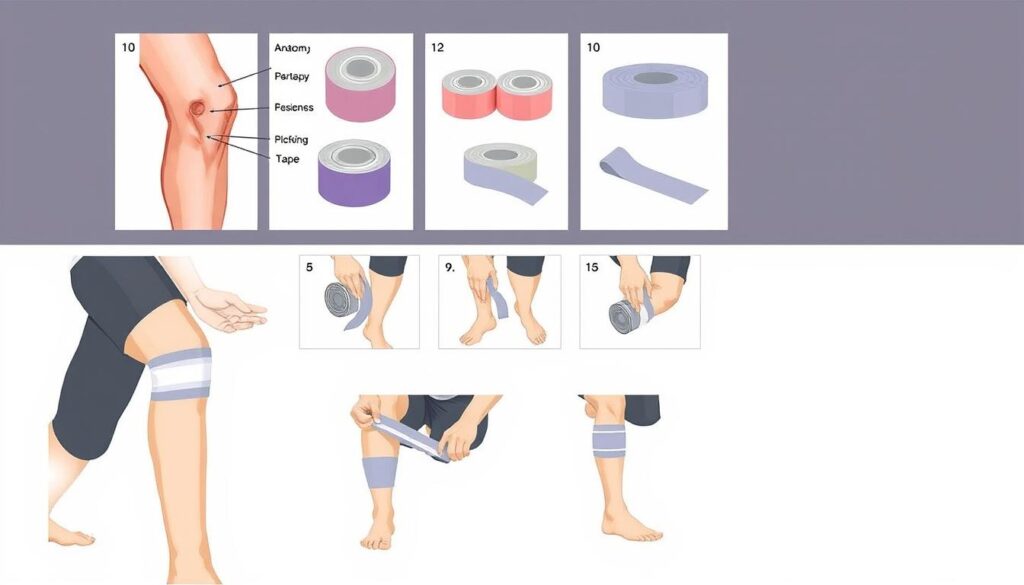
Knee taping is a powerful tool for managing pain and supporting joints. It’s used by athletes and physical therapy patients alike. This technique can be a game-changer for recovery from sports injuries or chronic knee pain1.
Different taping methods work for various knee conditions. Pros use special techniques to stabilize joints and reduce strain. Rigid and elastic tapes are the main materials used in knee taping2.
Kinesiology tape has become popular since the 2008 Olympics. It’s changed how people approach joint support. Unlike regular athletic tape, it’s elastic and supports muscles without limiting movement1.
Key Takeaways
- Knee taping offers targeted support for various conditions
- Different tape types provide unique benefits
- Proper technique is crucial for effective knee taping
- Consultation with a healthcare professional is recommended
- Taping can help manage pain and prevent further injury
Understanding Knee Taping Benefits and Preparation
Knee taping is a powerful technique for managing various knee-related challenges. It provides crucial support and pain relief for athletes and those with knee discomfort3.
When to Use Knee Taping
Knee taping for injuries becomes essential in several scenarios:
- Managing patellofemoral syndrome3
- Addressing anterior knee pain3
- Preventing sports-related knee injuries
- Providing stability during physical activities3
Essential Supplies for Knee Taping
To perform knee taping for support, you’ll need specific materials:
- Kinesiology tape
- Scissors
- Cleaning solution
- Adhesive gauze
| Tape Type | Purpose | Flexibility |
|---|---|---|
| Kinesiology Tape | Pain relief and movement support | High flexibility3 |
| Rigid Tape | Joint stability | Limited motion3 |
Preparing Your Knee for Taping
Before applying tape, ensure your skin is clean and dry. Avoid using lotions or oils that might prevent proper adhesion4.
Check your knee for open wounds or skin conditions. These might make taping unsafe4.
Proper preparation is key to effective knee taping and injury prevention.
Important precautions include consulting a healthcare professional if you have:
- Pregnancy
- Open wounds
- Skin allergies
- Using blood thinners4
Knee taping techniques vary depending on your specific needs. The Ligament technique offers maximum support4.
Apply the tape without stretching at the beginning and end. Rub it well for optimal adhesion4.
How to Tape a Knee
Knee taping is a useful method for easing pain and supporting joints5. It can greatly help in recovery and performance for athletes and those with knee issues6.
- Kinesiology Taping: A flexible method for supporting joints and muscles5
- McConnell Technique: Specialized approach for knee stability7
- Mulligan Taping: Effective for pain reduction7
Follow these steps to tape a knee:
- Clean and dry the knee area thoroughly
- Measure and cut tape strips with rounded edges
- Apply tape without stretching at the start and end points
- Rub the tape to activate the adhesive
| Taping Technique | Best Used For | Tape Removal Time |
|---|---|---|
| Kinesiology Tape | Joint Support | 3-5 Days |
| Rigid Tape | Knee Stability | 18 Hours |
Pro Tip: Always consult a sports medicine specialist for personalized taping techniques7.
Common mistakes to avoid include using lotions before taping, applying tape too tightly, or taping the back of the knee7. Proper technique is key for effective knee support and pain relief6.
Conclusion
Knee taping can revolutionize how you manage knee pain and support joint health. It’s a powerful technique for various musculoskeletal conditions. Scientific studies have validated the effectiveness of taping for pain management and functional recovery8.
Research involving 235 patients shows targeted taping techniques can significantly reduce discomfort. Some studies report up to 73% of patients experiencing pain reduction with therapeutic taping9.
Precision is crucial when applying knee tape. Always consult a healthcare professional for the most suitable technique. Taping works best as part of a comprehensive treatment plan.
This may include physical therapy, targeted exercises, and proper rest. By using evidence-based taping strategies, you can boost recovery and prevent potential injuries. Embrace knee taping benefits to maintain optimal joint function.
FAQ
How long can I keep knee tape on?
Kinesiology tape can stay on for 3-5 days. Rigid tape should be removed after about 18 hours. Monitor your skin and remove the tape if you experience irritation or discomfort.
Can I tape my knee by myself?
You can tape your knee at home, but it’s best to consult a professional first. A physical therapist or sports doctor can teach you the correct technique. They’ll ensure you apply the tape properly for your specific condition.
What conditions can knee taping help?
Knee taping can help with overuse injuries, patellofemoral problems, and general knee pain. It provides extra support during physical activities. Taping can boost knee stability, reduce pain, and improve exercise ability.
What supplies do I need for knee taping?
You’ll need kinesiology tape, rigid non-elastic medical tape, adhesive gauze, and scissors. Make sure your skin is clean before applying the tape. Avoid using oils or lotions on the area.
How do I remove knee tape safely?
Use oil or warm water to loosen the adhesive. Peel the tape slowly to avoid skin irritation. Be gentle and remove the tape in the direction of hair growth.
Is knee taping a complete treatment for knee injuries?
Knee taping is not a complete treatment. It works best with a therapeutic exercise program. Taping should be part of a comprehensive plan recommended by a healthcare professional.
Can anyone use knee taping?
Not everyone should use knee taping. Consider any medical conditions that might affect circulation. Always consult a healthcare professional before starting any taping technique. This is especially important if you have pre-existing knee issues.
What’s the difference between kinesiology taping and rigid taping?
Kinesiology tape is more flexible and can stay on for several days. It provides support while allowing some movement. Rigid tape is less flexible and used for more intense support.
Source Links
- No title found – https://thejupiterchiropractor.com/blog/how-to-kt-tape-a-knee-easy-kinesio-tape-guide
- How to Tape Your Knee – https://www.webmd.com/fitness-exercise/how-to-tape-knee
- Effective Taping Methods for Alleviating Pain – https://www.kneepaincentersofamerica.com/blog/taping-methods-for-knee-pain
- How to tape your knee (general pain) | THYSOL Australia – https://www.thysol.com.au/how-to-tape/general-knee-pain/?srsltid=AfmBOor0aFSCKFZtge-eGkeWo92eYC3vYkr6ht0NGgF4JK34KjVw9lrw
- How to Tape a Knee in 4 Techniques – https://www.healthline.com/health/how-to-tape-a-knee
- Kinesiology tape for Knee Pain – THYSOL USA – https://www.thysol.us/kinesiology-tape-instructions/knee-pain/
- How To: Knee Taping for Stability vs. Pain | Banner Health – https://www.bannerhealth.com/healthcareblog/teach-me/when-why-and-how-to-tape-your-knee
- Systematic Review of the Effect of Taping Techniques on Patellofemoral Pain Syndrome – https://pmc.ncbi.nlm.nih.gov/articles/PMC5582697/
- Efficacy of knee tape in the management of osteoarthritis of the knee • Johns Hopkins Arthritis Center – https://www.hopkinsarthritis.org/arthritis-news/efficacy-of-knee-tape-in-the-management-of-osteoarthritis-of-the-knee/

