
Got an eye infection like a stye? It’s no fun. A stye is a painful eyelid bump caused by blocked, infected oil glands1. These red, tender bumps are uncomfortable but usually heal on their own23.
Styes are often caused by Staphylococcus aureus bacteria, which accounts for 90-95% of cases1. Don’t worry, though. These eyelid bumps are typically harmless and clear up within two weeks3.
If your stye doesn’t improve after two days, call your doctor2. Watch for extreme pain, vision changes, or spreading infection. These signs might need medical attention2.
Key Takeaways
- Styes are typically harmless bacterial infections of the eyelid
- Most styes resolve within 7-10 days without medical intervention
- Proper hygiene can help prevent and manage stye infections
- Warm compresses are an effective home treatment
- Seek medical help if symptoms persist or worsen
What is a Stye and How Does It Form?
A stye is a painful, red bump on your eyelid caused by a bacterial infection. It forms when oil glands in your eyelid become blocked or infected. This creates an ideal environment for bacterial growth, resulting in an eyelid cyst45.
Understanding Stye Causes and Symptoms
Your risk of developing a stye increases with certain factors. These include wearing contact lenses, poor eye hygiene, and using old makeup. Conditions like blepharitis or rosacea can also increase your risk4.
- Wear contact lenses
- Have poor eye hygiene
- Use old or contaminated makeup
- Suffer from conditions like blepharitis or rosacea4
Styes have several common symptoms. These include eyelid swelling, redness, and pain. You may also experience light sensitivity and eye tearing4.
- Eyelid swelling
- Redness and pain
- Sensitivity to light
- Eye tearing
- Feeling of a foreign object in the eye4
Types of Styes: External and Internal
Styes can develop in two main locations on your eyelid. External styes form on the outer edge. Internal styes develop inside the eyelid6.
- External styes: Form on the outer edge of the eyelid
- Internal styes: Develop inside the eyelid6
“Most styes resolve on their own within a few days with proper home treatment”6
When to Seek Medical Help for a Stye
Sometimes, a stye may require medical attention. Contact a doctor if it doesn’t improve after 48 hours. Also seek help if it causes significant pain or affects your vision5.
- Does not improve after 48 hours
- Causes significant pain
- Spreads redness across the entire eyelid
- Affects your vision5
Most styes can be treated at home. However, persistent or severe infections might need medical care4.
Home Remedies for Treating a Stye
An eyelid bump can be painful, but simple home remedies can help. These treatments can ease inflammation and speed up healing. Let’s explore some effective options for relief.
Warm Compress: Your First Line of Defense
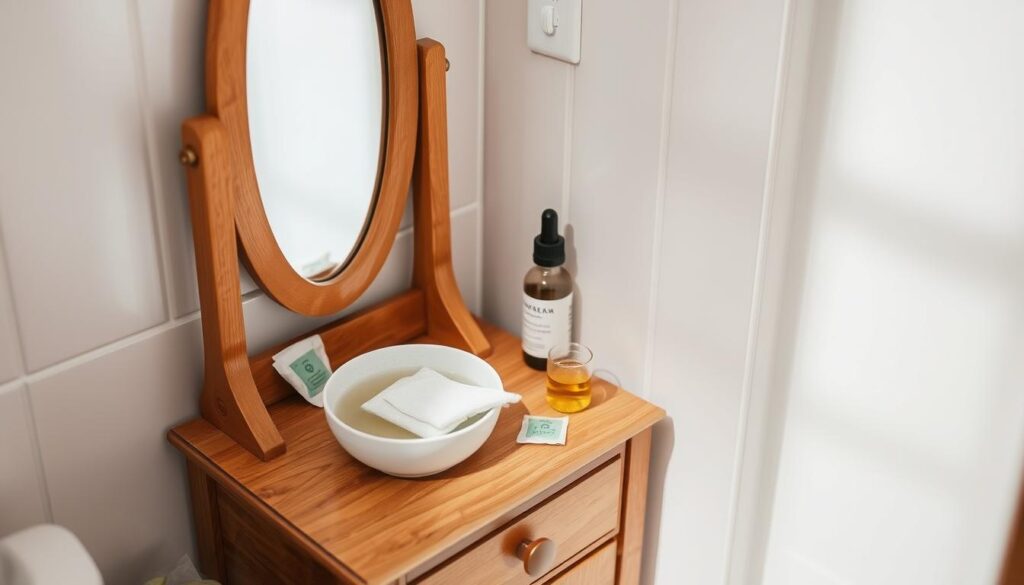
A warm compress is the best home treatment for a stye. Apply a clean, warm washcloth to your eye for 10-15 minutes. Repeat this 3-4 times daily7.
This method helps drain the stye and reduces discomfort8. Use soft, clean washcloths and make sure the water is comfortably warm.
- Use clean, soft washcloths
- Ensure water is comfortably warm
- Gently press against the affected eyelid
Natural Soothing Agents: Tea Bags and Herbal Remedies
Black tea bags have natural antibacterial properties that can help treat styes8. Herbal infusions like chamomile and rosemary can also ease pain and reduce swelling.
Over-the-Counter Pain Management
Over-the-counter options can provide relief for a painful hordeolum:
| Remedy | Benefits |
|---|---|
| Ibuprofen | Reduces inflammation and pain |
| Acetaminophen | Manages discomfort |
| Saline Solution | Helps clean eyelid and prevent infection8 |
Pro tip: Skip makeup and contact lenses during treatment to avoid irritation. Most styes heal on their own within a few days7.
Remember, if your stye doesn’t improve after 8 days or worsens, consult an eye care professional8.
Preventing Styes: Tips for Healthy Eyes
Excellent eye health requires proactive strategies to prevent bacterial infections like styes. Your daily hygiene routine protects your eyes from potential eye infection risks. Preventing harmful bacteria starts with consistent, mindful practices9.
Personal Hygiene: Keeping Your Eyelids Clean
Regular eyelid washing helps minimize chalazion and stye development. Use antiseptic wipes or tear-free baby shampoo to clean your eyelids gently. Wash your hands with soap before touching your face or handling contact lenses9.
Makeup and Eye Products: Best Practices
Your makeup routine impacts eye health significantly. Replace eye makeup products every three months. People wearing eye makeup have a higher risk of developing styes10.
Remove all makeup before sleeping to reduce bacterial contamination. Avoid sharing cosmetic products to keep your eyes healthy9.
Lifestyle Changes to Reduce Risk Factors
Some health conditions increase stye susceptibility, including diabetes, rosacea, and high LDL cholesterol10. Maintain good overall health and practice rigorous eye hygiene. Be mindful of your personal care routine to reduce chances of painful eye infections.
FAQ
What exactly is a stye?
A stye is a red, painful bump on your eyelid. It’s caused by blocked oil glands and looks like a pimple. Bacterial infections, usually Staphylococcus aureus, often trigger these uncomfortable bumps.
Styes form when oil glands get clogged with dead skin, dirt, or excess oil. This creates a perfect environment for bacteria to grow.
How long does a typical stye last?
Most styes go away within 7-10 days with proper home care. You’ll likely see improvement within a week if you use warm compresses and maintain good eye hygiene. Avoid touching or squeezing the stye.
If the stye lasts longer than two weeks or becomes more painful, see a doctor.
What are the best home treatments for a stye?
The most effective home remedy is applying warm compresses to the affected eye. Do this for 10-15 minutes, 3-4 times daily. You can use a clean, warm washcloth or warm tea bags.
Gently clean your eyelid with mild soap. Avoid wearing makeup or contact lenses. Use over-the-counter pain relievers like ibuprofen if needed.
Are there different types of styes?
Yes, there are two main types of styes: external and internal. External styes develop on the eyelid edge and are more visible. Internal styes form inside the eyelid and might be less noticeable.
Both types can cause redness, swelling, and discomfort. They’re typically treated similarly with warm compresses and good hygiene.
When should I see a doctor about a stye?
Seek medical help if your stye:
– Persists for more than two weeks
– Causes vision problems
– Becomes extremely large or painful
– Leads to significant swelling of the entire eyelid
– Occurs frequently or repeatedly
Complications like cellulitis might require immediate medical attention. Don’t hesitate to consult a doctor if you’re concerned.
How can I prevent styes from developing?
Prevent styes by maintaining excellent eye hygiene. Wash your hands often and avoid touching your eyes. Clean your eyelids regularly with warm water and mild soap.
Replace eye makeup every 3-6 months and remove it before sleeping. Practice proper contact lens hygiene. Manage underlying conditions like blepharitis and wash pillowcases regularly.
Are styes contagious?
Styes themselves aren’t directly contagious, but the bacteria causing them can spread. Avoid sharing towels, washcloths, or eye makeup. Wash your hands frequently to prevent potential transmission of stye-causing bacteria.
Source Links
- The 6 Best Stye Remedies – https://www.healthline.com/health/beauty-skin-care/best-stye-remedies
- How to Get Rid of a Stye: Remedies and Treatments – https://www.webmd.com/eye-health/remedies-stye
- No title found – https://www.allaboutvision.com/conditions/how-to-get-rid-of-a-stye.htm
- Hordeolum (Stye) – https://www.hopkinsmedicine.org/health/conditions-and-diseases/hordeolum-stye
- Stye (sty): Home treatments may relieve your pain-Stye (sty) – Symptoms & causes – Mayo Clinic – https://www.mayoclinic.org/diseases-conditions/sty/symptoms-causes/syc-20378017
- What Is a Stye and How Do You Treat Them? – https://drmcdevitteyecare.com/articles/default/614229-what-is-a-stye-and-how-do-you-treat-them
- Styes in Children: Care Instructions – https://myhealth.alberta.ca/Health/aftercareinformation/pages/conditions.aspx?hwid=ut2552
- How to Get Rid of a Stye: 5 Easy Home Remedies – https://www.tuasaude.com/en/how-to-get-rid-of-a-stye/
- 6 Tips to Prevent Styes From Forming – https://www.verywellhealth.com/how-to-avoid-a-stye-3422088
- What Causes Styes and How to Get Rid of Them | Banner Health – https://www.bannerhealth.com/healthcareblog/teach-me/how-to-prevent-and-treat-styes-on-your-eyelids

