
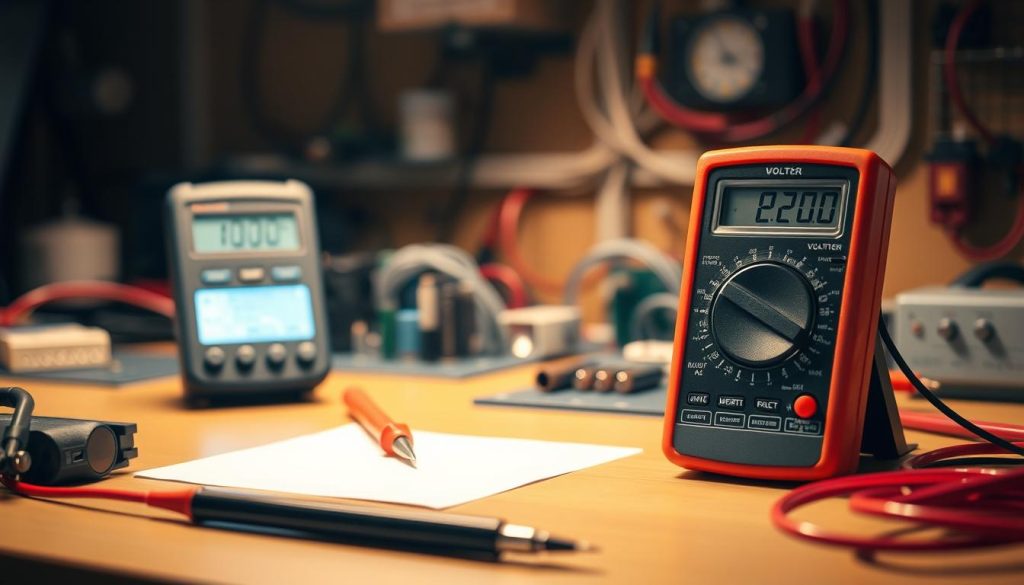
Voltmeters are vital for measuring voltage in circuits1. They come in digital and analog formats, each with unique benefits1. These tools help electricians and DIY fans work safely and accurately.
Voltmeters provide key insights into electrical circuits1. They measure voltage levels across different components, aiding in system diagnosis.
Modern digital multimeters can measure voltage, current, and resistance1. The Fluke 179 True-RMS Digital Multimeter is an advanced model with comprehensive capabilities1.
Key Takeaways
- Voltmeters are crucial for measuring electrical potential difference
- Digital and analog versions offer different measurement approaches
- Precise measurements are essential for electrical diagnostics
- Modern multimeters provide multiple measurement functions
- Safety is paramount when using electrical measurement tools
Understanding Voltmeter Basics and Components
Voltmeters are vital tools for measuring voltage in electrical systems. They provide key insights into circuits and help technicians assess voltage levels accurately. Electricians rely on these devices for various applications.
Types of Voltmeters: Digital vs Analog
Voltmeters come in two main types: digital and analog. Digital multimeters offer precise measurements and data logging features. They can measure multiple electrical quantities, making them versatile tools for electricians2.
- Analog voltmeters use a moving pointer on a scale
- Digital voltmeters provide easy-to-read numeric displays
- Digital models often include auto-ranging capabilities
Essential Parts of a Voltmeter
A typical voltmeter has several key components for accurate voltage measurement. These include:
- Display (digital or analog)
- Selector knob
- Measurement ports
- Probes
Display and Control Features
Modern voltmeters boast advanced display and control features. Digital models show measurements to multiple decimal places3. The selector knob allows users to choose different voltage ranges for precise readings2.
Different voltmeter types excel in specific scenarios. Amplified voltmeters can detect tiny potential drops. PMMC voltmeters measure direct current voltages through coil deflection3.
How to Use a Voltmeter Safely
Safety is crucial when measuring voltage in electrical circuits. Start at the highest range and work downward carefully. Understanding safe electrical testing steps prevents hazards and equipment damage.
Check your voltmeter for wear or damage before testing circuits. Ensure the testing area is dry and moisture-free. Use a Category II or higher voltmeter for AC mains voltage.
The Home Depot guide on multimeter usage suggests careful probe connection and range selection. For accuracy, identify DC or AC current before testing.
Most voltmeters handle up to 750VAC and 1000VDC. Connect the red probe to positive and black to negative terminals. Incorrect use can lead to inaccurate readings or device damage.
Wear protective gear and keep a safe distance during voltage testing. If unsure, seek expert help to avoid electrical risks4.
FAQ
What is a voltmeter and why do I need one?
A voltmeter is a key tool for measuring voltage in electrical circuits. It’s vital for checking electrical systems, testing batteries, and ensuring safe operations. This device helps you understand the electrical potential in various circuits and devices.
What’s the difference between digital and analog voltmeters?
Digital voltmeters show precise numeric readings on an electronic display. They’re easier to read and more accurate for most users. Analog voltmeters use a moving needle to show voltage.
Digital models are more modern and user-friendly. They often have extra features like auto-ranging and backlit displays.
How do I safely use a voltmeter?
Safety is key when using a voltmeter. Make sure the device can handle the voltage you’re measuring. Wear protective gear like insulated gloves.
Choose the right measurement range first. Connect the red probe to positive and black to negative or ground. Keep your hands away from the circuit while testing.
Can I use a voltmeter to test household outlets?
Yes, voltmeters work great for testing standard household electrical outlets. You can check if an outlet works and verify voltage levels. Typical US outlets have 120V.
Always ensure the outlet is easy to reach. Follow proper safety steps when testing.
What types of devices can I test with a voltmeter?
Voltmeters can test many electrical devices. These include batteries, car systems, appliances, electronic circuits, and solar panels. They measure both AC and DC voltages.
This makes them useful for various tasks, from car repairs to home electronics.
How do I choose the right voltmeter for my needs?
Think about what you’ll test, your tech skills, and your budget. Beginners often do well with a basic digital multimeter that auto-ranges.
Pros might want advanced models. These can measure temperature and perform complex circuit tests.
How often should I calibrate or replace my voltmeter?
Check consumer-grade voltmeters yearly for accuracy. Replace them if readings are off or probes are damaged. Pro models may need calibration every 6-12 months.
Follow the maker’s advice and replace after big impacts.
What are common mistakes to avoid when using a voltmeter?
Common errors include picking the wrong voltage range and touching live circuits incorrectly. Using damaged probes and not setting the right current type are also issues.
Always read the manual and start with lower voltage ranges. When unsure, ask a professional electrician for help.
Source Links
- What is a Voltmeter vs Multimeter – https://www.fluke.com/en-us/learn/blog/digital-multimeters/what-is-a-voltmeter?srsltid=AfmBOoqexi96gzBDx4O9cz_txiUnorbMA3Ea_pCUjJ_pmOpmvtLxwkVZ
- Voltmeter: Definition, Function & Diagram – https://www.vaia.com/en-us/explanations/physics/electricity/voltmeter/
- Voltmeter: Definition, Symbol, Diagram, Working, Types, Uses – https://testbook.com/physics/voltmeter
- How to Use a Voltmeter – https://auto.howstuffworks.com/under-the-hood/vehicle-maintenance/how-to-use-voltmeter.htm

