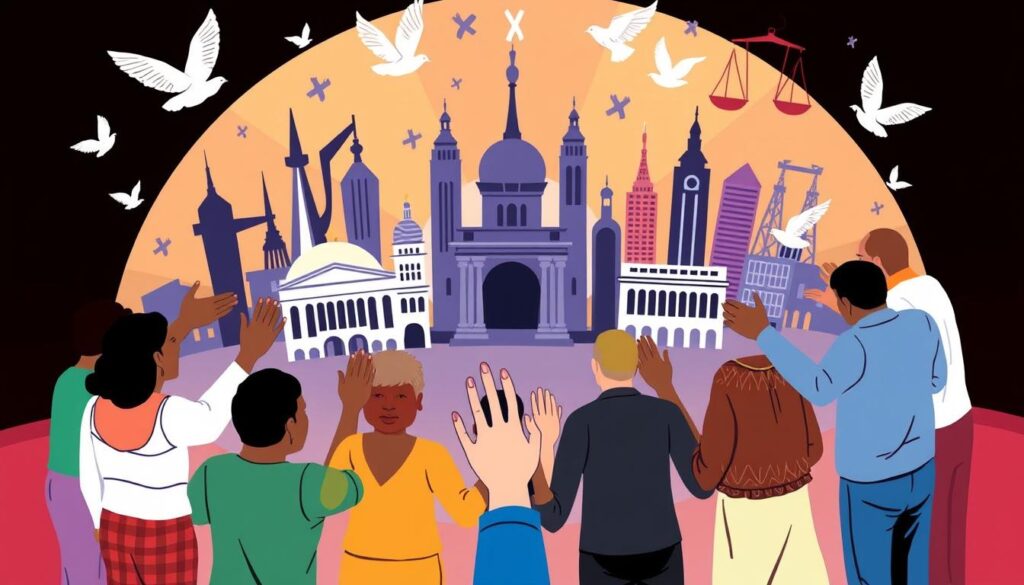
Human rights groups are key in fighting for rights all over the world. It’s vital to back them up so they can keep doing their important work. The UN says everyone should help protect and promote human rights everywhere. Today, millions of NGOs are working hard on human rights issues like poverty, health, education, and stopping violence1.
There are many ways to help these organizations, like volunteering, giving money, or sharing what they do. Even what we buy can help, by looking for fair wages and ethical products1. By supporting them, we help protect human rights, which is about respecting each person’s dignity. Groups like Amnesty International USA’s Human Rights Educators’ Network help teach about human rights in schools2.
Key Takeaways
- Human rights organizations play a vital role in promoting and protecting human rights worldwide.
- There are various ways to support human rights organizations, including volunteering, donating, and spreading awareness.
- Shopping habits can impact human rights, and considering factors like fair wages for workers and ethical sourcing of materials is essential1.
- Supporting human rights organizations can contribute to the promotion and protection of human rights, which is a fundamental aspect of human dignity.
- Initiatives such as Amnesty International USA’s Human Rights Educators’ Network support the work of human rights organizations2.
- International human rights organizations, such as the United Nations, also play a vital role in promoting and protecting human rights worldwide.
Understanding the Role of Human Rights Organizations
Human rights groups are key in protecting freedom and fighting for justice around the world. These nonprofit human rights organizations work in many ways. They range from local groups tackling specific problems to big international bodies shaping global policies.
One big job of these groups is to raise awareness and advocate for change. They work hard to influence laws, change public views, and make sure human rights are respected everywhere.
The Importance of Advocacy and Awareness
Groups like Amnesty International and Human Rights Watch are vital in pushing for policy changes. They use campaigns, lobbying, and direct help to tackle human rights abuses3.
They also run awareness campaigns. These help educate people and make the world more aware of human rights issues. This builds a more informed and caring global community4.
Key Issues Addressed by Human Rights Groups
These organizations deal with many issues, like civil rights, economic rights, and social justice. For example, the Centre on Housing Rights and Evictions (COHRE) fights for the right to a home and stops forced evictions. They see housing as a basic human right3.
Also, groups like the Children’s Defense Fund (CDF) protect kids’ rights. They make sure kids get the care and education they need for a good life4.
Ways to Support Human Rights Organizations
Supporting human rights is key to creating fair societies. By giving to a human rights organizations list, you can really help.
Financial Contributions and Fundraising Events
Donating money is a strong way to support human rights. It helps groups give aid, push for policy changes, and help those who are overlooked.
- Direct donations to organizations
- Participating in charity runs or galas
- Organizing bake sales or community events
Fundraising events have helped a lot. For example, Amnesty International’s Write for Rights campaign got over 5.8 million actions in 20235.
Volunteering Your Time and Skills
Volunteering your time and skills is very helpful. You can help in many ways, like with paperwork or by advocating for rights.
- Participate in outreach programs
- Assist in organizing events
- Provide professional services pro bono
Groups like UNICEF, working in almost 200 countries, need volunteers for their big programs6.
Donating Goods and Services
Donating goods or services is also very helpful. It supports their everyday work and special projects.
- Provide office supplies or equipment
- Offer legal or medical services
- Donate clothing or food for aid programs
Top human rights groups use these donations to improve their work and help more people.
Engaging Your Community in Support
Building a strong support network is key for human rights groups to succeed. Getting your community involved boosts your efforts and creates a sense of shared duty.
Organizing Awareness Campaigns
Awareness campaigns are vital for teaching people about human rights. Good campaigns bring attention to important issues and get people involved through different ways:
- Use social media like Twitter and Facebook to reach more people7.
- Hold public events to highlight human rights problems.
- Work with influencers to spread your message better.
Collaborating with Local Organizations
Working with local groups strengthens community bonds and boosts your impact. Together, you can:
- Share resources and knowledge to solve big problems8.
- Build trust and credibility in the community.
- Develop strategies that tackle both local and global human rights issues.
Hosting Educational Workshops
Workshops teach people how to stand up for human rights. When planning, think about these points:
- Pick topics that matter to your community.
- Invite experts to share useful and interesting info.
- Make it interactive to keep people engaged and interested.
| Strategy | Benefits | Examples |
|---|---|---|
| Awareness Campaigns | Increases public knowledge and support | Social media initiatives, public events |
| Collaborating with Local Organizations | Enhances resource sharing and credibility | Joint programs, shared events |
| Educational Workshops | Empowers individuals with advocacy skills | Training sessions, expert-led seminars |
Staying Informed and Spreading the Message
To help nonprofit human rights groups, it’s key to keep up with their work. Knowing their latest efforts helps spread their mission far and wide.
Following Human Rights Organizations Updates
Groups like Human Rights Watch have a team of about 550 people from over 70 countries9. They work in around 100 countries, giving us deep looks into human rights issues worldwide9.
Sharing Information on Social Media
Top human rights groups post their findings every day, reaching millions online9. Using hashtags and powerful messages can make their voices heard even more10.
Encouraging Conversations on Human Rights Issues
Talking about human rights helps us understand and support each other better11. By sharing values like kindness, we can overcome misunderstandings11. Movements that focus on unity and positive messages get more people involved11.
FAQ
What are human rights organizations and what role do they play globally?
Human rights groups protect and promote the rights of people everywhere. They push for policy changes and raise awareness on important issues. They also support those whose rights are being ignored.
These groups work at all levels, from local to international. They make sure human rights are respected everywhere.
How can I find a reputable list of human rights organizations to support?
Look for a list of human rights groups on recognized websites. Check their mission, transparency, and credentials. This will help you find organizations that match your values and make a real difference.
What are the different types of nonprofit human rights organizations?
There are many types of human rights groups. Some focus on specific rights like civil liberties or economic rights. Others take a broader approach to advocacy.
These groups range from small local efforts to large international NGOs. They influence policies and provide resources for defending human rights.
What are effective ways to financially contribute to human rights organizations?
You can donate money directly to these groups. You can also help out at fundraising events or set up regular donations. Many organizations accept donations online, where you can support specific projects.
Organizing your own fundraisers or working with local businesses can also help. This way, you can make a bigger impact on these important causes.
How can I volunteer my time and skills to support human rights causes?
Volunteering means using your time and skills to help these organizations. You can help with advocacy, planning events, marketing, research, or administration. Contacting groups directly or using volunteer platforms can help you find the right fit.
This way, you can contribute meaningfully to human rights efforts.
What types of goods and services can be donated to human rights organizations?
You can donate many things, like office supplies, medical equipment, clothes, and technology. You can also offer professional services like legal help, design, or counseling.
Donating goods and services helps these organizations save money. They can then use more resources to protect human rights.
How can I engage my community to support international human rights organizations?
Engage your community by organizing awareness campaigns and working with local groups. Hosting workshops can also educate people and inspire action.
By raising awareness and building partnerships, you can make a bigger difference. This helps support these important causes.
What are some successful strategies for organizing awareness campaigns for human rights?
Successful campaigns use clear messages and compelling stories. They also use both online and offline channels to spread information. Social media can help reach more people.
Working with influencers or community leaders can also boost your campaign. Encourage supporters to get involved for lasting change.
How can I stay informed about the latest developments in human rights issues?
Stay updated by following newsletters, social media, and reports from top human rights organizations. Subscribing to these channels keeps you informed about current issues and efforts.
Also, read reputable news and attend events to learn more about human rights globally.
What are effective ways to share information about human rights on social media?
Share information by crafting compelling messages and using hashtags. Include images and videos to engage your audience. Ask questions to start conversations.
Always share verified information from trusted sources. This keeps your message credible and impactful.
Source Links
- How To Promote Human Rights: 10 Examples – https://www.humanrightscareers.com/issues/how-to-promote-human-rights-10-examples/
- Human Rights Organizations Organizing Around the UDHR – http://hrlibrary.umn.edu/edumat/hreduseries/hereandnow/Part-5/5_udhr-orgs.htm
- Human Rights Activism and the Role of NGOs – Manual for Human Rights Education with Young people – www.coe.int – https://www.coe.int/en/web/compass/human-rights-activism-and-the-role-of-ngos
- Human Rights Organizations – The Role of Nongovernmental Organizations (NGOs) in Human Rights Advocacy – https://www.humanrights.com/voices-for-human-rights/human-rights-organizations/non-governmental.html
- Write a letter, change a life – https://www.amnesty.org/en/get-involved/write-for-rights/
- 6 Ways to Protect & Support Human Rights | Prosperity Candle – https://www.prosperitycandle.com/blogs/news/6-ways-to-protect-support-human-rights
- 15 Ways to Advance Social Justice in your Community – https://educationonline.ku.edu/community/15-ways-to-advance-social-justice
- Why is Community Engagement Important? – https://granicus.com/blog/why-is-community-engagement-important/
- About Us – https://www.hrw.org/about-us
- Simple actions for human rights – Manual for Human Rights Education with Young people – www.coe.int – https://www.coe.int/en/web/compass/simple-actions-for-human-rights
- A Guide to Hope-Based Communications – https://www.openglobalrights.org/hope-guide/