
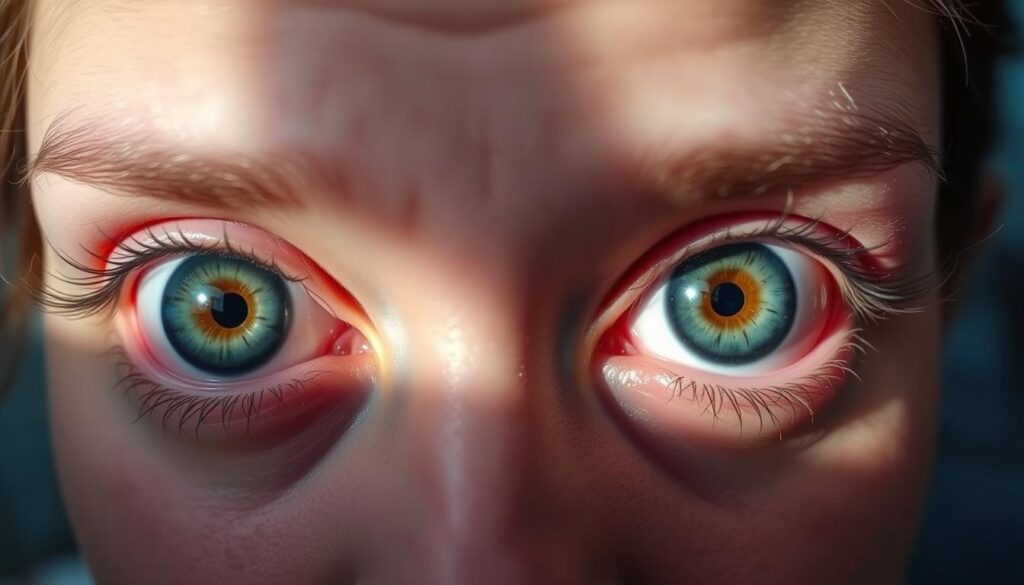
Your thyroid health can greatly affect your eyes, especially with thyroid eye disease (TED). It’s important to understand how thyroid issues can impact your vision. About 40% of people with Graves’ disease get TED before, during, or after their thyroid diagnosis1.
Hypothyroidism doesn’t always cause eye problems. But some thyroid conditions can change how your eyes look and work. Dry eyes, blurry vision, and thyroid orbitopathy are possible symptoms to watch for.
Only a small number of patients have moderate to severe eye issues1. Smoking makes you more likely to get eye-related thyroid problems. Non-smokers have a lower risk of bad symptoms.
Heavy smokers face a much higher chance of getting thyroid eye disease1. So, quitting smoking can help protect your eyes.
Key Takeaways
- Thyroid disorders can significantly impact eye health
- 40% of Graves’ disease patients may develop thyroid eye disease
- Smoking increases the risk of eye-related thyroid complications
- Not all thyroid patients will experience severe eye symptoms
- Early detection and management are crucial for eye health
Understanding Thyroid Eye Disease and Its Connection to Hypothyroidism
Thyroid eye disease (TED) is a complex autoimmune disorder. It attacks tissues around your eyes, causing inflammation. This condition can significantly impact your vision and eye health2.
What Causes Eye Problems in Hypothyroidism
Thyroid orbitopathy stems from an autoimmune response targeting eye tissues. This can occur in people with various thyroid function levels, including hypothyroidism. TSH Receptor Antibodies (TRAbs) play a key role in these eye-related complications3.
Common Signs and Symptoms
Thyroid eye disease can cause various symptoms that affect daily life:
- Eyelid retraction
- Swollen eyes
- Blurred vision
- Double vision
- Eye pain
- Light sensitivity
Risk Factors and Prevalence
Several factors influence the development of Graves’ ophthalmopathy:
| Risk Factor | Impact |
|---|---|
| Smoking | Seven times more likely to develop TED3 |
| Gender | Women are six times more likely to be affected3 |
| Age | Mean patient age is approximately 37 years2 |
About 35.6% of patients with thyroid disorders develop some form of eye disease2. Optic neuropathy is a potential complication. Early detection and management can greatly improve outcomes.
“Understanding your symptoms and seeking early medical intervention is key to managing thyroid eye disease effectively.”
Hypothyroidism and Eye Problems: Prevention and Treatment Options
Thyroid eye disease requires a thorough approach combining prevention and targeted treatments. Understanding your options can greatly impact your eye health. Learn about thyroid eye complications to better manage your condition.
Preventing thyroid eye problems is crucial. Here are some key strategies to consider:
- Quit smoking to reduce eye disease risk45
- Maintain stable thyroid levels through regular blood tests
- Take selenium supplements (100 mcg twice daily) for mild active TED5
- Avoid radioiodine treatment during active thyroid eye disease4
Treatment options vary from mild to advanced interventions. Artificial tear drops can provide relief in early stages.
As symptoms progress, your doctor might suggest:
- Steroid treatments to reduce inflammation5
- Immunosuppressive agents
- Radiotherapy for more severe cases
Rehabilitative surgeries become important in chronic stages. Decompression surgery can improve eye positioning and reduce bulging6.
Other surgical options include:
- Eye muscle surgery
- Eyelid repositioning
- Strabismus correction for double vision
Early intervention is critical in preventing serious eye damage and preserving your vision.
Talk to your eye doctor about the best treatment plan for you. Some patients may qualify for innovative clinical trials offering new treatments5.
Conclusion
Understanding thyroid eye disease (TED) is vital for managing eye problems effectively. Early detection and treatment can significantly improve your overall eye health7. With proper medical guidance, you can successfully navigate these challenging complications through comprehensive eye care.
Symptoms of TED can vary widely. Some patients may experience reduced sight8. Men might notice wet eyes or swollen eyelids8.
Smoking increases the risk of developing TED and complicates treatment outcomes7. Thyroid eye problems typically develop within 18 months of initial thyroid disease onset7.
Proactive management is crucial for protecting your vision and quality of life. Regular check-ups with specialists can assess your eye health using advanced tools. The Clinical Activity Score (CAS) system is one such diagnostic tool7.
While TED can be challenging, modern medical treatments offer hope. These treatments can effectively manage your symptoms and improve your overall well-being.
FAQ
What is Thyroid Eye Disease (TED)?
TED is an autoimmune condition that affects tissues around the eye. It causes inflammation in muscles, fatty tissue, and connective tissue. TED can occur with various thyroid conditions, including Graves’ disease.
How common are eye problems in hypothyroidism?
Eye problems aren’t typical in hypothyroidism. Severe cases may cause swelling around eyes and eyebrow hair loss. Eye issues are more common in hyperthyroidism. About 40% of Graves’ disease patients develop TED.
What are the main symptoms of Thyroid Eye Disease?
TED symptoms include bulging eyes, dryness, and light sensitivity. Patients may experience swollen eyelids, redness, blurred vision, and eye pain. Unlike conjunctivitis, TED often causes eye pain and double vision.
Who is at highest risk for developing Thyroid Eye Disease?
Risk factors include family history, low selenium levels, and smoking. Smokers have double the risk of developing TED. Heavy smokers face an eight-fold increased risk compared to non-smokers.
Women are more likely to be affected. The median age of diagnosis is 43 years.
How can I prevent or manage Thyroid Eye Disease?
Quit smoking and maintain stable thyroid levels through regular tests. Avoid radioiodine treatment during active TED. Consider taking selenium supplements.
Treatment options range from artificial tears to steroids and immunosuppressive agents. Rehabilitative surgeries may be necessary in some cases.
Can Thyroid Eye Disease affect my mental health?
Yes, TED can significantly impact quality of life. It may cause anxiety, irritability, and mood swings. Changes in appearance can lead to loss of self-esteem and social isolation.
Treatment, including surgery and counseling, can help improve these psychological effects.
When should I seek medical attention for eye problems related to thyroid conditions?
Seek immediate medical attention if you experience worsening symptoms. Watch for significant vision changes or extreme eye pain. Be alert for signs of complications like corneal ulcers.
Vision changes that could indicate optic nerve compression require urgent medical care.
Source Links
- Thyroid Eye Disease (TED) – https://www.btf-thyroid.org/thyroid-eye-disease-leaflet
- Hyperthyroid vs hypothyroid eye disease: the same severity and activity – https://pmc.ncbi.nlm.nih.gov/articles/PMC3213650/
- Thyroid Eye Disease – https://www.chop.edu/conditions-diseases/thyroid-eye-disease
- Thyroid Eye Disease – Prevent Blindness – https://preventblindness.org/thyroid-eye-disease/
- Thyroid Eye Disease – https://www.endocrine.org/patient-engagement/endocrine-library/thyroid-eye-disease
- The earlier you treat Thyroid Eye Disease (TED), the better – https://www.thyroideyes.com/thyroid-eye-disease-treatment/
- Thyroid Eye Disease – PMC – https://pmc.ncbi.nlm.nih.gov/articles/PMC9462910/
- Eye symptoms in patients with benign thyroid diseases – Scientific Reports – https://www.nature.com/articles/s41598-021-98232-0

