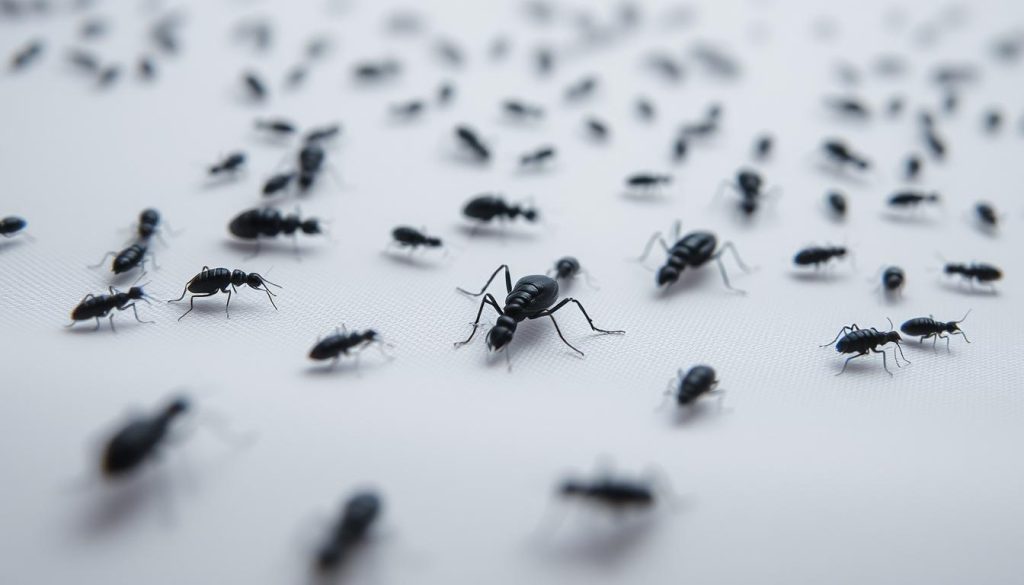
Finding tiny black bugs in your bed can be alarming. Not all small bugs are bed bugs. Identifying the specific insect is crucial for effective treatment1.
These tiny invaders can come from used furniture or travel items. They may also spread in shared living spaces1. Bed bugs have been around for thousands of years.
They’re small, about a quarter-inch long, like a tiny apple seed1. Bed bugs spread quickly in apartments and hotels. They’re mostly a nuisance, not a serious health threat1.
Knowing the exact type of bug is vital for pest control. Different insects need different treatments. Professional help is key to solving your bug problem.
Key Takeaways
- Not all tiny black bugs are bed bugs
- Professional identification is crucial for effective treatment
- Bed bugs can spread quickly in shared living spaces
- Multiple sources can introduce tiny insects to your bed
- Prompt action helps prevent widespread infestation
Common Types of Tiny Black Bugs in Bed
Finding tiny black bugs in your bed can be alarming. Correct identification is key for effective pest control. Different insects can invade your sleeping area, each needing specific treatment approaches.
Knowing various tiny black bugs helps tackle pest problems better. Let’s look at common insects you might find in your bedroom.
Bed Bugs: Detailed Characteristics
Bed bugs are well-known household pests with unique features. They’re oval-shaped and dark brown, looking like apple seeds. These bugs measure between 1/16 inch to 1/4 inch long2.
Key bed bug signs include red, itchy bites in lines or clusters3. You might also see tiny blood stains on sheets. Small dark fecal spots on bedding are another clue3.
- Red, itchy bites appearing in lines or clusters3
- Tiny blood stains on sheets
- Small dark fecal spots on bedding3
Carpet Beetles and Their Unique Traits
Carpet beetle larvae often look like bed bugs but don’t bite humans3. They’re 1/8 to 3/16 inch long2 and eat natural fibers. These insects can harm wool, silk, and other organic materials3.
Spider Beetles and Booklice
Spider beetles are tiny insects measuring 1/16 to 1/8 inch2. They like high humidity and can damage dried foods2. Booklice are 1/25 to 1/6 inch long2.
These bugs thrive in damp places and eat mold and fungi3. Proper identification is crucial for effective pest control. If unsure, ask a professional pest expert for help.
How to Identify and Deal with Tiny Black Bugs in Bed
Inspect your mattress carefully to find tiny black bugs in your bed. Different pests need specific strategies to get rid of them. Identifying the bug type is key to solving the problem.
- Bed Bug Signs:
- Red, itchy bed bug bites on skin
- Tiny blood stains on sheets
- Dark fecal spots on bedding4
- Carpet Beetle Indicators:
Try these methods to manage pests at home:
- Vacuum thoroughly, paying special attention to mattress seams and corners
- Wash all bedding in hot water (above 120°F)4
- Use airtight containers for food storage5
- Inspect and clean potential breeding areas regularly
| Pest Type | Size | Key Characteristics |
|---|---|---|
| Bed Bugs | 1-7 mm | Blood-feeding, rapid reproduction4 |
| Carpet Beetles | 1/16-1/8 inches | Fabric damage, slow reproduction5 |
Professional intervention might be necessary for severe infestations. If home treatments don’t work, call a pest control expert. They can provide solutions for your specific bug problem4.
Conclusion
Tiny bed bugs can be tricky, but knowing their traits helps you act fast. Be extra careful about hotel room bugs when traveling. Check your accommodations thoroughly6. For the best bed bug treatment, rely on professional pest control services7.
Stay alert to prevent widespread infestations. A single female bed bug can lay up to 5 eggs daily6. These tough pests survive months without food and thrive in various places6.
Check your space often and act quickly if you spot bugs. Don’t worry if you think you have an infestation. Get expert help through a complete pest management plan. Pros can identify the bug type and offer targeted treatments7.
The aim is to sleep peacefully and keep your home healthy. Stay informed and take action to beat these unwanted guests. With the right approach, you can successfully manage and remove bed bugs.
FAQ
How can I tell if the tiny black bugs in my bed are actually bed bugs?
Bed bugs are small, oval-shaped insects about the size of an apple seed. They have a reddish-brown color. Look for signs like tiny black droppings, shed skins, or blood stains on your mattress.
Bed bugs often hide in mattress seams, bed frames, and nearby furniture. Use a magnifying glass or ask a pest control expert for accurate identification.
Are all tiny black bugs in my bed dangerous?
Not all tiny black bugs pose the same risks. Bed bugs cause uncomfortable bites, while carpet beetles damage fabrics. Booklice are generally harmless, and spider beetles are mostly a nuisance.
Accurate identification is crucial to determine the right treatment and potential health concerns.
How did these tiny black bugs get into my bed?
Bed bugs often hitchhike on luggage, clothing, or second-hand furniture. Carpet beetles might enter through open windows or on fabric items. Booklice thrive in humid environments.
Travel, used furniture, and poor home maintenance can all lead to pest infestations.
What immediate steps should I take if I find tiny black bugs in my bed?
Start by inspecting your mattress, bedding, and surrounding areas thoroughly. Wash all bedding in hot water (at least 120°F) and dry on high heat.
Vacuum your mattress and surrounding areas carefully. For suspected bed bugs, use mattress encasements and contact a professional pest control service.
Can I get rid of these bugs without professional help?
Minor infestations can sometimes be managed with DIY methods. Thorough cleaning and vacuuming can help with carpet beetles. Reducing humidity can control booklice.
Bed bug infestations typically need professional intervention. For significant problems or unknown pests, consult a pest control expert.
How can I prevent tiny black bugs from entering my bed in the future?
Regularly inspect your bedding and mattress, especially after traveling. Use protective mattress encasements and reduce home humidity. Seal potential entry points and be cautious with second-hand furniture.
Keep a clean living environment and wash bedding often. When traveling, check hotel rooms and keep luggage away from beds.
Do these bugs carry diseases?
Most tiny black bugs in beds don’t transmit serious diseases. Bed bugs can cause skin infections from scratching bites. Carpet beetles might trigger allergic reactions in some people.
Booklice and spider beetles are generally just a nuisance. If you have persistent skin reactions, consult a healthcare professional.
Source Links
- Bed Bugs – What They Are and How to Control Them – https://www.health.ny.gov/environmental/pests/bedbugs.htm
- How to Identify Small Bugs in Your Bed or Bedroom (Pest Guide) – https://mandmpestcontrol.com/how-to-identify-small-bugs-in-your-bed-or-bedroom-pest-guide/
- How To Distinguish 10 Bugs That Look Like Bed Bugs – Alta Pest Control – https://www.altapestcontrol.com/blog/how-to-distinguish-bugs-that-look-like-bed-bugs
- Little Black Bugs On Bed. Tiny Black Bugs In Bed – https://www.buymyhouse.app/blog/tiny-black-bugs-in-bed/
- What Are These Tiny Black Bugs in My House? – https://www.thoughtco.com/what-are-these-tiny-black-bugs-in-my-house-1968030
- Bed Bugs Uncovered: A Comprehensive Guide to Understanding These Nighttime Nuisances – https://www.pestshare.com/bed-bugs/
- Got Black Bed Bugs? The 2 Reasons They Can Look Black – https://www.bedbugbarrier.com.au/black-bed-bugs/?srsltid=AfmBOoricmluI35BgrRdROrByCEm-6jju2DbuabaIC1k0Wez4h6fga6u