Iceland’s breathtaking landscapes offer endless photographic opportunities. This Nordic island boasts dramatic glaciers and volcanic terrains. Nature photographers will find an unparalleled canvas of natural wonders to capture1.
Iceland has 100 remarkable locations for visual storytelling. Both professionals and enthusiasts can explore these diverse settings. Extraordinary experiences await, regardless of your camera type1.
This guide provides insights for capturing Iceland’s magical environments. It covers techniques for northern lights, glacier caves, and wildlife photography1.
Strategic planning is crucial for stunning landscape compositions. Understanding local conditions will improve your photos. Proper preparation enhances your chances of photographic success.
Key Takeaways
- Iceland offers 100+ unique photographic locations
- Diverse landscapes provide endless creative opportunities
- Photography techniques vary by location and season
- Both professional and smartphone cameras can capture remarkable images
- Proper preparation enhances photographic success
Preparing for Your Iceland Photography Adventure
Iceland’s unique landscape demands specialized equipment and knowledge. Careful preparation is key to capturing its breathtaking beauty. Strategic planning will ensure a successful photography journey2.
Iceland offers remarkable photo opportunities across different seasons. Temperatures vary and landscapes transform dramatically. Photographers must understand these elements for successful adventure photography2.
Essential Photography Gear Recommendations
Selecting the right gear is crucial for Iceland winter photography. Compact and lightweight solutions are now trending. These enable easier navigation of Iceland’s diverse terrain2.
- Weather-sealed camera bodies
- Wide-angle lens (14-18mm)
- Telephoto lens (up to 200mm)
- Sturdy tripod
- Neutral density filters
Understanding Iceland’s Photographic Light Conditions
Iceland presents unique lighting challenges for photographers. Summer offers nearly 24 hours of daylight, creating extraordinary photo opportunities3.
Winter brings shorter days, perfect for moody landscapes. It’s also ideal for capturing potential Northern Lights.
Packing Strategic Photography Essentials
| Season | Recommended Gear | Temperature Range |
|---|---|---|
| Winter | Weatherproof camera, extra batteries, thermal clothing | -5°C to 5°C |
| Summer | Wide-angle lens, lightweight tripod, neutral density filters | 10°C to 14°C |
Your packing strategy should account for Iceland’s unpredictable weather. Flexibility is key when planning photography expeditions in this dynamic landscape3.
“Preparation transforms potential challenges into extraordinary photographic opportunities.” – Professional Landscape Photographer
Pack waterproof gear, multiple lens options, and adaptable clothing layers. Your preparedness will directly impact your photography adventure’s quality2.
Top Locations for Landscape Photography in Iceland
Iceland offers photographers a stunning canvas of natural beauty. Its diverse landscapes transform photography journeys. From waterfalls to glaciers, this Nordic island provides endless opportunities for capturing breathtaking scenes across its unique terrain.
Captivating Waterfalls: Goðafoss and Gullfoss
Iceland’s waterfalls provide amazing photo opportunities. Skógafoss Waterfall stands 60 meters tall, offering dramatic compositions4.
Brúarfoss Waterfall captivates with its electric blue water. It’s especially stunning during summer when the Midnight Sun creates vibrant sky colors5.
Majestic Glaciers: Vatnajökull National Park
Vatnajökull National Park is a glacier photographer’s dream. The park boasts incredible ice caves with crystal-blue formations. These natural wonders showcase volcanic ash deposits5.
Here, photographers can capture the raw beauty of Iceland’s frozen landscapes. The unique formations offer endless creative possibilities.
Breathtaking Black Sand Beaches: Vík and Reynisfjara
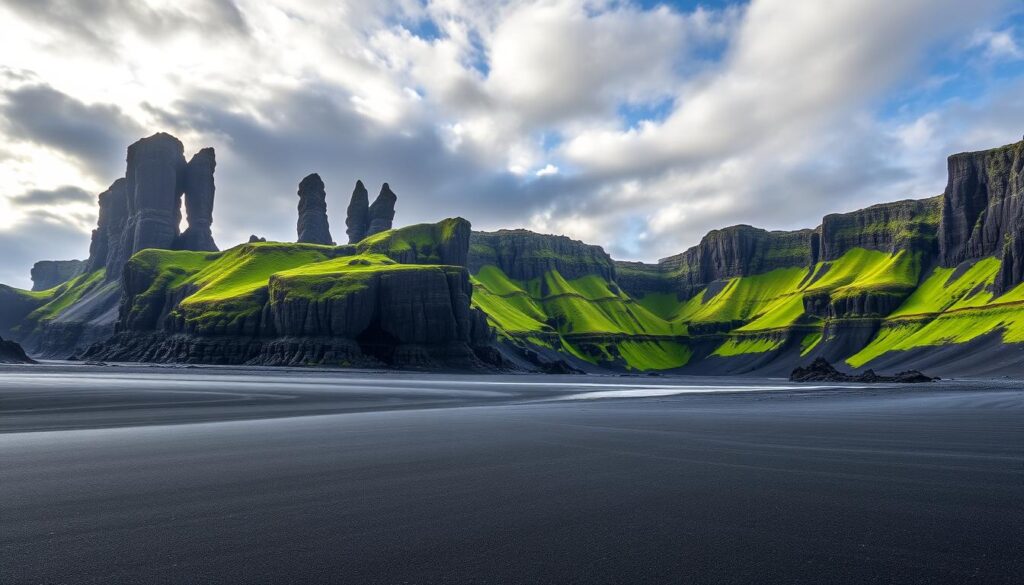
Reynisfjara Black Sand Beach offers extraordinary photo compositions. It features basaltic columns, dramatic cliffs, and powerful Atlantic waves5.
Nearby, the Sólheimasandur Plane Wreck provides another compelling photography location4. This unique site adds intrigue to Iceland’s coastal landscapes.
The Northern Lights: Best Viewing Spots
Iceland’s northern lights photography is best between September and April. Prime locations include Kirkjufell Mountain and remote areas away from light pollution.
The Sólheimasandur Plane Crash site becomes magical during aurora displays. The lights illuminate the black volcanic landscape, creating unforgettable scenes5.
- Best photography seasons: Summer for 24-hour daylight, Winter for Northern Lights
- Must-visit regions: Golden Circle, South Coast, Snæfellsnes Peninsula
- Essential gear: Wide-angle lens, sturdy tripod, neutral density filters
Techniques for Capturing Iceland’s Natural Beauty
Iceland’s landscape offers stunning visual diversity. Mastering various photography methods can transform your images into breathtaking artwork. Long exposure and creative compositions are key to highlighting this unique environment6.
For puffin photography, use a telephoto lens of at least 200mm. The Látrabjarg cliffs are perfect for wildlife shots, especially in summer. Shoot in RAW format for better post-processing options78.
Drone photography can reveal extraordinary landscapes. However, follow local regulations and practice caution. Plan your locations using tools like Google Earth and PhotoPills76.
Enhance Iceland’s natural beauty in post-processing without sacrificing authenticity. Use graduated neutral density filters to balance light intensities. Focus on maintaining the landscape’s genuine characteristics6.
Your goal is to reflect Iceland’s raw, untamed environment. Let your unique perspective shine through in your photographs.
FAQ
What camera gear should I bring to Iceland?
Pack a weather-sealed camera and dependable gear for Iceland. Bring a wide-angle lens for landscapes and a telephoto for wildlife. Don’t forget a sturdy tripod and neutral density filters for long exposures.
Iceland’s weather can change quickly. Make sure your equipment is protected from moisture and cold.
When is the best time to photograph the Northern Lights in Iceland?
The best time for Northern Lights photography is between September and April. Mid to late September offers great day and night conditions.
Top spots include Thingvellir National Park and Jökulsárlón glacier lagoon. Look for areas with minimal light pollution.
What should I wear for photography in Iceland?
Wear layered, waterproof clothing to handle Iceland’s changing weather. Include thermal base layers and waterproof outer shells. Don’t forget sturdy hiking boots and weather-resistant gloves.
Your outfit should protect you while allowing flexibility for various shooting conditions.
How can I capture the best landscape photographs in Iceland?
Focus on unique compositions and Iceland’s dramatic landscapes. Use a wide-angle lens and shoot during golden hours. Add foreground elements for depth and try long exposures.
Shoot in RAW format for better post-processing options. This helps capture Iceland’s incredible light and color variations.
Are drones allowed for photography in Iceland?
Drone photography is possible, but you must follow strict rules. Always check local guidelines and get necessary permissions. Respect nature conservation areas and wildlife.
Keep a safe distance from people and structures. Avoid flying in protected or restricted zones.
What are the top photography locations in Iceland?
Must-visit spots include the South Coast and Jökulsárlón glacier lagoon. Don’t miss Diamond Beach, Snæfellsnes Peninsula, and Vatnajökull National Park.
Capture Seljalandsfoss and Skógafoss waterfalls. The black sand beaches of Vík and Reynisfjara offer unique photo opportunities.
How do I photograph waterfalls in Iceland?
For waterfall shots, try long exposures between 1/20th and 2 seconds. This creates a silky water effect. Use neutral density filters in bright conditions.
Include surrounding landscape elements for context. Experiment with different angles to showcase the waterfall’s unique features.
What wildlife can I photograph in Iceland?
Iceland offers chances to photograph puffins, Arctic foxes, and reindeer. Use a telephoto lens and keep a respectful distance.
The Westfjords and coastal regions are great for wildlife shots. Be patient and watch for various seabirds.
Source Links
- Photographing Iceland: A photo guide to 100 locations – Photographing Iceland – https://photographingiceland.is/photographing-iceland-a-photo-guide-to-100-locations/
- Ultimate Guide to Iceland Photography | Iceland Photo Tours – https://iceland-photo-tours.com/articles/landscape-and-nature-photography/ultimate-guide-to-iceland-photography
- My Secrets to a Better Photography Experience in Iceland | Photzy – https://photzy.com/my-secrets-to-a-better-photography-experience-in-iceland/
- The Top 30 Locations in Iceland for Photography – https://www.reykjavikcars.com/blog/travel-tips/iceland-photography
- 27 Iceland Photography Locations That Will Blow Your Mind | Iceland Photo Tours – https://iceland-photo-tours.com/articles/landscape-and-nature-photography/iceland-photography-locations-that-will-blow-your-mind
- 10 Simple Tips for Seascape Photography in Iceland | Iceland Photo Tours – https://iceland-photo-tours.com/articles/photography-tutorials/top-10-tips-for-seascape-photography-in-iceland
- Iceland Photography Tips – The Photo Hikes – https://thephotohikes.com/iceland-photography-tips/
- The Ultimate Guide to Photography in Iceland | Guide to Iceland – https://guidetoiceland.is/nature-info/photography-in-iceland