
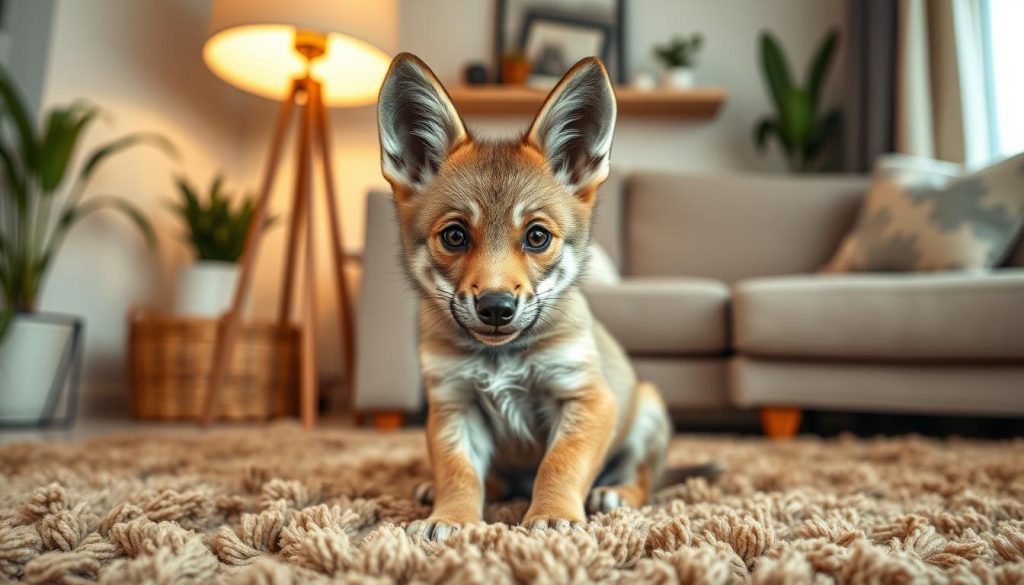
Coyotes aren’t your typical house pets. They’re wild canines related to wolves and foxes. Unlike dogs, coyotes keep their wild instincts, making them tough companions.
These animals have unique eating habits. They scavenge for both meat and plants. Coyotes may look like Border Collies, but their wild nature sets them apart.
Coyotes need lots of space to roam. They’re not meant for indoor living. These animals often hunt smaller prey and can be aggressive to others.
Taming a coyote is extremely rare. It comes with big challenges that most people can’t handle1.
Key Takeaways
- Coyotes are wild animals with complex behavioral patterns
- Domestication is extremely difficult and rarely successful
- Legal restrictions exist in many states for coyote ownership
- Wild instincts make coyotes unsuitable as typical household pets
- Significant space and specialized care are essential
Understanding Coyote as a Pet: Natural Instincts and Behavior
Coyote ownership is far more challenging than regular pet care. These wild animals have strong instincts that make them hard to domesticate2. Unlike dogs, coyotes haven’t been bred by humans for thousands of years2.
Wild Animal Mentality vs Domestication
Coyotes are highly adaptable creatures. They live in every state except Hawaii3. Their success in urban areas comes from their ability to find food and navigate new spaces4.
Their diet usually includes:
- Small rodents
- Local vegetation
- Opportunistic urban food sources
Early Age Training Requirements
Training a coyote requires deep knowledge of their behavior. Proper socialization must begin extremely early. It’s vital to understand their body language.
A happy coyote shows a “big smile,” wide eyes, and erect ears2.
Coyotes are not domestic animals and require specialized, intensive behavioral management.
Natural Behavioral Patterns
Coyotes use play to interact and learn. Their play fighting helps them develop survival skills2. This keeps their wild instincts sharp.
Understanding their signals is key to managing coyote behavior challenges2.
Coyote domestication is very complex. Their wild nature means they need special care and commitment3. They can’t be treated like typical pets.
Legal and Safety Considerations for Exotic Pet Coyotes
Owning a coyote as a pet is complex and challenging. Laws vary widely across states, with many banning private ownership. These wild animals come with significant regulatory hurdles and potential risks5.
Coyote care goes beyond typical pet ownership. Owners must build special enclosures meeting strict guidelines. These include a 24x24x12 foot space with 8-gauge wire fencing to prevent escapes5.
Many communities have strict rules on exotic pets, especially wild canines. This is due to public safety concerns6.
Health risks are a major issue with coyote ownership. These animals can spread dangerous diseases like rabies. This threatens both humans and pets5.
Coyotes need specific vaccines, including DHPP and rabies shots. Finding a vet experienced in exotic animal care can be tough5.
Coyote-dog hybrids aren’t a safer option. They have similar legal and ethical problems. Wildlife protection groups advise against owning these animals. They stress the risks to community safety and animal welfare6.
FAQ: Coyotes as Pets – What You Need to Know
Can I legally own a coyote as a pet?
Owning a coyote is illegal in most states. Wildlife rules ban wild canines as pets due to safety issues. Few states allow exotic pets with permits, but these are rare and demanding.
Are coyote pups easier to domesticate than adult coyotes?
Coyote pups are hard to tame, despite their cute looks. They keep wild instincts, even when raised from birth. These include hunting drives and unpredictable aggression that can’t be trained away.
How different are coyotes from domesticated dogs?
Coyotes differ greatly from dogs in social habits and behavior. They have wild survival instincts that make them unfit as pets. Coyotes are independent and have strong pack mentalities.
What health risks are associated with keeping a coyote?
Coyotes can spread diseases like rabies and parasites. They need special vet care that most clinics can’t provide. This makes their health care tough and potentially risky.
Can coyote-dog hybrids be better pets?
Coyote-dog hybrids are not good pets and often face legal issues. They have unpredictable traits and may be aggressive. Local authorities might not see them as valid pets.
What specialized care do coyotes require?
Coyotes need unique diets and huge living spaces. They require complex care and expert wildlife handling. Their needs far exceed typical pet care, making them unsuitable for most people.
Are there any alternatives for those interested in exotic canine companions?
Consider wolf-dog hybrids from trusted breeders instead of coyotes. Exotic breeds like Czechoslovakian Wolfdogs might satisfy your wild-like pet interest. These options are more legal and easier to manage.
Source Links
- Do Coyotes Make Good Pets? – http://wildliferemovalusa.com/coyotesgoodpets.html
- Communicating With Your Pet Coyote: Body Language – Exotic Pet Wonderland – https://exoticpetwonderland.org/2023/11/20/pet-coyote-body-language/
- Do Coyotes Make Good Pets? Can They Be Domesticated? Legality & More | PangoVet – https://pangovet.com/pet-lifestyle/general/do-coyotes-make-good-pets/
- Coyote FAQS – https://www.coyotewatchcanada.com/site/coyote-faqs
- Pet Coyote Care Guide – Exotic Pet Wonderland – https://exoticpetwonderland.org/exotic-pet-care-guides/pet-coyote-care-guide/
- Detailed Discussion of Exotic Pet Laws – https://www.animallaw.info/article/detailed-discussion-exotic-pet-laws

