
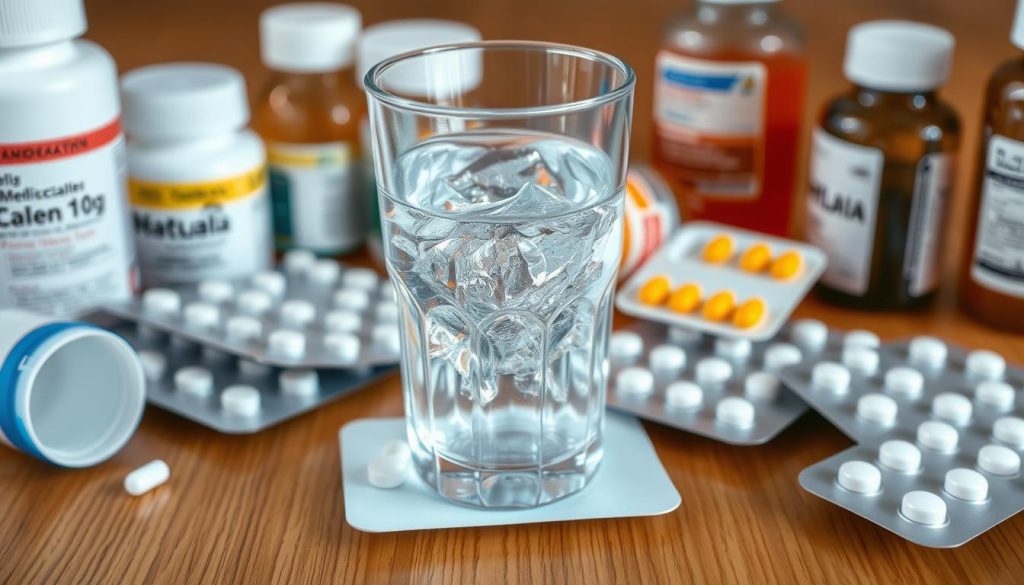
A “full glass of water” for medication typically means 8 ounces (240 mL). This amount is crucial for patient safety. Proper hydration plays a vital role in how well medicines work.
Taking pills without enough water can be risky. It may cause swelling or choking. The glass size matters when following drug guidelines.
Doctors stress knowing water amounts for prescriptions. Each medicine might need specific hydration. Always read and follow your medication’s water intake instructions carefully.
Key Takeaways
- A full glass of water equals 8 ounces (240 mL)
- Proper water intake helps prevent medication-related complications
- Different medications may have unique water consumption guidelines
- Always consult healthcare providers about specific medication instructions
- Hydration levels directly impact medication effectiveness
Understanding Medication Instructions and Water Requirements
Water is crucial for medication effectiveness and patient safety. It’s not just for swallowing pills. Water helps medications absorb and spread throughout the body1.
Why Water Matters in Medication Management
Drinking water with medications ensures proper absorption and prevents side effects. Different medications have unique water requirements that patients should know2.
- Nonsteroidal anti-inflammatory agents (NSAIDs) require sufficient liquid to minimize esophageal irritation
- Bisphosphonates need plenty of water to reduce potential stomach discomfort
- Some medications have specific hydration guidelines based on their dosage form
Common Water Consumption Patterns with Medications
Studies show interesting trends in water consumption with medications3:
- 15.4% of participants use 60ml or less liquid with their medications
- 64% of participants consume between 101-150ml of water
- Average water consumption varies by age group, ranging from 107ml to 118ml
Hydration Considerations for Medication Safety
Knowing your fluid intake needs is vital, especially when taking medications. Some health conditions may require adjusted water consumption1.
- Diabetes patients might need increased hydration
- People taking diuretics should monitor fluid loss
- Some blood pressure medications can affect thirst signals
Always consult your healthcare provider about specific water intake recommendations for your medications.
Good drinking water habits can boost medication effectiveness and overall health. Understanding water guidelines helps patients improve treatment outcomes and reduce side effects1.
Full Glass of Water Ounces: Standard Measurements and Guidelines
Knowing liquid measurements is key when taking medicine. Doctors often suggest an 8-ounce (240 ml) glass of water for medication. Accurate measuring helps ensure proper hydration and drug absorption45.
Different drugs may need varying amounts of water. Always ask your doctor or pharmacist for specific instructions. Some patients might need more or less water based on their health4.
Precise measuring cups help patients follow guidelines and maintain consistent water intake5. Staying hydrated is about more than just taking medicine. Water makes up about 60% of an adult’s body weight4.
Understanding proper drink sizes can improve overall health. The recommended daily fluid intake varies by age. It’s important to track your personal hydration needs5.
Always follow the specific instructions for your medications. Some pills need a full glass of water to dissolve properly. Others might have unique requirements. Listen to your doctor’s advice for your medication routine4.
FAQ
What exactly does “take with a full glass of water” mean?
A “full glass of water” is about 8 ounces (240 ml). This amount helps medications dissolve and move through your system. It also ensures proper absorption and reduces potential side effects.
Why is it important to take medication with water?
Water is key for medication absorption and distribution. It dissolves pills and moves them through your digestive tract. Water also helps prevent stomach irritation and spreads medicine throughout your body.
How can I measure a full glass of water accurately?
Use a measuring cup or glasses with volume markings. Most drinking glasses hold 8-12 ounces. For medications, aim for 8 ounces (240 ml). Ask your pharmacist if you’re unsure about the right amount.
Are there different water requirements for different medications?
Yes, some medicines have unique water intake rules. Some need more or less water. Others must be taken with food or on an empty stomach. Always follow the instructions on your medication label.
What if I have trouble swallowing pills with water?
Try taking pills while sitting upright. Use a straw or tilt your head forward slightly when swallowing. Ask your doctor about liquid forms or smaller pills if needed.
Can I use other liquids instead of water when taking medication?
Stick to water unless told otherwise by your doctor. Some drinks like grapefruit juice can affect how medicines work. Alcohol and caffeine can also interfere with medication absorption.
How long should I stay upright after taking medication with water?
For most pills, stay upright for 10-15 minutes after taking them. This prevents pills from getting stuck and helps them absorb properly. Some medicines may require longer upright periods.
Source Links
- Are you drinking enough water with your medications? | Express Scripts – https://www.express-scripts.com/pharmacy/blog/how-much-water-with-medication
- SafeMedicationUse.ca – Newsletter – https://safemedicationuse.ca/newsletter/newsletter_water.html
- The amount of liquid patients use to take tablets or capsules – https://pmc.ncbi.nlm.nih.gov/articles/PMC4139049/
- Water – The Nutrition Source – https://nutritionsource.hsph.harvard.edu/water/
- Drink 8 Glasses of Water a Day: Fact or Fiction? – https://www.healthline.com/nutrition/8-glasses-of-water-per-day

