
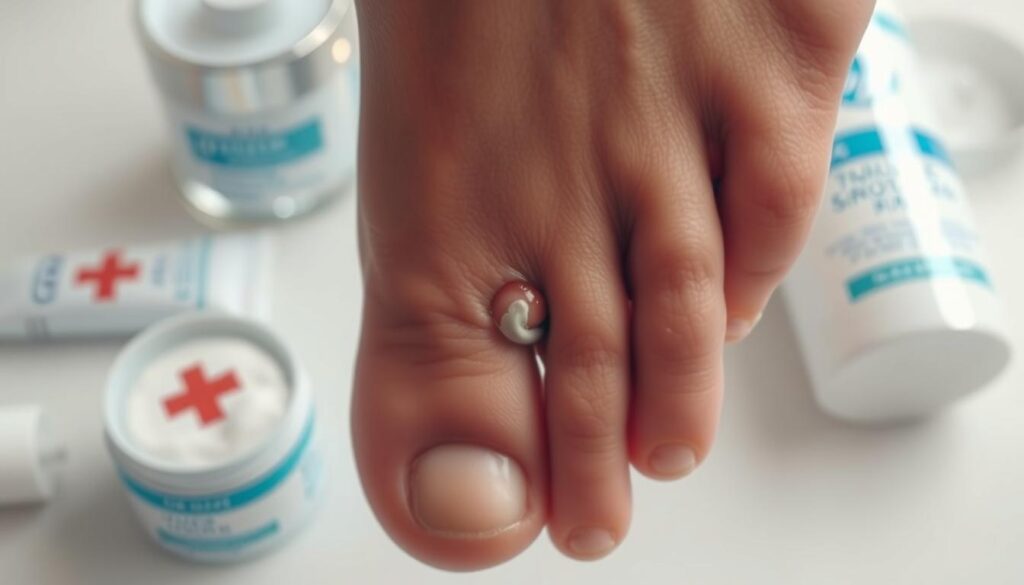
Ingrown toenails can be a real pain. They happen when your toenail grows into the skin around it. Sports like running and tennis can make you more likely to get them12.
Many things can cause ingrown toenails. These include sports injuries, foot shape, and family history. Even fungal infections can play a role2. Your genes might make you more likely to get them3.
Some people are at higher risk for ingrown toenails. Those with diabetes or poor blood flow need to be extra careful. Tight shoes can also increase your chances of getting them21.
Key Takeaways
- Ingrown toenails can affect anyone, especially athletes
- Genetics play a significant role in toenail development
- Proper foot care is essential for prevention
- Early intervention can prevent serious complications
- Professional medical advice is crucial for persistent issues
What Are Ingrown Toenails?
Ingrown toenails are a common foot problem that can cause serious pain. They affect people of all ages, but teenagers are particularly prone to this condition4. The issue arises when a toenail’s edge grows into the surrounding skin.
Understanding the Condition
An ingrown toenail occurs when the nail’s edge grows into the nearby skin. This usually happens on the big toe4. Certain lifestyle choices and grooming habits can increase your risk of getting an ingrown toenail.
Recognizing Common Symptoms
- Persistent pain along the nail edges
- Redness and swelling around the affected toe
- Potential skin inflammation
- Possible pus or infection development
Key Risk Factors
Some groups are more likely to get ingrown toenails. Teens with sweaty feet and runners face higher risks5. Tight shoes and poor nail trimming can also lead to this problem4.
| Risk Category | Potential Impact |
|---|---|
| Teenagers | Higher susceptibility due to foot perspiration |
| Athletes | Increased risk from repetitive toe pressure |
| Diabetes Patients | Higher complication risks due to poor circulation |
Diabetics face serious risks from ingrown toenails due to poor blood flow. Nerve damage can also complicate matters5. Seeing a foot doctor is crucial for managing these issues.
Professional care can help prevent problems related to nail fungus and other toenail conditions. Regular check-ups are important for maintaining good foot health.
Prevention is always better than cure when it comes to foot health.
Causes of Ingrown Toenails
Ingrown toenails stem from various factors affecting foot health and nail growth. Understanding these causes helps prevent painful nail conditions. Proper Pedicure Safety6 is key to maintaining healthy toenails.
Improper Nail Cutting Techniques
Your nail trimming method greatly influences ingrown toenail prevention. Cutting nails too short or rounding corners can lead to nail growth into surrounding skin7.
Experts suggest these tips:
- Trim nails straight across
- Avoid cutting too close to the skin
- Use clean, sharp nail clippers
Tight Footwear and Its Impact
Shoes that crowd toes can create pressure, causing ingrown toenails6. Proper footwear is crucial, especially for those with Diabetic Foot Care concerns7.
| Footwear Issue | Potential Risk |
|---|---|
| Tight shoes | High ingrown toenail risk |
| Short socks | Increased toe pressure |
| Narrow toe boxes | Nail growth distortion |
Genetic Factors
Some people are genetically prone to ingrown toenails. Inherited nail shapes can increase susceptibility to this condition6. The big toe is often most affected7.
Prevention is always better than treatment when it comes to foot health.
Effective Treatments for Ingrown Toenails
Ingrown toenails can cause pain and frustration. Luckily, there are many ways to treat them. Options range from simple home remedies to professional medical procedures.
Home Remedies to Try First
Several at-home treatments can help when you first notice an ingrown toenail. These methods are easy to try and may provide quick relief.
- Soak your foot in warm, soapy water for 10-20 minutes, 3-4 times daily8
- Gently lift the nail edge and insert cotton or dental floss underneath8
- Apply petroleum jelly to the affected area8
- Use over-the-counter pain relievers like acetaminophen or ibuprofen8
When Professional Help is Necessary
If home remedies don’t work, it’s time to see a doctor. Approximately 20 percent of foot-related physician visits involve ingrown toenails. This makes it a common medical issue9.
Medical Treatments and Procedures
Doctors can offer several treatments for stubborn ingrown toenails. These options are more advanced than home remedies.
| Procedure | Description | Recovery Time |
|---|---|---|
| Nail Lifting | Separating nail from skin | 2-12 weeks8 |
| Partial Nail Removal | Surgical toenail removal | 2-4 months10 |
| Complete Nail Removal | Permanent solution for recurring cases | 3-4 months10 |
Note for patients with specific conditions: People with diabetes or deformed toenails need extra care. They should talk to a doctor before trying any treatment10.
Professional interventions like partial nail avulsion can significantly reduce the chances of ingrown toenail recurrence9.
Prevention Tips for Healthy Toenails
Protect your toes from painful ingrown nails with proactive foot care. Trim toenails regularly and maintain proper hygiene to reduce risk. Learn effective strategies for preventing ingrown toenails to keep your feet healthy and comfortable11.
Nail care requires precision. Cut toenails straight across and avoid rounding corners to prevent ingrowth12. Wear orthopedic shoes to reduce toe pressure, especially if you’re genetically prone to ingrown nails11.
Choose footwear with ample toe room. This allows free movement and lowers the risk of nail problems. Regular foot care is key to maintaining healthy toenails.
Inspect your feet weekly for potential issues12. People with diabetes or poor circulation need extra vigilance. Seek professional help if needed11.
Good foot hygiene and preventive measures can significantly reduce the chance of painful ingrown toenails. Stick to these habits for healthier, more comfortable feet.
FAQ
What exactly is an ingrown toenail?
An ingrown toenail happens when the nail grows into the toe’s soft skin. It usually affects the big toe. This condition causes pain and can lead to infection if left untreated.
What are the main symptoms of an ingrown toenail?
The main symptoms include pain and tenderness along the nail edges. Redness and swelling of the surrounding skin are also common. In severe cases, you might see pus or spreading inflammation.
You may feel discomfort when wearing shoes or pressing on the affected toe.
What causes ingrown toenails?
Several factors can cause ingrown toenails. Improper nail cutting, like trimming too short or rounding corners, is a common cause. Wearing tight shoes that crowd your toes can also lead to this problem.
Other factors include genetic predisposition to curved nails and nail injuries. Some medical conditions that affect nail growth may also play a role.
Can I treat an ingrown toenail at home?
For mild cases, you can try some home remedies. Soak your foot in warm, soapy water for 10-20 minutes, 3-4 times daily. Gently lift the nail edge and apply petroleum jelly.
Over-the-counter pain relievers can help manage discomfort. If you have diabetes or notice infection signs, seek medical help.
When should I see a doctor about an ingrown toenail?
Consult a doctor if home treatments don’t work or you see signs of infection. Seek help if you have diabetes, poor circulation, or severe pain. Recurring ingrown toenails also warrant medical attention.
How can I prevent ingrown toenails?
Proper nail care is key to prevention. Trim toenails straight across, keeping them even with your toe tips. Avoid rounding nail corners and wear shoes that fit well.
Maintain good foot hygiene. If you have diabetes or circulation issues, check your feet regularly.
Are some people more prone to ingrown toenails?
Yes, certain groups have a higher risk. These include teenagers and people with naturally curved nails. Those who wear tight shoes or have diabetes are also more susceptible.
People who stress their toes, like runners or soccer players, may develop ingrown toenails more often.
What medical treatments are available for severe ingrown toenails?
Doctors can lift the nail and insert cotton underneath. In some cases, partial or complete nail removal may be necessary. For recurring issues, a procedure called partial matricectomy can prevent nail regrowth.
Source Links
- Prevention Tips & Treatments for Ingrown Toenails | Banner – https://www.bannerhealth.com/healthcareblog/better-me/how-to-prevent-and-treat-ingrown-toenails
- Ingrown Toenails: Causes, Treatment, and Prevention – Southern Maryland Foot & Ankle – https://somdfootandankle.com/ingrown-toenails-summer-sport-risk/
- Ingrown Toenails: Causes, Treatment, and Prevention Tips | Joint Replacement Institute – https://www.jointinstitutefl.com/2024/05/10/ingrown-toenails-causes-treatment-and-prevention-tips/
- Ingrown Toenail – OrthoInfo – AAOS – https://orthoinfo.aaos.org/en/diseases–conditions/ingrown-toenail
- Ingrown toenails-Ingrown toenails – Symptoms & causes – Mayo Clinic – https://www.mayoclinic.org/diseases-conditions/ingrown-toenails/symptoms-causes/syc-20355903
- Ingrown Toenail – Foot Health Facts – https://www.foothealthfacts.org/conditions/ingrown-toenail
- Ingrown toenails – https://www.healthdirect.gov.au/ingrown-toenails
- Ingrown toenails-Ingrown toenails – Diagnosis & treatment – Mayo Clinic – https://www.mayoclinic.org/diseases-conditions/ingrown-toenails/diagnosis-treatment/drc-20355908
- Management of the Ingrown Toenail – https://www.aafp.org/pubs/afp/issues/2009/0215/p303.html
- Ingrown Toenails – https://www.aafp.org/pubs/afp/issues/2019/0801/p158-s1.html
- How to Prevent and Treat Ingrown Toenails – FASA – https://fasafw.com/blog/how-to-prevent-and-treat-ingrown-toenails/
- How to Take Care of and Avoid Ingrown Toenails: Advanced Foot & Ankle Center: Podiatry – https://balancehealth.com/resources/how-to-take-care-of-and-avoid-ingrown-toenails/advanced-foot-and-ankle-center/

