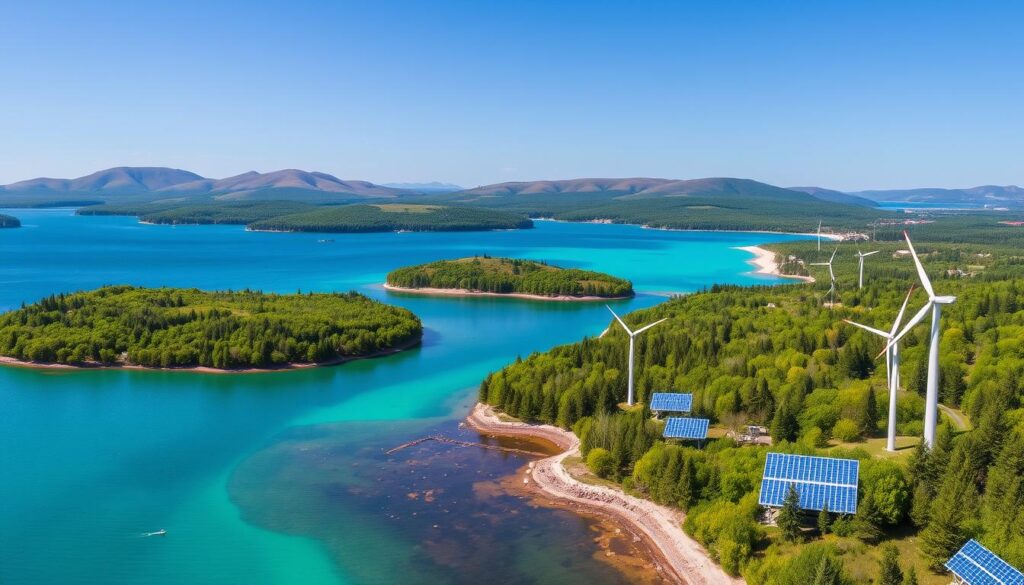
The Great Lakes are North America’s vital freshwater reservoir. These magnificent waterways support millions of people across the United States. Your grasp of their importance can ignite meaningful environmental action.
The Great Lakes hold 20% of the world’s surface freshwater. They boast 4,530 miles of shoreline, serving as a lifeline for communities. Groups like the Environmental Law & Policy Center (ELPC) defend these ecosystems from various threats.
The Great Lakes Restoration Initiative (GLRI) unites federal agencies to tackle environmental issues. This program has approved $450 million for fiscal year 20251. It shows a strong commitment to safeguarding our precious water resources.
Key Takeaways
- Great Lakes are a crucial freshwater reservoir for North America
- GLRI represents a coordinated approach to lake conservation
- Environmental organizations play a critical role in lake protection
- The lakes support millions of people through drinking water and economic activities
- Comprehensive strategies are essential for preserving these ecosystems
Understanding the Importance of Lakes
Lakes are amazing water bodies that support life and human activities. They’re crucial for our planet’s environment and economy. These living systems do more than just hold water.
Lakes offer vital ecosystem services for our survival. They support life from riparian zones to wetlands. Let’s discover how lakes contribute to our world.
Ecosystem Services Provided by Lakes
- Providing critical drinking water for millions of people
- Supporting diverse aquatic and terrestrial wildlife
- Regulating local climate and water cycles
- Filtering and purifying water through natural processes
Some lakes have incredible features. The Caspian Sea is the world’s largest, covering over 370,000 square kilometers2.
Lake Baikal in Russia is the deepest. Its bottom is nearly 2 kilometers below the surface2.
Economic Benefits of Healthy Lakes
| Lake | Economic Impact | Key Contribution |
|---|---|---|
| Great Salt Lake | $2.5 billion annually | Regional economic activity |
| Lake Mead | $336 million (2018) | Recreation and tourism |
| Great Lakes Region | $6 trillion | US-Canada trade |
Lakes create value through fishing, tourism, transportation, and power generation. They boost local and national economies. The Great Lakes Region accounts for over 50% of US-Canada trade3.
Cultural and Recreational Value of Lakes
“Lakes are not just water bodies, they are living stories of our landscape and heritage.”
Lakes offer amazing recreational opportunities. People can fish, boat, and watch wildlife. These water systems help us connect with nature.
Lakes provide endless ways to enjoy outdoor activities. They’re perfect for those who love nature and adventure.
Common Threats to Lake Ecosystems
Lake ecosystems face numerous challenges that threaten their balance. Protecting our waterfront resources is crucial. Understanding these threats helps maintain recreational opportunities.
Pollution and Water Quality Challenges
Water pollution poses a significant risk to lake ecosystems worldwide. About 80% of municipal wastewater enters water bodies untreated. This causes severe environmental damage4.
Freshwater ecosystems have lost more biodiversity than most other ecosystems. This loss is alarming and requires immediate attention5.
- Industrial waste contamination
- Agricultural runoff
- Toxic chemical discharge
Invasive Species Impact
Non-native species disrupt lake environments dramatically. The Great Lakes region hosts over 3,500 plant and animal species. Many invasive species threaten the native ecosystem6.
| Invasive Species Impact | Ecosystem Consequences |
|---|---|
| Zebra Mussels | Disrupts food chain |
| Asian Carp | Competes with native fish |
Climate Change Consequences
Climate change severely impacts lake ecosystems. Algal blooms may increase by 20% by 2050 due to nutrient-rich fertilizers5. These changes threaten environmental stability and recreational activities.
“Protecting our lakes is not just an environmental necessity, but a commitment to our shared natural heritage.”
You can help preserve our precious lake ecosystems. Your understanding of these threats is key to safeguarding them for future generations.
Community Efforts for Lake Conservation
Lake conservation thrives on passionate community involvement. Local residents are key in protecting aquatic ecosystems. They work together to preserve shorelines and restore vital wetlands7.
Local Clean-Up Initiatives
Your community can make a big impact through clean-up programs. Volunteers remove debris and prevent pollution. They help maintain healthy aquatic environments through collaborative conservation efforts.
Successful strategies include:
- Organizing shoreline cleanup events
- Removing abandoned fishing gear
- Creating waste management programs
Partnerships with Environmental Organizations
Lake protection needs strong partnerships between community groups and environmental organizations. These team-ups can create powerful solutions for ecosystem preservation7.
| Partner Type | Conservation Role |
|---|---|
| Local NGOs | Community engagement |
| Government Agencies | Policy development |
| Research Institutions | Scientific monitoring |
Educational Programs for Residents
Knowledge is a powerful tool in lake conservation. Educational programs can transform community understanding of aquatic ecosystems. They highlight the critical importance of these water bodies7.
Training volunteers and raising awareness helps communities develop long-term protection strategies. These efforts ensure the future of local water resources.
“Our lakes are living systems that require our active protection and respect.”
How You Can Contribute to Lake Protection
Our freshwater reservoirs need your help. You can make a big difference in protecting lake ecosystems. Your choices matter in preserving these vital water resources8.
Joining Local Conservation Groups
Local groups offer great ways to protect lakes. You can join clean-up events that help lake environments9. These groups also teach about lake ecosystems and offer hands-on projects10.
Reducing Personal Water Pollution
Your daily habits affect lake health. Use fewer chemicals and dispose of medications properly. Manage property runoff to reduce pollution9.
Create rain gardens and redirect downspouts. Pick up pet waste to help keep lakes clean.
Advocating for Policy Changes
Support environmental policies for long-term lake protection. Talk to local leaders about invasive species control. Back strategies that address climate change impacts on lakes8.
Raise awareness and support research on lakes. Your efforts can help save these important resources for the future.
FAQ
What makes the Great Lakes so important?
The Great Lakes are Earth’s largest freshwater system. They provide drinking water to 42 million people. These lakes support a billion fishing economy and offer vital ecosystem services.
They enable transportation, power generation, and recreation. The lakes generate nearly billion annually from outdoor activities.
What major environmental threats do the Great Lakes face?
The Great Lakes face industrial pollution, toxic algae blooms, and invasive species. Over 180 non-native species have settled in the lakes. Climate change is warming the Midwest faster than other regions.
This rapid warming causes shoreline erosion and disrupts ecosystems. These threats pose significant challenges to the lakes’ health.
How can individuals help protect lake ecosystems?
Join local conservation groups and participate in clean-up initiatives. Reduce personal water pollution and advocate for environmental policies. Be mindful of household chemical use and properly dispose of medications.
Support the Great Lakes Restoration Initiative (GLRI). Back efforts to control invasive species. Every action helps preserve these vital ecosystems.
What is the Great Lakes Restoration Initiative (GLRI)?
The GLRI is a team effort led by the U.S. Environmental Protection Agency. It involves 16 federal agencies working to address major environmental issues.
Every dollar spent under this initiative generates over three dollars in economic activity. This boost creates jobs and revitalizes communities across eight states.
How do lakes contribute to local economies?
Lakes boost economies through fishing, hunting, and wildlife watching. They also support tourism and recreational activities. The Great Lakes alone generate almost billion annually in revenue.
They enable transportation and power generation. Lakes provide critical infrastructure for nearby communities, driving economic growth.
What conservation organizations are working to protect the Great Lakes?
The Environmental Law & Policy Center (ELPC) actively protects the lakes. They fight industrial pollution, toxic algae, and invasive species. ELPC also works to preserve GLRI funding.
The U.S. Fish and Wildlife Service partners with conservation groups. Together, they focus on habitat protection and restoration projects.
Source Links
- Protecting the Great Lakes | ELPC – https://elpc.org/projects/protecting-the-great-lakes/
- Lake – https://education.nationalgeographic.org/resource/lake/
- Why Lakes Are Important Resources – https://www.discovermagazine.com/planet-earth/why-lakes-are-important-resources
- Concerns and Threats of Contamination on Aquatic Ecosystems – https://pmc.ncbi.nlm.nih.gov/articles/PMC7121614/
- The interlinked threats facing lakes and why we need to protect them – https://www.unep.org/news-and-stories/story/interlinked-threats-facing-lakes-and-why-we-need-protect-them
- Great Lakes ecoregion – https://www.noaa.gov/education/resource-collections/freshwater/great-lakes-ecoregion
- Our Lake, Our Life: Community-based conservation for livelihood development in Lake Ossa – https://www.peoplenotpoaching.org/our-lake-our-life-community-based-conservation-livelihood-development-lake-ossa
- Take action for lakes – https://www.decadeonrestoration.org/lakes
- Top 10 Ways to Help the Lakes at Home – Clean Lakes Alliance – https://www.cleanlakesalliance.org/top10/
- citizen.pdf – https://www.shorelandmanagement.org/depth/citizen.pdf