
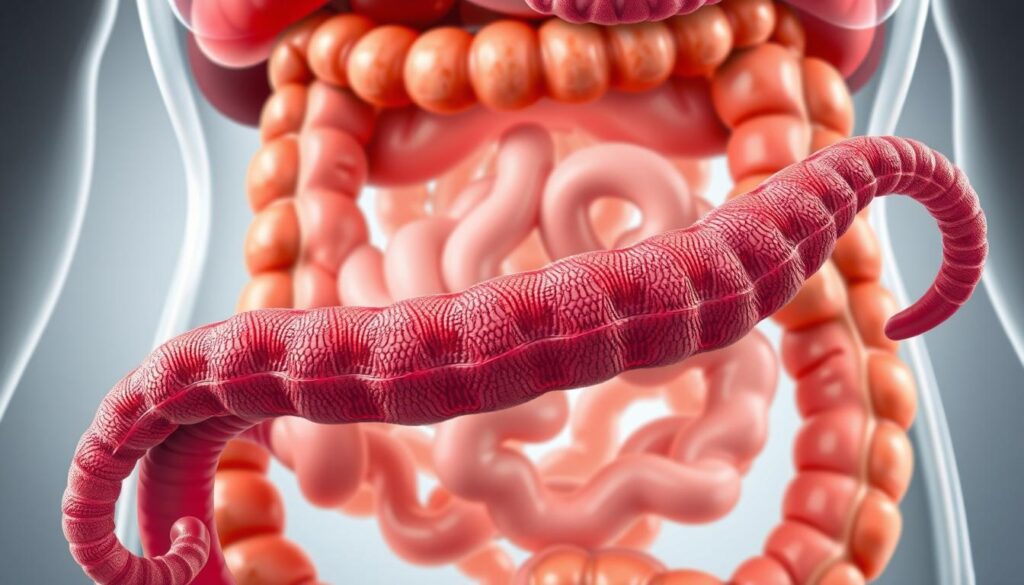
Parasitic infections pose a worldwide health challenge. Intestinal worms are tiny organisms that invade your body. They set up camp in your digestive system, affecting millions1.
In the US, pinworms are the most common helminth infestation. They often affect children1. These parasites can live in your gut for a long time without causing obvious symptoms2.
Tropical and subtropical areas see more intestinal worm infections. Developing countries face higher risks due to poor sanitation1. International travelers and those in areas with limited water treatment are at risk too.
Key Takeaways
- Intestinal worms impact over one billion people globally
- Pinworms are the most common worm infection in the United States
- Parasites can live in the body without causing immediate symptoms
- Developing countries have higher infection rates
- Understanding transmission and prevention is critical
Understanding Intestinal Worms and Their Impact on Health
Intestinal worms are tiny parasites that invade your body through various routes. These organisms cause major health issues worldwide. They’re especially problematic in areas with poor sanitation3.
- Roundworms (Ascaris lumbricoides)
- Hookworms (Necator and Ancylostoma species)
- Whipworms (Trichuris trichiura)
- Threadworms (Strongyloides stercoralis)
Common Types of Parasitic Worms
Parasitic worms fall into different groups based on their traits4:
| Worm Type | Scientific Classification | Primary Habitat |
|---|---|---|
| Nematodes | Roundworms | Intestinal Tract |
| Cestodes | Tapeworms | Digestive System |
| Trematodes | Flatworms | Intestinal Region |
How Parasitic Infections Spread
Worm infestations occur through various means. Knowing these routes is vital for prevention3:
- Contaminated soil exposure
- Consuming undercooked meat
- Poor personal hygiene
- Inadequate sanitation systems
Soil-transmitted helminthiases mainly affect communities with limited access to clean water and proper sanitation3.
Nearly one billion kids need yearly treatment for intestinal worms. This shows how big this health issue is globally5.
Treatments like albendazole and mebendazole are cheap. They cost less than fifty cents per person each year5.
Preventive strategies are crucial to reduce these parasitic infections. Better infrastructure and hygiene practices can lower worm transmission risks3.
Regular medical interventions also play a key role. They help keep these harmful parasites at bay.
Key Signs and Symptoms of Intestinal Worms
Intestinal worms can cause many uncomfortable health issues. Knowing the signs of Strongyloidiasis and Trichuriasis helps with early detection and treatment6.
Worm infestation symptoms often appear slowly. They may include abdominal pain, weight loss, fatigue, and digestive problems.
- Abdominal pain and cramping
- Unexpected weight loss
- Persistent fatigue
- Digestive disruptions
Pinworms are the most common intestinal worms in the United States. These tiny parasites usually affect school-age children7.
Kids between 5 and 10 years old are at highest risk. Infections rarely occur in children under two7.
Severe cases of intestinal worms can lead to major health problems. Ascaris lumbricoides infects about 772–892 million people worldwide8.
Most cases are found in tropical and subtropical areas.
“Early recognition of worm infestation symptoms can prevent serious health consequences.”
Watch for these important warning signs:
- Visible worms in stool
- Rectal itching
- Unexplained digestive problems
- Nutritional deficiencies
Not all worm infections show symptoms right away. Regular check-ups and good hygiene help prevent these parasites6.
Early detection is key to avoiding health complications from intestinal worms.
Prevention and Treatment Options
Protecting yourself from intestinal parasites requires a smart approach. The right strategies can greatly lower your risk of infection. Good habits help maintain your overall health.
Managing parasitic infections needs both medical help and preventive steps. Your health plan should address specific risks. It’s important to tailor the approach to your needs.
Medical Interventions for Antiparasitic Medication
Deworming treatments are key to eliminating intestinal parasites. Doctors choose specific medications based on the worm type found. Precise diagnosis through stool analysis or blood tests guides the treatment plan.
- Praziquantel for tapeworm infections9
- Mebendazole for roundworm treatments
- Albendazole for comprehensive parasite elimination
Comprehensive Prevention Strategies
Preventing parasitic infections requires multiple protective steps. Pinworm infections affect about 13% of Americans, making prevention vital10.
- Practice rigorous hand hygiene
- Cook meats thoroughly
- Wash fruits and vegetables carefully
- Use purified water when traveling
| Prevention Method | Effectiveness |
|---|---|
| Handwashing | High |
| Food Safety | Very High |
| Water Purification | Essential |
Vigilance and proper hygiene are your best defense against intestinal parasites.
In the United States, intestinal parasites are less common. This is due to advanced sanitation practices10. Regular check-ups and good hygiene can greatly lower your infection risk.
Conclusion
Intestinal parasites pose a significant health risk worldwide. Medical research highlights their global impact. Effective treatment requires awareness and proactive strategies11.
In developing regions, 48% of people have at least one intestinal nematode worm. This statistic emphasizes the need for preventive measures12.
Poor hygiene, contaminated water, and inadequate sanitation spread worm infections11. Your personal health habits can prevent parasitic infections. This is especially true in high-prevalence areas12.
Early detection is key for effective intestinal parasite treatment. Professional diagnosis ensures proper intervention13. Stay informed and practice good hygiene to reduce your risk of intestinal worms.
FAQ
What are intestinal worms?
Intestinal worms are tiny parasites living in human digestive systems. They include flatworms and roundworms. These organisms depend on human hosts to survive and reproduce.
If left untreated, they can cause various health issues. Flatworms include tapeworms and flukes, while roundworms include pinworms, hookworms, and whipworms.
How do people get infected with intestinal worms?
Intestinal worm infections occur through several ways. These include eating undercooked meat from infected animals and drinking contaminated water.
Walking barefoot on contaminated soil and poor hygiene also increase risk. Contact with feces containing parasites and poor sanitation are other causes.
Children and those with weak immune systems face higher infection risks.
What are the common symptoms of intestinal worms?
Symptoms vary but often include abdominal pain, diarrhea, and nausea. Vomiting, gas, bloating, fatigue, and unexplained weight loss are also common.
Some people might experience itching around the rectum or see worms in their stool. Dysentery can occur in severe cases.
Notably, some individuals may have worms for years without noticeable symptoms.
How are intestinal worm infections diagnosed?
Diagnosis usually involves several methods. These include stool sample analysis and the “Scotch tape” test for pinworms.
Blood tests and imaging studies like X-rays, CT scans, or MRIs may be used. A doctor will choose the best approach based on your symptoms and medical history.
What treatments are available for intestinal worms?
Treatment typically involves antiparasitic medications. Praziquantel is used for tapeworms, while mebendazole or albendazole treat roundworms.
These medications are usually taken for 1 to 3 days. Symptoms often improve within weeks.
Your doctor will prescribe the best medication for your specific worm infection.
How can I prevent intestinal worm infections?
Prevention starts with regular handwashing and proper food safety. Avoid raw or undercooked meat and fish.
Thoroughly wash fruits and vegetables. Use boiled or purified water when traveling to developing countries.
Good personal hygiene and avoiding contaminated soil are crucial in preventing infections.
Are intestinal worm infections dangerous?
While many infections are mild, untreated worms can cause serious problems. These include anemia, intestinal blockages, and malnutrition.
Children, pregnant women, and those with weak immune systems face higher risks. They may develop more severe symptoms if infected.
How common are intestinal worm infections?
Intestinal worm infections are very common worldwide. The World Health Organization estimates 24% of people have soil-transmitted worms.
These infections are most common in tropical and subtropical regions. In the United States, pinworms are the most frequent type, especially among children.
Source Links
- Intestinal Worms: Symptoms, Treatment, Causes, Recovery, and More – https://www.healthline.com/health/intestinal-worms
- Intestinal parasites – https://www.mountsinai.org/health-library/condition/intestinal-parasites
- What are intestinal worms? | Soil-transmitted helminthiasis – https://unlimithealth.org/ntds/intestinal-worms/
- How the gut parasitome affects human health – https://pmc.ncbi.nlm.nih.gov/articles/PMC9058362/
- About Intestinal Worms – The END Fund – https://end.org/about-intestinal-worms/
- Ascariasis-Ascariasis – Symptoms & causes – Mayo Clinic – https://www.mayoclinic.org/diseases-conditions/ascariasis/symptoms-causes/syc-20369593
- Pinworm infection-Pinworm infection – Symptoms & causes – Mayo Clinic – https://www.mayoclinic.org/diseases-conditions/pinworm/symptoms-causes/syc-20376382
- About Ascariasis – https://www.cdc.gov/sth/about/ascariasis.html
- Intestinal worms: Types, causes, symptoms, and treatment – https://www.medicalnewstoday.com/articles/324042
- Intestinal Parasites: Types, Symptoms, Prevention & Treatment – https://resources.healthgrades.com/right-care/infections-and-contagious-diseases/intestinal-parasites
- PDF – https://jag.journalagent.com/ias/pdfs/IAS_27_1_17_24.pdf
- A review and meta‐analysis of the impact of intestinal worms on child growth and nutrition – https://pmc.ncbi.nlm.nih.gov/articles/PMC6860651/
- A study of prevalence of intestinal worm infestation and efficacy of anthelminthic drugs – https://pmc.ncbi.nlm.nih.gov/articles/PMC4017176/

