
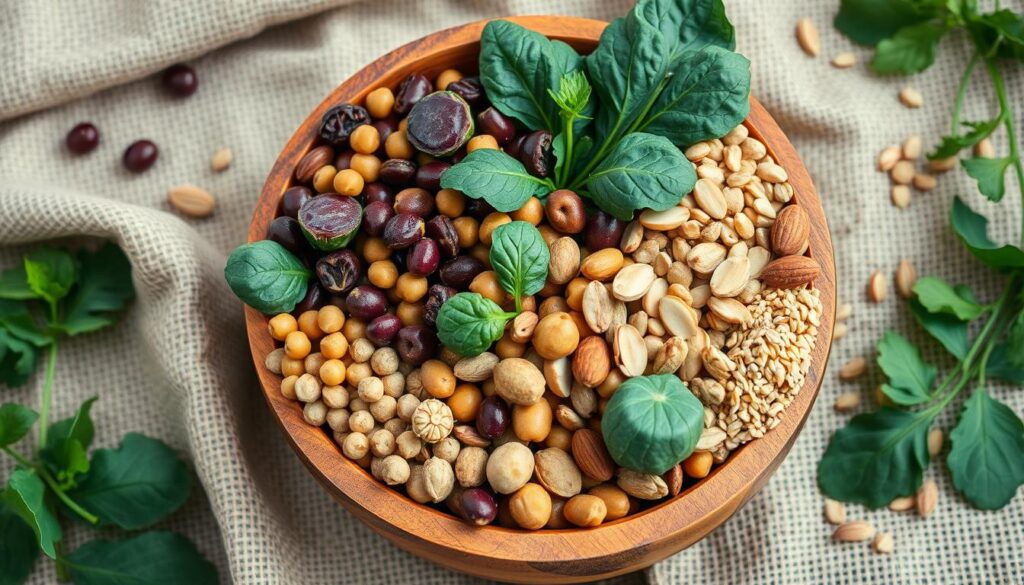
Iron plays a vital role in our bodies. It helps produce energy and transport oxygen. Exploring vegan iron sources can revolutionize your diet and boost your health.
Plant-based iron sources offer incredible options for nutrient-dense eating. Legumes are top-notch iron powerhouses. Soybeans pack 8.8 mg of iron per cup1.
Natto, a fermented soybean product, contains even more iron. It boasts an impressive 15 mg per cup1. These options make excellent choices for plant-based diets.
Lentils provide 6.6 mg of iron per cooked cup. They also offer complex carbs, folate, and manganese1. These nutrients make lentils a nutritional powerhouse.
Other beans are great iron sources too. White, lima, red kidney, and navy beans contain 4.2-4.6 mg of iron per cup1. Adding these to your diet can boost your iron intake significantly.
Key Takeaways
- Plant-based diets can successfully meet iron requirements
- Legumes are exceptional sources of dietary iron
- Combining iron-rich foods can enhance nutrient absorption
- Variety is key in maintaining iron intake
- Understanding iron sources empowers nutritional choices
Understanding Iron’s Role in Your Body
Iron is crucial for your body’s optimal function. It powers your energy and supports vital processes. Knowing iron’s importance helps you make smart food choices, especially for plant-based diets2.
The Science Behind Iron Absorption
Your body needs iron to create hemoglobin. This protein carries oxygen through your blood. Iron absorption varies based on its source.
Plant-based sources contain non-heme iron. It has a lower absorption rate than heme iron from animal products3.
Heme vs. Non-Heme Iron Sources
Understanding iron types can help you boost your nutrition:
- Heme iron: Found in animal products, contributes 10-15% of total iron intake3
- Non-heme iron: Comes from iron-rich vegetables, iron-rich fruits, and plant-based sources
- Bioavailability of iron from mixed diets ranges from 14-18%, while vegetarian diets offer 5-12%3
Daily Iron Requirements for Plant-Based Diets
Your iron needs vary based on age and gender. Here’s the Recommended Dietary Allowance (RDA):
- Men: 8 mg daily
- Women: 18 mg daily
- Pregnant women: 27 mg daily2
Pro tip: Vegans and vegetarians might need up to 1.8 times more iron. This is due to lower absorption from plant sources.
“Understanding your body’s iron needs is the first step to optimal nutrition.” – Nutrition Experts
Watch for signs of iron deficiency like fatigue and pale skin2. Eat diverse iron-rich veggies and fruits to nourish your body2.
Iron-Rich Plant Foods and Their Benefits
Plant-based iron sources can transform your nutrition and support overall health. Your body needs essential nutrients, and iron plays a crucial role. It aids brain development, cellular production, and energy maintenance4.
Let’s explore some powerful iron-rich plant foods for your daily intake:
- Lentils: Packed with 6.59 mg of iron per cooked cup, these legumes are nutritional powerhouses5
- Tofu: A half-cup serving provides 6.65 mg of iron and approximately 10g of protein5
- Spinach: One cooked cup delivers 6.43 mg of iron5
- Hemp Seeds: Three tablespoons contain 2.38 mg of iron5
To boost iron absorption, pair these foods with vitamin C sources. Try bell peppers, citrus fruits, or strawberries5. Your diet can significantly impact iron and overall wellness.
*Nutrition tip: Combine plant-based iron sources strategically to enhance absorption and meet your daily requirements.*
| Food Source | Iron Content (mg) | Additional Benefits |
|---|---|---|
| Lentils | 6.59 | High protein, fiber |
| Tofu | 6.65 | Complete protein |
| Spinach | 6.43 | Rich in vitamins |
| Blackstrap Molasses | 3.6 | Natural sweetener |
Adults need different amounts of iron. Women aged 19-50 require 18 mg daily. Those over 50 need 8 mg4.
Add diverse iron-rich plant foods to your diet. This can support your nutritional needs naturally and deliciously.
Conclusion
Plant-based iron sources offer a powerful way to meet your daily nutritional needs. With smart food choices, you can fight iron deficiency effectively. This condition affects many women and children worldwide.
Not all iron sources are equal. Plant-based iron has lower bioavailability than animal products. Yet, it still provides great nutritional benefits6. Pair iron-rich foods with vitamin C to boost absorption.
Try science-backed methods to get more iron from plants. Lentils, spinach, dark leafy greens, and quinoa are excellent options7. Aim for the right daily intake of iron.
Women who menstruate need 18 mg of iron daily. Adult men and postmenopausal women should get 8 mg7. A nutritionist can help create a plan that fits your needs.
Smart iron nutrition can boost your health. By focusing on Iron-Rich Plant Foods, you’ll support your body’s vital functions. Maintain wellness through plant-based iron sources.
FAQ
What is iron and why is it important for my body?
Iron is a vital nutrient for many body processes. It helps create hemoglobin, which carries oxygen throughout your body. Iron supports blood production and is crucial for physical and mental well-being.
Without enough iron, you might feel tired and weak. It can also lead to other health issues.
What’s the difference between heme and non-heme iron?
Heme iron comes from animal products. Non-heme iron is found in plant-based foods. Your body absorbs non-heme iron less easily.
You can boost non-heme iron absorption by eating it with vitamin C-rich foods.
How much iron do vegans and vegetarians need daily?
Vegans need up to 1.8 times more iron than meat-eaters. Women should aim for 32 mg daily, while men need 14 mg.
This higher need is because plant-based iron is harder to absorb.
What are the best plant-based sources of iron?
Top iron-rich plant foods include legumes like tofu, tempeh, and lentils. Leafy greens, nuts, seeds, and whole grains are also great sources.
Dark leafy greens, legumes, and dark chocolate are especially high in iron.
How can I improve iron absorption from plant-based foods?
Pair iron-rich foods with vitamin C sources like citrus fruits or bell peppers. This helps your body absorb more iron.
Avoid eating calcium-rich foods or drinking coffee with iron-rich meals. These can block iron absorption.
What are the signs of iron deficiency?
Common signs include low energy, shortness of breath, and a weak immune system. You might also experience headaches, dizziness, pale skin, and irritability.
If you’re always tired or have these symptoms, talk to a nutritionist.
Can I get enough iron from a vegan or vegetarian diet?
Yes, a well-planned plant-based diet can provide enough iron. Eat a variety of iron-rich foods and use strategies to boost absorption.
If you’re worried, consider working with a nutritionist for personalized advice.
Are all plant-based iron sources equally effective?
Not all plant-based iron sources are absorbed the same way. Legumes, dark leafy greens, and fortified foods tend to have more iron.
Mix different iron-rich foods and use absorption-boosting tricks to get the most iron.
Source Links
- 24 Iron-Rich Plant Foods for Vegetarian and Vegan Mamas – https://morethanjustveggies.com/iron-rich-plant-foods/
- Iron – https://nutritionsource.hsph.harvard.edu/iron/
- Office of Dietary Supplements – Iron – https://ods.od.nih.gov/factsheets/Iron-HealthProfessional/
- 52 Foods High In Iron – https://health.clevelandclinic.org/how-to-add-more-iron-to-your-diet
- The best iron-rich vegetarian foods – https://www.medicalnewstoday.com/articles/323902
- Preventing iron deficiency with iron-rich foods – https://proveg.org/5-pros/pro-health/preventing-iron-deficiency-with-iron-rich-foods/
- Importance of Iron in Our Body | 10 Plant-based Iron Rich Foods – https://plantbasedworkshop.com/blogs/plant-based-lifestyle/importance-of-iron-and-plantbased-foods?srsltid=AfmBOopMThivOCID5SghnKeiY6L5vrXAPHvosehyoOt178x1OJxCOWqg

