
Liquid measurement conversion can be puzzling. Precision is key in cooking, beverages, and daily hydration1. In the US Customary System, 1 gallon equals 128 fluid ounces.
This means 100 ounces isn’t a full gallon1. It’s about 78.125% of a gallon, with a 28-ounce difference1. Chefs and drink makers need exact measurements.
Accurate conversions matter in recipes and hydration plans. Knowing 100 ounces isn’t a gallon helps people track their liquid intake better. This knowledge aids in making smart choices about drinking habits.
Key Takeaways
- 1 gallon equals 128 fluid ounces
- 100 ounces is about 78.125% of a gallon
- There’s a 28-ounce difference between 100 ounces and a full gallon
- Accurate measurements are critical in cooking and beverage industries
- Understanding liquid conversions supports better dietary planning
Understanding Fluid Measurements in US and Imperial Systems
Volume conversion can be tricky, especially with fluid ounces to gallons across different systems. It’s crucial for cooking, scientific research, and everyday tasks2.
Volume measurements are complex, with differences between US Customary and Imperial systems. These variations affect oz to gallon conversions in various contexts3.
US Customary vs Imperial Measurements
Key differences between these systems include:
- A US gallon contains 128 fluid ounces2
- An Imperial gallon contains 160 fluid ounces2
- The US gallon is approximately 3.785 liters2
- The Imperial gallon is about 4.546 liters2
Wet vs Dry Gallon Measurements
Gallons come in two types: wet and dry. Wet gallons measure liquids, while dry gallons are for dry goods.
The US dry gallon is about 268.8 cubic inches2.
Importance of Measurement Accuracy
Precise volume conversion is vital in many fields. Small differences can greatly impact recipes, experiments, and industrial processes3.
Knowing the exact conversion between fluid ounces and gallons can save time and prevent costly mistakes.
Grasping these measurement nuances is key to successful volume conversion. It helps in cooking, brewing, and research2.
Converting Between Different Volume Measurements
Volume conversions can be tricky. Understanding cups to gallons, pints to gallons, and quarts to gallons makes measuring easier. The National Institute of Standards and Technology provides precise guidelines for these measurements4.
One US gallon equals 3.785 liters. It contains 4 quarts, 8 pints, or 16 cups5. These facts help in cooking and measuring.
US Fluid Ounces to Metric Conversions
Precision matters when converting US fluid ounces to metric. One US fluid ounce equals 29.5735 milliliters6. This knowledge ensures recipe accuracy for chefs and home cooks.
128 fluid ounces equals 1 gallon4. This makes it easy to scale recipes up or down.
Quick Reference Charts for Kitchen Use
Quick reference charts are handy for volume conversions. Here are some key points: 1 cup equals 8 fluid ounces. 1 pint contains 16 fluid ounces.
1 quart measures 32 fluid ounces5. These standards help with pints to gallons or quarts to gallons conversions.
Digital Tools and Apps for Conversion
Many apps and online calculators make volume conversions easy. They quickly convert between cups, gallons, and metric measurements. This eliminates potential errors.
Learning these conversion basics will boost your kitchen confidence. You’ll adapt recipes more easily with this knowledge.
FAQ
How many gallons are in 100 fluid ounces?
100 fluid ounces equals about 0.78 gallons in the US system. This is less than a full gallon of 128 fluid ounces. Understanding this conversion helps with accurate liquid measurements in various activities.
What’s the difference between US Customary and Imperial fluid measurements?
US and Imperial systems differ slightly in volume measurements. A US gallon is 128 fluid ounces. An Imperial gallon is about 160 fluid ounces. This difference affects recipes and international cooking.
How do I convert fluid ounces to gallons quickly?
Divide the number of ounces by 128 to convert to gallons. For example, 100 ÷ 128 = 0.78 gallons. Many apps and online calculators can help with quick conversions.
Are wet and dry measurements the same?
No, wet and dry measurements differ. Liquid gallons are for fluids. Dry gallons are for dry ingredients. Use the right tools for accurate recipe measurements.
Can I use kitchen measuring tools for precise conversions?
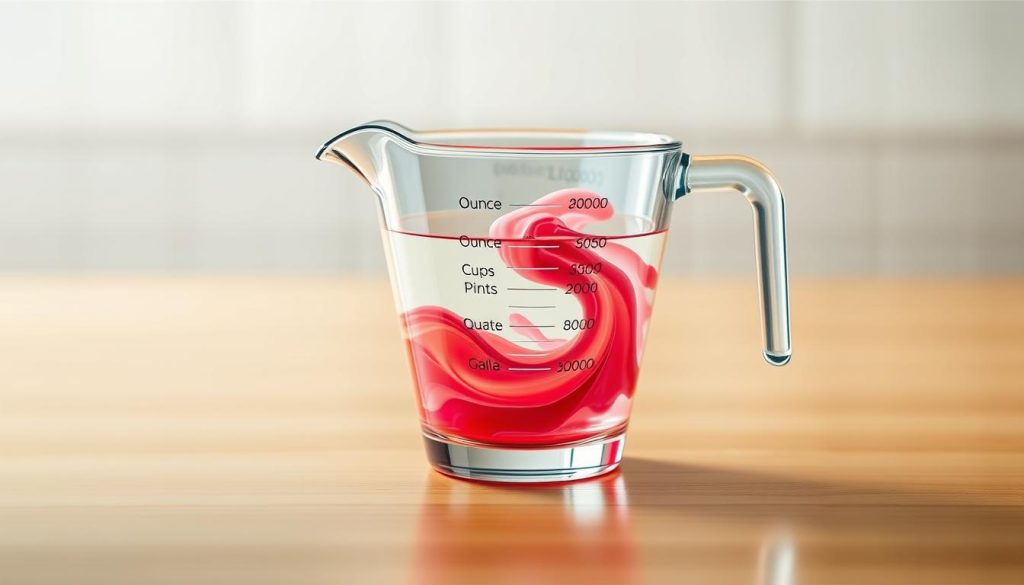
Yes! Measuring cups often show ounces, cups, and sometimes gallons. Digital kitchen scales with multiple units can help with precise cooking conversions.
What digital tools can help with volume conversions?
Many apps and websites offer quick volume conversions. Unit Converter, Convert Pad, and Google’s calculator are helpful options. These tools convert between various units with just a few taps.
Source Links
- Gallons to Ounces Converter – https://www.thecalculatorsite.com/conversions/common/gallons-ounces.php
- How Many Ounces in a Gallon? (Conversion Guide & Charts!) – https://simple-veganista.com/how-many-ounces-in-a-gallon/
- Comparison of the imperial and US customary measurement systems – https://en.wikipedia.org/wiki/Comparison_of_the_imperial_and_US_customary_measurement_systems
- Convert Fluid Ounce (US) to Gallon (US) – https://www.unitconverters.net/volume/fluid-ounce-us-to-gallon-us.htm
- Ounces to Gallons Converter – (oz to gal) – Inch Calculator – https://www.inchcalculator.com/convert/ounce-to-gallon/
- Convert Ounces to Gallons (oz to gal): Chart, Formula, Steps – https://www.splashlearn.com/math-vocabulary/ounces-to-gallons

