
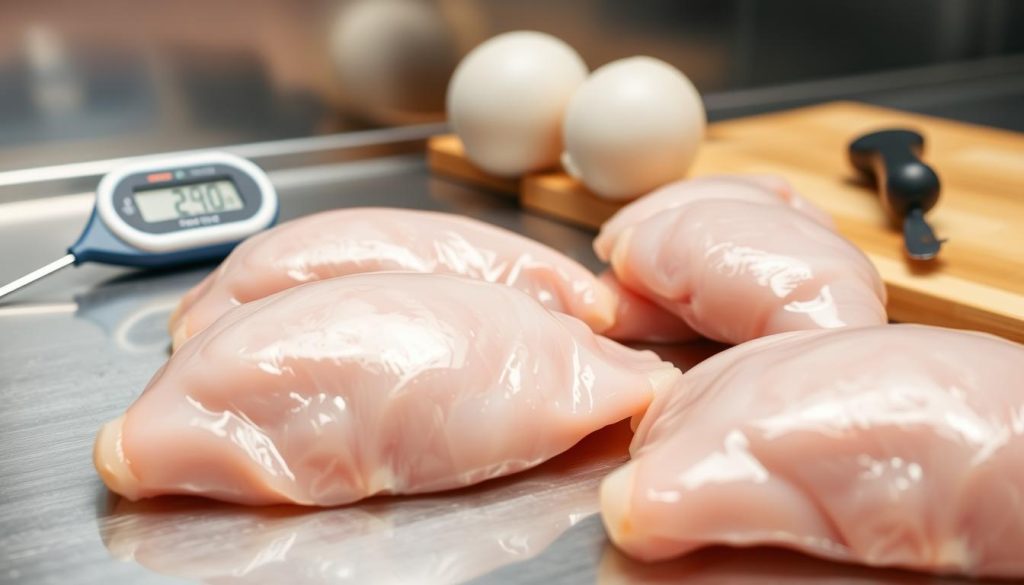
Chicken food safety is crucial for home cooks and health-conscious individuals. Proper raw chicken storage prevents foodborne illnesses. Annually, about 1 million Americans get sick from mishandled poultry1.
Safe storage of raw chicken protects your family’s health. The USDA advises using or freezing chicken within 1-2 days of purchase2. Proper refrigeration and timely preparation are key to preventing Salmonella1.
Surprisingly, 1 in 25 chicken packages may contain Salmonella bacteria1. Storing raw chicken below 40°F helps reduce bacterial growth and ensures food safety1.
Key Takeaways
- Raw chicken should be used within 1-2 days of refrigeration
- Always store chicken at temperatures below 40°F
- Check for signs of spoilage before cooking
- Freeze chicken quickly to extend its shelf life
- Practice careful food handling to prevent foodborne illness
Understanding Raw Chicken Storage Time Limits
Proper poultry handling is vital for family safety. Raw chicken needs careful storage to prevent bacteria growth. Following temperature guidelines ensures food safety.
Cooking chicken safely starts with proper storage. Bacteria thrive in certain temperatures, making refrigeration essential. Storing raw chicken below 40°F (4°C) slows bacterial growth.
Critical Storage Guidelines
- Refrigerate raw chicken within 2 hours of purchase3
- Store chicken in the coldest part of the refrigerator
- Use raw chicken within 1-2 days of refrigeration4
Packaging Impact on Storage
The right packaging can boost chicken safety. Use airtight, leak-proof containers to avoid cross-contamination. Place chicken on the bottom shelf to prevent drips onto other foods3.
| Storage Location | Maximum Safe Storage Time |
|---|---|
| Refrigerator (40°F or below) | 1-2 days |
| Freezer (0°F or below) | Up to 1 year |
Pro tip: Always check the chicken’s look and smell before cooking. If something seems off, it’s safer to throw it away4.
How to Tell If Raw Chicken Safe for Consumption
Knowing how to spot spoiled chicken is vital to avoid food poisoning. Fresh raw chicken is light pink with white fat. Bad chicken may have gray or green flesh and yellow fat5.
Good raw chicken shouldn’t feel slimy, sticky, or tacky. These textures mean the meat has gone bad5.
The smell test is key for chicken safety. A strong sour or sulfur-like odor means the chicken is unsafe to eat5.
Ignoring storage rules raises the risk of chicken cross-contamination. One in four chicken pieces carries harmful bacteria6. Thaw chicken in the fridge and use within 3-5 days after the “sell by” date6.
Experts say don’t wash raw chicken. It can spread germs across your kitchen. This increases the chance of foodborne illness.
Each year, 48 million people get sick from foodborne illnesses. One million cases are linked to poultry6. Always follow food safety rules.
If you’re unsure about chicken’s safety, it’s best to throw it out. This protects you and your family from health risks.
FAQ
How long can raw chicken safely stay in the refrigerator?
Raw chicken should only be kept in the fridge for 1-2 days before cooking. This timeframe is crucial for preventing bacterial growth and potential foodborne illness. Cook or freeze the chicken within this period, even if the “best if used by” date hasn’t passed.
What temperature should I keep my refrigerator to store raw chicken safely?
Maintain your fridge temperature at or below 40°F (4°C). This slows bacterial growth and prevents rapid spoilage. Use a refrigerator thermometer to ensure the correct temperature for safe chicken storage.
Is it safe to wash raw chicken before cooking?
No, washing raw chicken is not recommended. It can spread harmful bacteria like Salmonella around your kitchen through water splashes. This increases the risk of cross-contamination. Instead, cook chicken to the proper internal temperature to kill any dangerous bacteria.
How can I tell if raw chicken has gone bad?
Look for signs of spoilage like gray or greenish color, slimy texture, or unusual smell. Visible mold is also a clear indicator of spoilage. If you notice any of these signs, it’s best to discard the chicken.
What’s the safest way to defrost frozen chicken?
There are three safe methods to defrost chicken. Refrigerator thawing is recommended, allowing the chicken to thaw slowly. Cold water thawing involves submerging sealed chicken in cold water, changing it every 30 minutes.
Microwave thawing is also an option. Use the defrost setting and cook immediately after thawing.
Can I store raw chicken in its original packaging?
It’s best to transfer chicken to an airtight, leak-proof container after opening. This prevents cross-contamination and potential drips in your refrigerator. Always place the container on the bottom shelf to avoid drips onto other foods.
What internal temperature indicates that chicken is fully cooked?
Chicken must reach an internal temperature of 165°F (74°C) to be safe for consumption. Use a meat thermometer to check the temperature at the thickest part. This ensures all harmful bacteria are killed.
Source Links
- How Long Can Raw Chicken Stay in the Fridge? – https://www.eatingwell.com/article/7964605/how-long-can-raw-chicken-stay-in-the-fridge/
- How Long Can Chicken Stay in the Fridge or Freezer? Here’s What You Need to Know – https://www.realsimple.com/how-long-can-chicken-stay-in-the-fridge-7562096
- 4 Steps to Food Safety – https://www.foodsafety.gov/keep-food-safe/4-steps-to-food-safety
- Safe Food Handling – https://www.fda.gov/food/buy-store-serve-safe-food/safe-food-handling
- How to Tell if Chicken Is Bad: Signs and What to Look For – https://www.healthline.com/nutrition/how-to-tell-if-chicken-is-bad
- How to Tell When Raw Chicken Has Gone Bad | Banner Health – https://www.bannerhealth.com/healthcareblog/advise-me/how-to-tell-if-your-raw-chicken-is-bad

