Southern Spain’s Islamic heritage is a treasure trove of cultural wonders. Andalusia’s landscape tells a story of centuries-old Islamic influence. The region’s growing Muslim population adds to its rich cultural tapestry1.
Southern Spain’s Islamic sites blend diverse cultural influences beautifully. Intricate mosque designs and stunning Quran calligraphy dot the region. Cities like Cordoba, Sevilla, and Granada boast amazing Islamic landmarks2.
Islamic traditions have shaped modern Spanish culture in fascinating ways. The mix of Spanish citizens and immigrants keeps cultural exchange alive. This diverse heritage reflects the region’s interconnected past1.
Key Takeaways
- Andalusia preserves a rich Islamic cultural legacy
- Multiple cities showcase significant Islamic historical sites
- Muslim population in Spain continues to grow
- Islamic architectural influences remain prominent
- Cultural diversity defines Southern Spain’s heritage
The Rise of Islamic Civilization in Spain
Islamic conquest transformed European history from 711 to 1492. Muslim rulers built a thriving civilization in Spain3. It reshaped the cultural landscape dramatically.
Ṭāriq ibn Ziyād led Muslim forces across the strait. He defeated King Roderick, opening the path to conquest3. This event kicked off an era of cultural and intellectual growth.
The Historical Context of Al-Andalus
Al-Andalus became a center of learning and tolerance. The Islamic period saw a golden age of remarkable achievements4.
- Establishment of numerous libraries and educational institutions
- Advanced scientific and philosophical research
- Unprecedented religious coexistence
Key Figures in Islamic Spain
Outstanding leaders shaped this extraordinary civilization. ʿAbd al-Raḥmān III restored order and expanded Muslim control across the peninsula3.
| Leader | Contribution | Period |
|---|---|---|
| ʿAbd al-Raḥmān I | Established Independent Emirate | 756-929 |
| ʿAbd al-Raḥmān III | Expanded Territorial Control | 912-961 |
The Cultural Flourishing of Al-Andalus
Islamic Spain wasn’t just about conquest, but cultural blending. Non-Muslim communities enjoyed freedoms and contributed to a diverse society4.
In Al-Andalus, knowledge knew no religious boundaries.
The Umayyad dynasty ruled from 756 to 1031. They created a legacy of intellectual and artistic excellence4. This legacy inspired generations to come.
Architectural Marvels of Islamic Influence
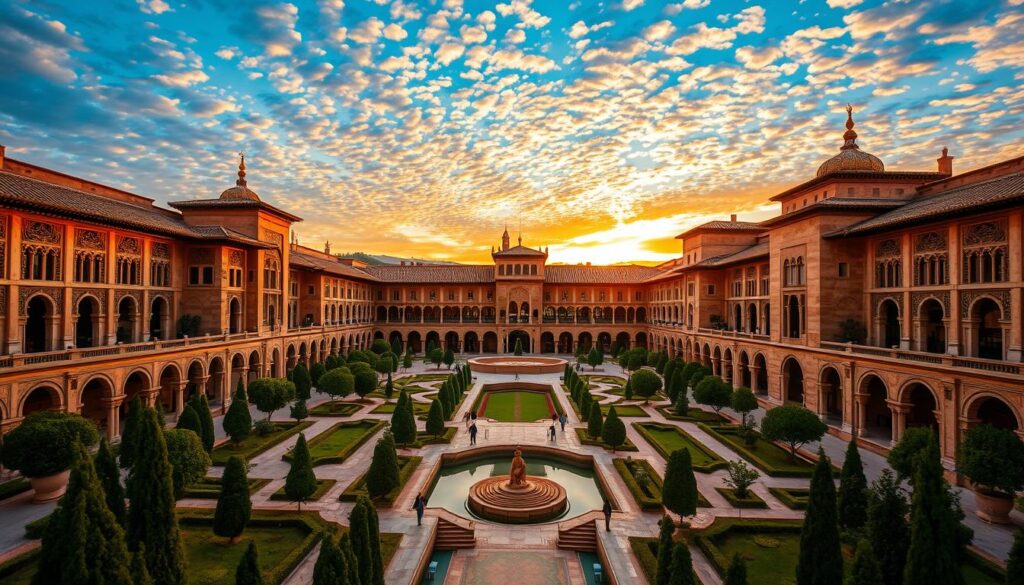
Islamic architecture showcases centuries of artistic and cultural expression. Its intricate mosque designs and sophisticated geometric patterns tell stories of civilization and faith. These architectural wonders span from western Africa to eastern Asia, captivating travelers and scholars56.
Iconic Landmarks to Explore
Islamic architectural treasures boast remarkable sites with incredible craftsmanship. Here are some must-visit destinations:
- The Alhambra in Granada, a UNESCO World Heritage Site featuring stunning Moorish design7
- The Dome of the Rock in Jerusalem with its unique octagonal layout5
- The Great Mosque of Damascus, representing Umayyad architectural brilliance7
The Distinctive Aesthetic of Islamic Architecture
Islamic architectural design has unique features that set it apart. Key elements include:
| Architectural Feature | Significance |
|---|---|
| Geometric Patterns | Symbolize divine complexity and mathematical precision |
| Calligraphy | Integrates artistic and religious expression |
| Mihrab Niches | Indicates direction of prayer in mosques |
Modern Recognition of These Treasures
Islamic architecture continues to inspire architects and designers worldwide. These marvels represent a rich cultural heritage that goes beyond religious boundaries. From mosques to civil structures, they showcase human creativity and spiritual expression6.
Islamic architecture is not just about buildings, but about telling stories of human creativity and spiritual expression.
The Lasting Impact of Islamic Traditions
Islamic heritage in Southern Spain still echoes through cultural practices and traditions. This rich legacy shows a strong link between past and present. Islamic influences remain vibrant, shaping the region’s social fabric for centuries8.
Culinary Influences in Southern Spain
Local cuisine reveals flavors inherited from Islamic culinary traditions. Spices, cooking methods, and ingredients like almonds reflect the Muslim presence. Quranic teachings about food have subtly influenced local eating habits8.
Language and Literature: A Legacy
Southern Spain’s language is deeply marked by Arabic influences. Many Spanish words come from Arabic, showing past cultural exchanges. The region’s literature still bears the mark of medieval scholars9.
Festivals and Celebrations Rooted in Islamic Culture
Festivals today subtly honor Islamic heritage, from Ramadan-inspired gatherings to harmony-focused events. The hajj pilgrimage inspires spiritual connections, reminding locals of their historical roots. This living culture shows how Islamic traditions remain crucial to Southern Spain’s identity8.
FAQ
When did Islamic rule begin in Southern Spain?
Islamic rule in Southern Spain started in 711 AD. General Tariq ibn-Ziyad landed at Gibraltar and defeated King Roderick. Muslim presence lasted until the mid-16th century, with varying durations across regions.
What are the most significant Islamic architectural sites in Southern Spain?
Key sites include the Great Mosque of Cordoba and the Alhambra Palace in Granada. The Royal Alcazar and Giralda tower in Sevilla are also notable. These showcase unique Mudejar decoration and Islamic architectural styles.
How did Islamic culture influence Spanish society?
Islamic culture greatly impacted Spanish society through libraries, schools, and literature. Many Spanish words have Arabic origins. The concept of convivencia (coexistence) between different religions was important.
What is the current Muslim population in Spain?
In 2019, Muslims made up 4.45% of Spain’s total population. Of these, 42% were Spanish citizens. Communities continue to maintain cultural traditions, especially in the Alpujarra Mountains.
Who are some notable figures from Islamic Spain?
Ibn ‘Arabi, a famous Sufi mystic from Murcia, is a prominent figure. Many scholars from Al-Andalus made big contributions to literature and science. They created a rich intellectual legacy during this period.
How does Islamic heritage continue to be celebrated in Southern Spain?
Islamic heritage is celebrated through festivals and preservation of historical sites. The Nakshbandi Sufi order remains active in the region. Many communities honor their roots through food, language, and cultural practices.
What makes the Islamic architecture in Southern Spain unique?
Islamic architecture features intricate calligraphy and geometric patterns. The Alhambra Palace shows off sophisticated design techniques. These buildings blend beauty with function, reflecting the achievements of Islamic civilization in Spain.
Source Links
- Islam in Spain – https://en.wikipedia.org/wiki/Islam_in_Spain
- Discovering the Islamic Heritage of Southern Spain: A Journey Through Time – Halaal Travels – https://halaal-travels.com/discovering-the-islamic-heritage-of-southern-spain-a-journey-through-time/
- Spain – Muslim Rule, Reconquista, Culture | Britannica – https://www.britannica.com/place/Spain/Muslim-Spain
- BBC – Religions – Islam: Muslim Spain (711-1492) – https://www.bbc.co.uk/religion/religions/islam/history/spain_1.shtml
- Islamic architecture – https://en.wikipedia.org/wiki/Islamic_architecture
- Islamic Architecture: The Architectural Wonders of the Arab World – https://talkao.com/blog/islamic-architecture-the-architectural-wonders-of-the-arab-world/
- Architectural Marvels of the Islamic Golden Age: Discover Spain to Iran’s Heritage Gems – ConnollyCove – https://www.connollycove.com/architectural-marvels-of-islamic-golden-age/
- Islam and Modern Trends | Religious Studies Center – https://rsc.byu.edu/mormons-muslims/islam-modern-trends-0
- The Impact of Islam – https://www.historyhaven.com/AP Prep WH/The Impact of Islam.htm