
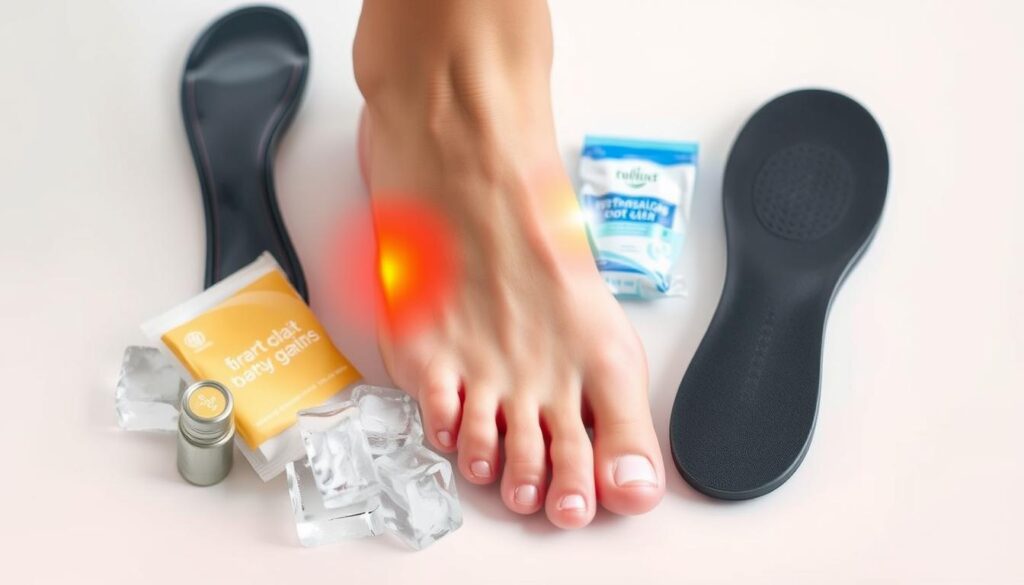
Foot pain in the ball area can be frustrating. Metatarsalgia affects many, causing discomfort during everyday tasks1. Understanding this condition is key for those who are active or stand for long periods2.
Metatarsal pain often has multiple causes. Running or jumping can stress your feet, leading to discomfort1. Your shoes play a big role in foot health2.
Weight and foot shape can worsen metatarsalgia. Morton’s toe or extra pounds can change how weight spreads across your foot12. Many describe the pain as walking on a pebble1.
Key Takeaways
- Metatarsalgia affects foot mobility and daily comfort
- Proper footwear is crucial for preventing foot pain
- Multiple factors contribute to metatarsal discomfort
- Weight management can help reduce foot stress
- Early intervention prevents long-term complications
Understanding Metatarsalgia: Causes and Symptoms
Metatarsalgia is a complex foot condition that affects daily activities and mobility. It causes pain in the ball of your foot. This makes walking and standing difficult3.
Knowing the causes and symptoms helps manage this condition effectively. Early recognition can prevent further complications.
Common Causes of Metatarsal Pain
Several factors increase your risk of developing metatarsalgia. These include lifestyle choices and physical characteristics.
- High-impact sports and intense training4
- Wearing inappropriate footwear, especially high heels3
- Foot structure variations like high arches or hammer toes5
- Excess body weight putting pressure on foot bones3
- Medical conditions such as arthritis and diabetes3
Key Symptoms to Recognize
Be aware of these distinctive signs of metatarsalgia:
- Sharp or burning pain in the ball of the foot5
- Numbness or tingling in toes3
- Increased discomfort when walking or standing5
- Pain that feels like walking on pebbles3
“Understanding your foot’s signals can be the first step towards effective metatarsalgia management.”
Treating metatarsalgia involves addressing underlying causes and using targeted strategies. Persistent foot pain requires professional help.
Consult a healthcare expert for personalized metatarsalgia management4. They can provide effective solutions tailored to your needs.
Metatarsalgia Treatment: Professional Care Options
Professional metatarsalgia therapy offers comprehensive solutions for persistent foot pain. Healthcare experts provide targeted treatments beyond simple home remedies6. These treatments address your discomfort effectively.
Professional foot pain care involves a multi-faceted approach. Here are key treatment options:
- Physical Therapy Techniques
- Soft tissue manipulation
- Targeted stretching exercises
- Gait analysis and retraining7
- Advanced Diagnostic Assessments
- Ultrasound imaging
- MRI/X-ray referrals
- Comprehensive physical testing
Your treatment plan may include specialized interventions. These depend on the specific cause of your metatarsalgia8.
| Treatment Option | Purpose | Potential Benefits |
|---|---|---|
| Custom Orthotics | Redistribute foot pressure | Reduce pain, improve foot mechanics |
| Corticosteroid Injections | Reduce inflammation | Provide temporary pain relief |
| Shockwave Therapy | Stimulate healing | Promote tissue repair |
Surgical intervention is rarely considered for metatarsalgia treatment7. It’s only an option when conservative treatments don’t provide relief.
Your healthcare provider will create a personalized therapy plan. This plan will be tailored to your specific needs6.
Expert care can transform your foot pain from a persistent problem to a manageable condition.
Self-Care Strategies for Foot Pain Relief
Metatarsalgia needs a full approach to foot care. Your feet support your body weight and absorb impact during movement. Here are tips to ease pain and prevent discomfort.
Immediate Pain Management Techniques
Ice therapy is a great first step to reduce swelling. Apply ice packs for 20 minutes several times a day9. This numbs pain and decreases inflammation.
Over-the-counter pain relievers like ibuprofen or naproxen can also help. They manage discomfort and reduce inflammation9.
Supportive Care Methods
Effective exercises can boost your foot health. Try these key strategies:
- Choose proper footwear that provides adequate support10
- Use metatarsal pads to deflect stress from painful areas9
- Incorporate arch supports to minimize bone stress9
“Prevention is always better than cure when it comes to foot health.”
Specific exercises can strengthen and support your feet. Try these metatarsalgia relief exercises:
- Toe curls to improve flexibility
- Marble pickups to enhance grip strength
- Calf raises to support foot mechanics11
If pain lasts more than two weeks, see a doctor. They can evaluate and create a personalized treatment plan10.
Conclusion
Metatarsalgia management needs a holistic approach to foot pain relief. Understanding the causes and using targeted strategies can help manage symptoms12. With proper care, most people see big improvements in their foot health13.
Your journey starts with taking action. Expert medical advice can help create a plan that fits your needs14. Exercises, good shoes, and custom orthotics often provide great relief12.
Act early to prevent long-term foot pain. Listen to your body and get help if pain continues13. Mixing self-care with medical support can effectively manage metatarsalgia12.
This approach can help you return to normal activities. You’ll enjoy better comfort and easier movement in your daily life.
FAQ
What exactly is metatarsalgia?
Metatarsalgia causes pain in the ball of your foot. It feels sharp, aching, or burning. Walking becomes difficult, like stepping on pebbles.
This condition can greatly affect your daily activities and mobility. It’s important to address metatarsalgia early for better outcomes.
What are the most common causes of metatarsalgia?
Foot structure issues like high arches can cause metatarsalgia. Improper footwear and high-impact activities are also common culprits.
Medical conditions such as obesity or diabetes may contribute. Aging, foot trauma, and jobs requiring prolonged standing are other factors.
How can I recognize if I have metatarsalgia?
Sharp pain in your foot’s ball is a key sign. You might feel numbness or tingling in your toes.
Walking becomes hard, and your metatarsal area may swell. Tight shoes often increase the pain. Consult a doctor if these symptoms persist.
What professional treatments are available for metatarsalgia?
Physical therapy and custom orthotics can help. Professionals may offer footwear advice and advanced assessments like ultrasounds or MRIs.
Treatments such as shockwave therapy or corticosteroid injections are options. Severe cases might require surgery, but this is rare.
Can I manage metatarsalgia at home?
Yes, try resting and applying ice packs. Take over-the-counter pain relievers and wear proper shoes. Metatarsal pads can offer relief.
Perform foot exercises like toe curls and marble pickups. Managing your weight and changing activities can also help.
How long does it take to recover from metatarsalgia?
Recovery time varies based on the cause and severity. Many see improvement within weeks to months with proper care.
Stick to your treatment plan for the best results. Consistency is key in managing metatarsalgia effectively.
When should I see a doctor about my foot pain?
See a doctor if your foot pain persists or is severe. Seek help if it interferes with daily activities.
Watch for swelling, numbness, or changes in foot appearance. Early diagnosis and treatment can prevent worsening conditions.
Can metatarsalgia be prevented?
You can lower your risk with well-fitting shoes. Maintain a healthy weight and use orthotic supports.
Increase exercise intensity gradually. Regular foot and leg strengthening exercises help. Remember, prevention is better than cure.
Source Links
- How to Manage Metatarsalgia: Effective Treatments for Foot Pain Relief – Cole Pain Therapy Group – https://colepaintherapygroup.com/how-to-manage-metatarsalgia-effective-treatments-for-foot-pain-relief/
- How is metatarsalgia treated? – https://www.austinfootandankle.com/faqs/metatarsalgia-treatment.cfm
- Metatarsalgia – https://patient.info/foot-care/heel-and-foot-pain-plantar-fasciitis/metatarsalgia-metatarsal-injury
- Kick Metatarsalgia to the Curb – https://my.clevelandclinic.org/health/diseases/15890-metatarsalgia
- Metatarsalgia-Metatarsalgia – Symptoms & causes – Mayo Clinic – https://www.mayoclinic.org/diseases-conditions/metatarsalgia/symptoms-causes/syc-20354790
- Metatarsalgia treatment & exercises | MyFootMedic – https://myfootmedic.com/services/metatarsalgia-treatment/
- Metatarsalgia | Symptoms and Treatment | OrthoIndy Blog – https://blog.orthoindy.com/2021/03/03/what-is-metatarsalgia-symptoms-and-treatment/
- Metatarsalgia: Care Instructions | Kaiser Permanente – https://healthy.kaiserpermanente.org/health-wellness/health-encyclopedia/he.metatarsalgia-care-instructions.abp4945
- Metatarsalgia-Metatarsalgia – Diagnosis & treatment – Mayo Clinic – https://www.mayoclinic.org/diseases-conditions/metatarsalgia/diagnosis-treatment/drc-20354795
- Metatarsalgia: Treatment, exercises, symptoms, and causes – https://www.medicalnewstoday.com/articles/190431
- How to Treat Metatarsalgia and Pain on Ball of the Foot – https://ankleandfootcenters.com/metatarsalgia/
- Immediate Relief for Metatarsalgia: Exercises and Stretches – https://backcountry.physio/relief-for-metatarsalgia/
- How to Treat Pain in the Ball of the Foot from Metatarsalgia – https://ankleandfootcenters.com/pain-in-the-ball-of-the-foot/
- Conservative Treatment for Primary Metatarsalgia – https://www.orthojournal.org/articles/conservative-treatment-for-primary-metatarsalgia.html

