
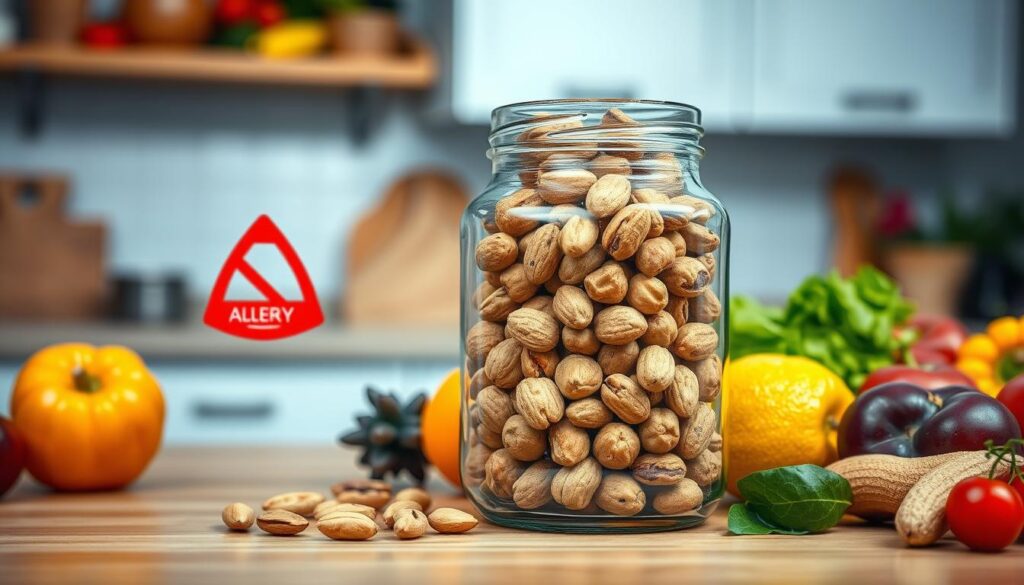
Peanut allergies are serious and affect millions in the United States1. Your immune system might react strongly to peanut proteins. This can trigger a severe allergic reaction or anaphylaxis.
Awareness is key to managing food intolerance risks. About 2.5% of U.S. children have this allergy1. Ongoing medical research explores new treatments to help you stay safe.
Allergists suggest strategies for managing peanut allergies. These include avoiding peanut-containing foods and carrying emergency medication1. Understanding hidden peanut sources in your diet is also crucial.
Key Takeaways
- Understand your specific allergy triggers and risk factors
- Always carry emergency medication
- Read food labels carefully
- Communicate your allergy to restaurants and food handlers
- Stay informed about new treatment options
- Create an emergency action plan
Understanding Peanut Allergy and Its Symptoms
Peanut allergies affect millions worldwide, causing reactions from mild discomfort to life-threatening emergencies2. Knowing about peanut allergies is vital for your health and safety.
Common Signs of Allergic Reactions
Spotting allergy symptoms can save lives. Peanut allergies show up in various ways.
- Skin reactions like hives and swelling3
- Digestive problems such as stomach pain and nausea3
- Respiratory issues including wheezing and shortness of breath2
- Cardiovascular symptoms like dizziness2
Risk Factors and Triggers
Your peanut allergy risk depends on several factors. Family history, early peanut exposure, and existing allergies can increase your chances2.
Common triggers include:
- Baked goods
- Candies
- Sauces
- Ice cream3
When to Seek Emergency Care
Anaphylaxis is a severe, potentially deadly allergic reaction needing immediate medical help3. Look out for these warning signs:
- Airway constriction
- Swelling of lips or throat
- Rapid pulse
- Severe drop in blood pressure2
Always carry an epinephrine injection and know how to use it in case of a severe allergic reaction3.
For those with nut allergies, staying prepared is crucial. Prevention and readiness are key to maintaining health and safety.
Essential Steps for Daily Allergy Management
Managing a peanut allergy requires a thorough approach to protect your health. Your daily strategy should focus on a strict nut-free diet. Stay prepared for potential allergic incidents4.
A robust allergy management plan involves several key steps. These steps help ensure your safety and well-being.
- Always carry an epinephrine injection with you
- Conduct regular allergy testing to monitor your condition
- Educate family and friends about cross-contamination risks
- Read food labels meticulously
Medical treatments for peanut allergies are advancing. Palforzia is the first FDA-approved treatment for children aged 1 to 17 years5. Oral immunotherapy (OIT) has shown promising results in clinical studies.
In these studies, 71% of children became desensitized to peanuts5. This offers hope for many families dealing with peanut allergies.
“Knowledge and preparation are your best defense against peanut allergies.”
Your daily routine should prioritize prevention. Vigilance is key – always ask about ingredients when dining out. Pack safe snacks and create an emergency action plan with your allergist.
Xolair is another treatment option for peanut allergies. It can be given every 2-4 weeks to adults and children over one year old5.
Managing a peanut allergy is a lifelong commitment. Stay informed and be prepared at all times. Work closely with healthcare professionals to ensure your safety4.
Hidden Sources of Peanuts and Cross-Contamination Risks
Peanuts can hide in unexpected places. Protecting yourself from accidental exposure requires vigilance. Food allergies can be tricky to navigate safely.
Surprising Foods Containing Peanuts
Peanuts lurk in many unsuspected foods. Cross-contamination risks are high in various cuisines and processed foods6.
- African and Asian cuisine
- Mexican restaurant dishes
- Alternative nut butters
- Specialty pizzas
- Vegetarian meat substitutes
Restaurant Safety Guidelines
Your safety at restaurants depends on clear communication. Deep fryers pose significant cross-contamination risks. 20-25% of food allergy issues relate to shared fryers7.
Always follow these key steps:
- Inform staff about your peanut allergy
- Ask detailed questions about food preparation
- Request allergen-free cooking surfaces
Reading Food Labels Effectively
Food labels are crucial in avoiding accidental exposure. U.S. laws require listing peanuts as ingredients. However, cross-contamination warnings remain voluntary6.
Pay close attention to:
| Label Section | What to Look For |
|---|---|
| Ingredients List | Direct peanut mentions |
| Contains Statement | Potential cross-contamination warnings |
| Processing Information | Shared equipment alerts |
Remember, even foods without obvious peanut ingredients can pose risks through cross-contamination.
Careful strategies help manage food intolerance and reduce allergic reactions. Prevention remains your best defense against peanut exposure. Immunotherapy offers promising future treatments for peanut allergies.
Conclusion
Living with a peanut allergy requires smart food safety and active management. Modern research offers hope for those with this dietary restriction8. Early steps have shown promise in lowering peanut allergy risks8.
Your safety depends on thorough allergy management. Food allergies affect 4% to 8% of children, highlighting the need for awareness9. Create a strong emergency plan and read food labels carefully.
Keep open talks with family, friends, and doctors to manage your peanut allergy well. New treatments like oral immunotherapy offer fresh hope for handling food allergies. Stay up-to-date on the latest findings.
Work closely with allergists for the best care. With proper care, you can enjoy a full life despite your peanut allergy. Your allergy journey is unique.
Stay alert, informed, and confident. Every careful step you take helps keep you healthy and safe.
FAQ
What percentage of children in the United States are affected by peanut allergies?
Peanut allergies affect about 2.5% of U.S. children. This number has grown significantly in the last 20 years.
What are the common symptoms of a peanut allergic reaction?
Peanut allergy symptoms vary from mild to severe. They can include skin reactions like hives and swelling. Stomach pain, nausea, and breathing problems may also occur.
In some cases, dizziness and other heart-related symptoms might happen.
How is a peanut allergy diagnosed?
Doctors use skin prick tests and blood tests to diagnose peanut allergies. Sometimes, they might do oral food challenges under medical supervision.
What is anaphylaxis, and how serious is it?
Anaphylaxis is a severe, life-threatening allergic reaction. It can cause breathing trouble, throat swelling, and sudden blood pressure drops. Immediate treatment with epinephrine is crucial.
What hidden sources of peanuts should I be aware of?
Peanuts can hide in many foods. Watch out for them in Asian, African, and Mexican dishes. They might be in nut butters, candies, and sauces too.
Check ingredients in chili, egg rolls, and ice creams. Be careful with granola, marzipan, and vegetarian meat substitutes.
How can I manage my peanut allergy when dining out?
Always tell restaurant staff about your allergy. Ask how they prepare food and watch for cross-contamination risks. Carry your epinephrine auto-injector everywhere you go.
Is there a cure for peanut allergies?
There’s no cure for peanut allergies yet. But new treatments like oral immunotherapy might help reduce peanut sensitivity.
What emergency preparation is recommended for someone with a peanut allergy?
Always carry an epinephrine auto-injector. Create an allergy action plan with your doctor. Share this plan with schools and workplaces.
Make sure people around you know how to respond to an allergic reaction.
How important are food labels for someone with a peanut allergy?
Food labels are vital for people with peanut allergies. Always read ingredient lists and “Contains” statements carefully. U.S. laws require listing peanuts as ingredients.
Be extra careful, as cross-contamination warnings are voluntary.
What are the risk factors for developing a peanut allergy?
Family history of food allergies is a key risk factor. Early peanut exposure can also play a role. Talk to a pediatric allergist about your specific risks.
Source Links
- How to Manage a Peanut Allergy – https://healthmatters.nyp.org/how-to-manage-a-peanut-allergy/
- Peanut allergy – Symptoms and causes – https://www.mayoclinic.org/diseases-conditions/peanut-allergy/symptoms-causes/syc-20376175
- Peanut Allergy (for Parents) – https://kidshealth.org/en/parents/nut-peanut-allergy.html
- Navigating Life with a Peanut Allergy: Essential Tips for Safety and Wellness – https://www.lafoodallergy.com/learn/navigating-life-with-a-peanut-allergy-essential-tips-for-safety-and-wellness
- Peanut Allergy Treatment | Allergy & Asthma Network – https://allergyasthmanetwork.org/food-allergies/peanut-allergy-treatment/
- Environmental food exposure: what is the risk of clinical reactivity from cross-contact and what is the risk of sensitization – https://pmc.ncbi.nlm.nih.gov/articles/PMC6324195/
- Unexpected Sources of Cross-Contact with Food Allergens — Allergy Amulet – https://www.allergyamulet.com/blog/unexpected-sources-of-cross-contact-with-food-allergens
- Introducing peanut in infancy prevents peanut allergy into adolescence – https://www.nih.gov/news-events/news-releases/introducing-peanut-infancy-prevents-peanut-allergy-into-adolescence
- Peanut allergy: an overview – PMC – https://pmc.ncbi.nlm.nih.gov/articles/PMC154188/

